
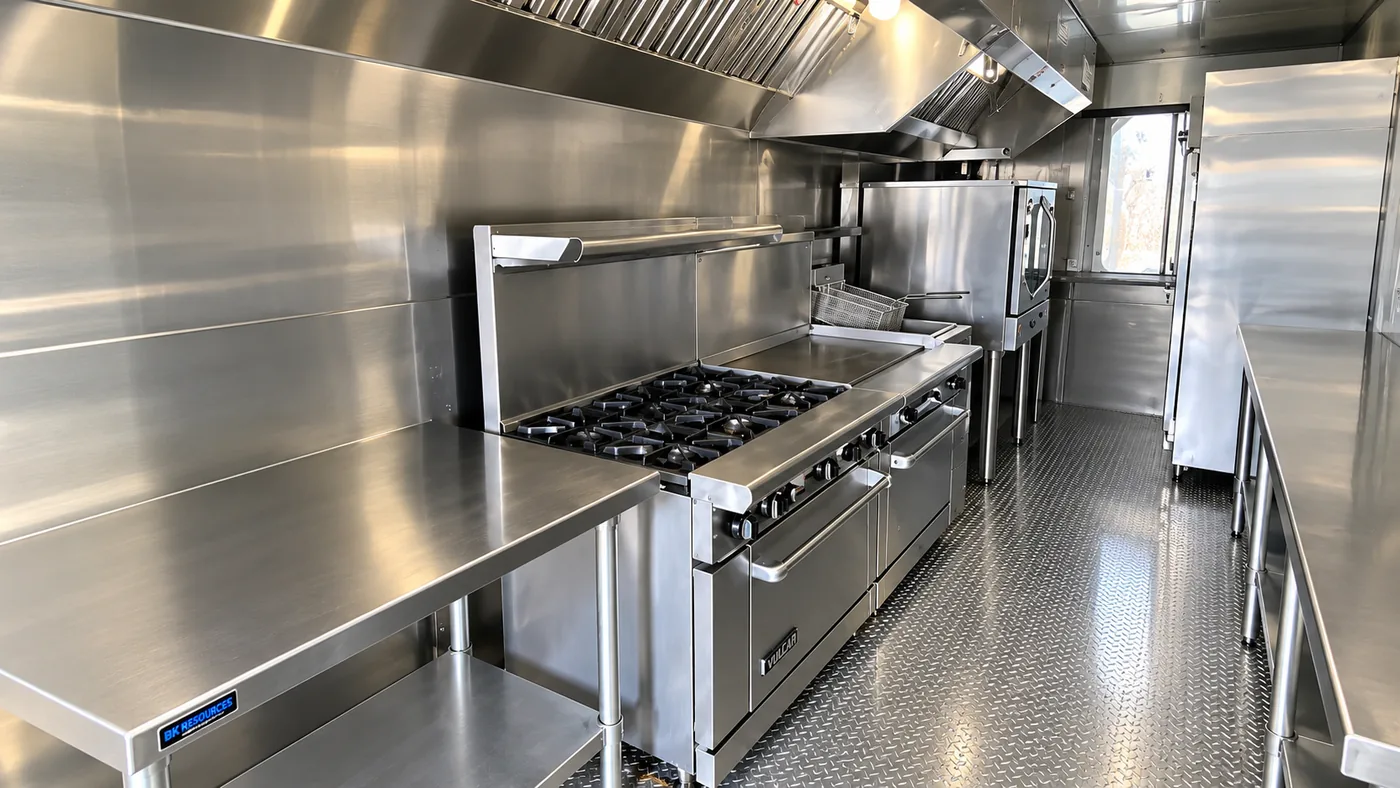
Build the kitchen around the meal-production sequence
Receiving, cold storage, preparation, cooking, holding and service should form one practical workflow. The temporary kitchen should support the menu and staffing plan without forcing raw ingredients, finished food and returned wares through conflicting routes.
Utility demand follows the cooking line
Ranges, ovens, fryers, ventilation, sinks and refrigeration create different power, fuel, water and wastewater requirements. Match the connection plan to the exact equipment schedule instead of relying on trailer length alone.
Use the menu and meal count to choose the format
Confirm the busiest service period, preparation methods, staffing, delivery route and sanitation responsibilities before approving the mobile kitchen configuration.
- Menu and preparation methods
- Meals per service period and peak staffing
- Cooking, preparation and serving responsibilities
- Power, fuel, water and wastewater connections
Explore project and location planning
7 planning pages
Questions for this rental
What should the enquiry include?
Provide the exact project address and required operating dates. Describe the menu, preparation methods and meal-service workload. Explain the routes for deliveries, clean storage and returned dishes. These details help define the equipment and service responsibilities for the proposal.
Does a rental automatically include every supporting service?
Kitchen equipment rental does not automatically include cooks, catering, food supplies, daily sanitation or operating approvals. Define these responsibilities in the project brief.