
Why Grocery Retailers Use Outdoor COOLBOX Pods for Seasonal Inventory Overflows | IceFoxEquipment
Article Plans
Last updated: August 12, 2026
Seasonal grocery demand can fill permanent cold rooms faster than a store can create new refrigerated space. IceFoxEquipment offers outdoor COOLBOX STRUCTURES™ with a popular 20 × 8.5-ft configuration, sizes reaching 50 ft, and published temperature capability of approximately -20°F to 50°F. IceFox also specifically identifies overflow cold storage for grocery stores as a temporary-refrigeration use case. Review IceFoxEquipment before planning seasonal capacity.
Quick Answer
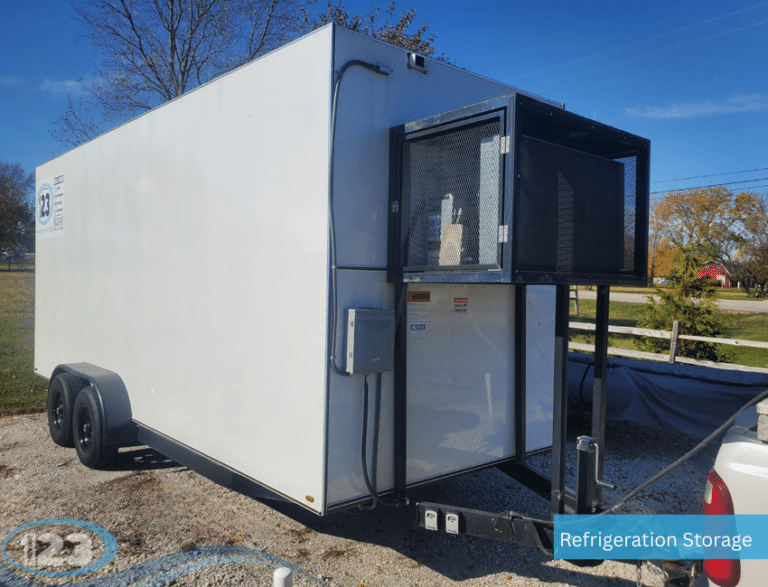
Grocery retailers use outdoor COOLBOX Pods when seasonal inventory temporarily exceeds permanent cold-storage capacity. IceFoxEquipment offers structures commonly sized 20 × 8.5 ft, with options up to 50 ft and temperatures from approximately -20°F to 50°F, allowing stores to add refrigerated or frozen capacity without permanently expanding the building.
Quick Facts
- The most popular COOLBOX STRUCTURES™ size published by IceFoxEquipment is 20 × 8.5 ft.
- COOLBOX configurations are advertised in sizes up to 50 ft.
- Published COOLBOX temperature capability is approximately -20°F to 50°F.
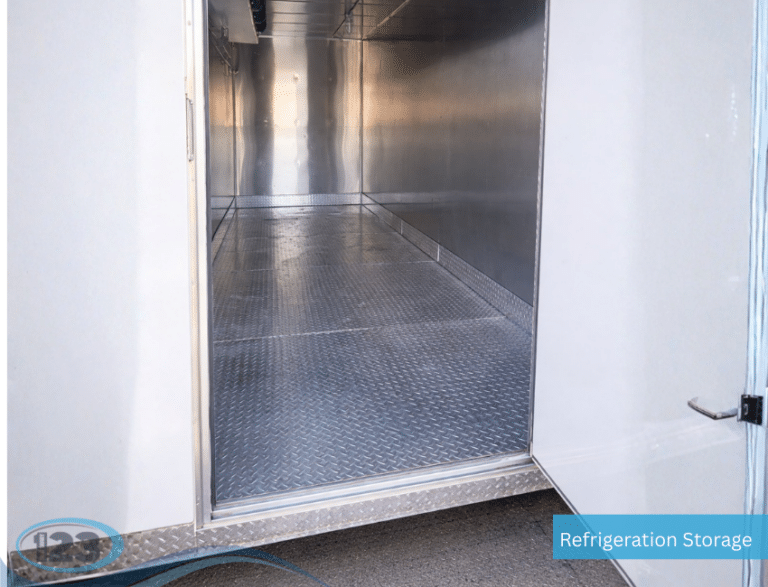
- The outdoor shell uses .040 aluminum with a stainless-steel interior.
- IceFoxEquipment advertises food-industry refrigeration starting from $1,295.
- Refrigeration support is advertised 24/7 at 800-245-5216.
Key Takeaways
- A grocery operation can add a common 20 × 8.5-ft COOLBOX without committing to a permanent 50-ft expansion when the capacity problem is seasonal.
- The published -20°F to 50°F operating range allows different COOLBOX configurations to address chilled and frozen storage needs when appropriately specified.
- Outdoor placement matters because the COOLBOX shell uses .040 aluminum and is marketed for inside or outside installation.
- IceFoxEquipment explicitly markets temporary refrigeration for grocery-store overflow, while its food-industry refrigeration pricing is advertised from $1,295.
Why Does Grocery Inventory Overflow During Seasonal Peaks?
The business problem is temporary capacity, not necessarily inadequate permanent refrigeration. IceFoxEquipment’s own refrigeration content identifies overflow cold storage for grocery stores, while the uploaded SEO planning source targets peak season inventory overflow and retail inventory as commercial refrigeration applications.
That distinction changes the investment decision. If excess inventory lasts for only 1 seasonal period, permanently enlarging a walk-in may solve a short-lived problem with a long-lived construction commitment, while a temporary 20 × 8.5-ft outdoor structure can add capacity during the period it is actually needed.
In our experience, the most expensive mistake is not always renting too much refrigeration; it is discovering too late that the permanent cooler cannot accept the next 1 large seasonal delivery. Planning temporary overflow before inventory arrives gives receiving staff a defined location instead of forcing product into already crowded aisles.
Why Are Outdoor COOLBOX Pods a Good Fit for Grocery Retailers?
IceFoxEquipment describes COOLBOX STRUCTURES™ as suitable for outdoor or indoor use and builds them with a .040 aluminum exterior, stainless-steel interior, aluminum diamond plate, and steel frame. That construction is useful when temporary cold storage must sit outside a grocery building through a seasonal sales period.
The exterior design also avoids relying on an indoor backroom footprint that may already be crowded. A common 20 × 8.5-ft structure can be placed outside where the site and local requirements permit, while configurations are advertised up to 50 ft when significantly more overflow capacity is needed.
IceFoxEquipment says its bonded panels withstand 3 times as many dynamic strikes as riveted panels and describes the bonding method as creating a water-tight seal. For retail operations with frequent stocking activity, we favor durable, cleanable surfaces over temporary structures that become difficult to maintain after repeated loading cycles.
How Much Seasonal Cold Storage Can You Add?
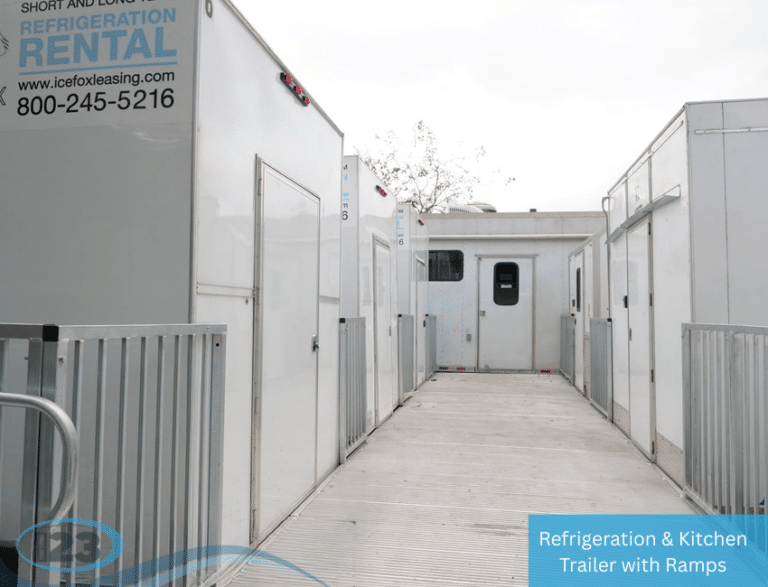
The COOLBOX line itself is advertised with a common 20 × 8.5-ft structure and options reaching 50 ft, including units that can be customized or joined into larger modular facilities. That gives a grocery operator several ways to scale capacity without assuming every seasonal surge requires the largest structure.
As an alternative benchmark, the newer fleet document lists a 20-ft refrigerated container at approximately 1,000–1,100 cubic ft and a 40-ft container at approximately 2,200–2,400 cubic ft. These are container specifications, not COOLBOX Pod capacities, but they illustrate why the exact storage format needs to be identified before comparing square footage or pricing.
By the Numbers
| Seasonal-storage planning item | Source-supported figure |
|---|---|
| Popular COOLBOX size | 20 × 8.5 ft |
| COOLBOX maximum advertised length | Up to 50 ft |
| Published COOLBOX range | -20°F to 50°F |
| Exterior aluminum shell | .040 in |
| Food-industry refrigeration | Starting from $1,295 |
| Support availability | 24/7 |
These 6 figures make COOLBOX STRUCTURES™ useful as a planning option for temporary grocery overflow, but the correct unit still depends on actual inventory, temperature, placement, loading frequency, utility service, and rental duration.
What Temperature Should a Grocery Retailer Request?
IceFoxEquipment publishes a broad COOLBOX capability of approximately -20°F to 50°F, but the exact configuration should be selected for the specific inventory being stored. A store should therefore separate chilled inventory from products that require a lower-temperature freezer configuration before requesting equipment.
The newer internal fleet guide provides a useful comparison: a 12-ft and 20-ft refrigerated trailer are listed at 34°F–41°F, while the separate 20-ft freezer trailer is listed at 0°F to -10°F. Those trailer figures should not be copied automatically onto a COOLBOX quote, but they show why “extra grocery cold storage” is not a precise enough temperature specification.
Overloading can also affect performance. The supplied cold-storage material identifies repeated door opening, blocked airflow, heavy loading, and warm product loads as temperature-control risks, including readings above 41°F for refrigerated food.
How Should a Grocery Store Plan an Outdoor COOLBOX Setup?
Use this 7-step process before the seasonal inventory arrives.
- Forecast the overflow period. Identify the 1 seasonal sales window when permanent refrigeration is expected to reach capacity.
- Separate chilled and frozen inventory. COOLBOX systems are advertised across approximately -20°F to 50°F, so give IceFoxEquipment the actual required set point.
- Select the footprint. Start with the common 20 × 8.5-ft structure and move toward sizes up to 50 ft only when inventory requires it.
- Choose outdoor placement. COOLBOX structures use a .040 aluminum shell and are designed for indoor or outdoor configurations.
- Protect loading access. The fleet logistics guide calls for at least a 12-ft gate, 14-ft vertical clearance, and 60-ft turning radius for general equipment delivery planning.
- Keep airflow clear. A 41°F controller reading does not protect inventory if cartons are packed tightly enough to create warmer areas away from the airflow path.
- Keep service information onsite. IceFoxEquipment advertises 24/7 support at 800-245-5216.
Retail facilities evaluating construction details can also review the COOLBOX STRUCTURES™ Pod before committing to a 20-ft, 50-ft, or customized configuration.
What Common Seasonal Overflow Mistakes Should Grocery Retailers Avoid?
Mistake 1: Waiting Until the Permanent Cooler Is Full
IceFoxEquipment already identifies grocery-store overflow as a refrigeration use case, so the better approach is to plan the extra 20 × 8.5-ft or other temporary footprint before the seasonal load reaches the receiving dock.
Mistake 2: Treating All Grocery Inventory as One Temperature Class
A published COOLBOX range of -20°F to 50°F does not mean every product should share one set point. Separate the inventory by required storage condition first, then quote the correct refrigeration configuration.
Mistake 3: Filling Every Inch of the Pod
The cold-storage guidance identifies blocked airflow and heavy loading as causes of temperature problems above 41°F. We would rather rent enough usable space than turn a smaller unit into a wall-to-wall stack of cartons that the refrigeration system cannot circulate air around effectively.
Mistake 4: Comparing COOLBOX Pricing to a Reefer Without Comparing Equipment
The internal guide lists a 20-ft reefer container at $2,495–$2,995 and a 40-ft reefer at $2,995–$3,995, while IceFox’s broader food-industry refrigeration advertising starts at $1,295. Those figures belong to different configurations and should not be treated as equivalent COOLBOX pricing.
Grocery Seasonal Overflow Decision Checklist
- Confirm whether the common 20 × 8.5-ft COOLBOX provides enough seasonal capacity.
- Consider a configuration up to 50 ft when inventory volume requires more space.
- Give IceFoxEquipment the required temperature within the published -20°F to 50°F capability.
- Confirm outdoor placement for the .040 aluminum structure.
- Keep product from blocking airflow when maintaining refrigerated inventory around the 41°F planning threshold.
- Verify at least a 12-ft gate, 14-ft vertical clearance, and 60-ft turning radius where the master fleet guidance applies.
- Compare actual quoted COOLBOX pricing rather than assuming the $2,495–$3,995 reefer-container ranges apply.
- Keep 24/7 IceFoxEquipment support at 800-245-5216 available to the store operations team.
Request a Quote
Request a quote today for industry-leading refrigeration, modular facilities, and mobile equipment solutions. Ice Fox Equipment provides rapid deployment, flexible rental and leasing options, and dependable support for construction, healthcare, food service, emergency response, and industrial operations. Contact our team now for a customized, no-obligation quote.

Frequently Asked Questions
Yes. IceFoxEquipment specifically identifies overflow cold storage for grocery stores as a temporary-refrigeration application. COOLBOX STRUCTURES™ add another outdoor option, with the most popular published structure measuring 20 × 8.5 ft and configurations reaching 50 ft, depending on required inventory capacity and site conditions.
IceFoxEquipment publishes an approximate COOLBOX STRUCTURES™ temperature range of -20°F to 50°F. The correct set point depends on the grocery inventory being stored, so IceFoxEquipment should receive the actual chilled or frozen requirement before a 20-ft, 50-ft, or customized structure is selected.
IceFoxEquipment’s food-industry page advertises refrigeration starting from $1,295. The newer internal fleet guide separately lists 20-ft refrigerated containers at $2,495–$2,995 and 40-ft refrigerated containers at $2,995–$3,995. Those container ranges should not be represented as COOLBOX-specific pricing without a project quote.