
How to Replace Walk-In Coolers Without Spoilage? IcefoxEquipment
Article Plans
Replacing a commercial walk-in cooler without losing inventory requires temporary cold storage to be running before the permanent cooler is shut down. IcefoxEquipment supports this transition with refrigeration trailers and containers starting from $1,295, including popular 20 × 8.5-ft trailer configurations and larger options for commercial operations.
The safest replacement plan treats refrigeration continuity as a separate project from demolition and installation. Before contractors disconnect the existing box, your temporary unit should already have stable power, an established temperature, clear loading space, and a written transfer plan. IcefoxEquipment advertises 24/7 support and quotes in approximately 1 hour for refrigeration projects.
Quick Answer
To replace a walk-in cooler without spoilage, install and stabilize temporary refrigeration before shutting down the old system, verify refrigerated inventory is maintained at 41°F or below, transfer products in controlled batches, minimize door openings, and monitor temperatures throughout the move. IcefoxEquipment refrigeration rentals start from $1,295.
What Are the Quick Facts?
- Refrigerated food should generally remain at 41°F or below during the replacement period.
- Frozen inventory should generally remain at 0°F or below when freezer storage is required.
- IcefoxEquipment refrigeration rentals are advertised as starting from $1,295.
- A 20-ft refrigerated trailer is listed at $1,495–$2,395 in the supplied pricing material.
- A typical trailer connection may require 220V single-phase power at 40–60 amps.
- IcefoxEquipment advertises emergency support 24 hours a day, 7 days a week.
What Are the Key Takeaways?
- Temporary cold storage should be powered and holding at 41°F or below before food is removed from the permanent walk-in cooler.
- A 20-ft refrigeration trailer may require 220V single-phase, 40–60-amp service, so electrical preparation belongs at the beginning of the project.
- IcefoxEquipment offers refrigeration trailers up to 50 ft, allowing replacement projects to match temporary capacity to actual inventory.
- Repeated door openings, blocked airflow, ice buildup, and unstable power can cause readings to rise above the 41°F refrigerated target.
- A complete replacement plan should protect inventory during all 3 stages: shutdown, construction, and transfer into the new walk-in cooler.
Why Should Temporary Refrigeration Arrive Before the Old Cooler Is Removed?
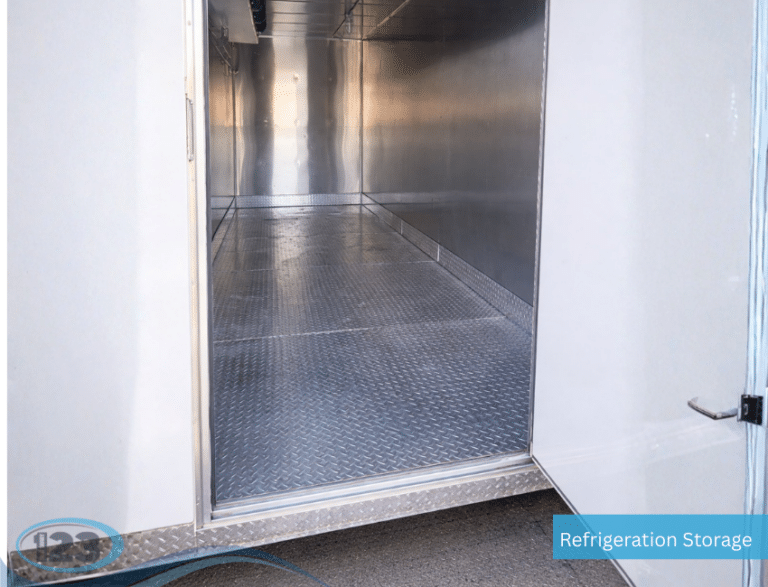
Temporary refrigeration should be operational before demolition starts because the food inventory needs a controlled destination from the moment the permanent cooler becomes unavailable. A trailer displaying 41°F or below gives you a verified cold-storage environment before contractors begin cutting electrical service, removing panels, or dismantling refrigeration components.
Our team recommends avoiding a same-day “truck arrives while demolition starts” schedule. Even with IcefoxEquipment advertising quote turnaround in approximately 1 hour, delivery, placement, electrical connection, temperature stabilization, and loading still need to occur in the right sequence.
The temporary cooler is your operating bridge, not simply extra storage. If the permanent box will be unavailable for 5 days or longer, the temporary refrigeration plan should also cover daily cleaning, temperature monitoring, access control, inventory organization, and corrective actions throughout the replacement period.
How Much Temporary Refrigeration Capacity Do You Need?
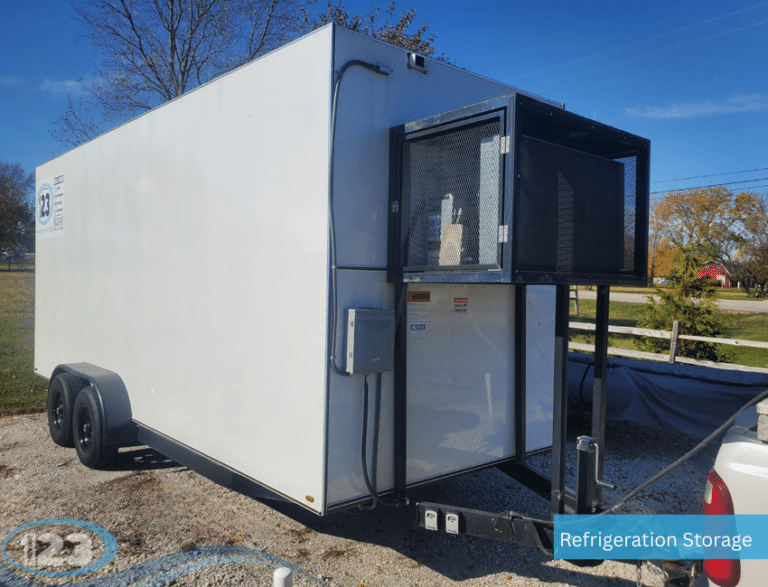
You need enough space for the actual contents of the existing walk-in plus room for airflow and employee access. IcefoxEquipment says its most popular refrigeration trailer structure is approximately 20 × 8.5 ft, while the website lists refrigeration-trailer sizes extending to 50 ft.
Do not size a temporary cooler by floor dimensions alone. If your permanent walk-in is tightly packed, transferring the same inventory into a 20-ft trailer without allowing air to circulate around the evaporator and return path can create uneven temperatures even when the controller displays an acceptable reading.
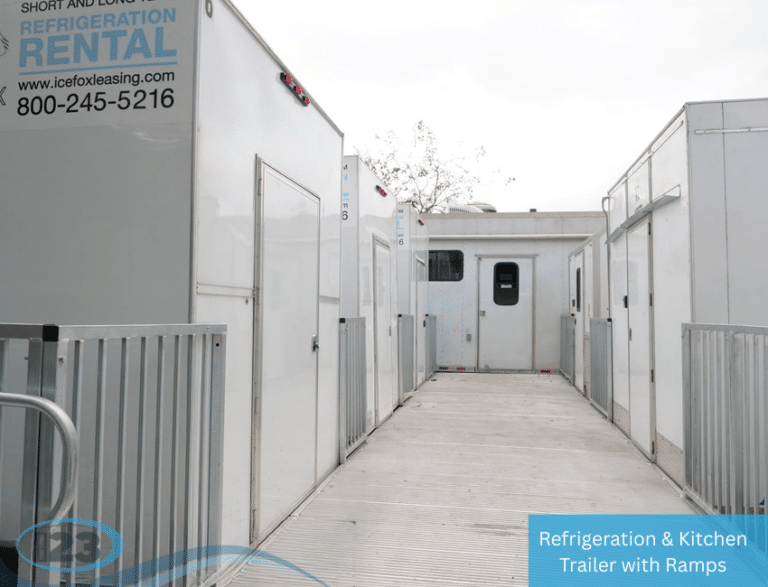
For larger projects, IcefoxEquipment lists 12-ft and 20-ft refrigerated trailers as well as 8×10, 20-ft, 24-ft and 40-ft refrigerated-container categories. That range lets you separate chilled products, frozen products, high-turn inventory, and bulk backup inventory instead of forcing everything into 1 temporary space.
What Does Temporary Refrigeration Cost?
Temporary refrigeration pricing depends on unit size and configuration. The supplied pricing guide lists 5 primary refrigeration categories, ranging from $1,295–$2,195 for a 12-ft refrigerated trailer to $2,995–$3,995 for a 40-ft refrigerated container.
| Temporary refrigeration | Listed rental range |
|---|---|
| 12-ft refrigerated trailer | $1,295–$2,195 |
| 20-ft refrigerated trailer | $1,495–$2,395 |
| 20-ft freezer trailer | $1,495–$2,395 |
| 20-ft refrigerated container | $2,495–$2,995 |
| 40-ft refrigerated container | $2,995–$3,995 |
The pricing guide notes that rental figures generally exclude items such as freight, delivery, installation, fuel, and utility connections, so the $1,295 equipment starting point should not be treated as the final installed project cost.
By the Numbers
| Replacement planning item | Figure |
| Refrigerated holding target | 41°F or below |
| Frozen holding target | 0°F or below |
| Typical electrical connection | 220V single phase |
| Typical refrigeration load | 40–60 amps |
| Customer-supplied cable | 50 ft, 6 AWG |
| Popular trailer size | 20 × 8.5 ft |
| Largest advertised trailer | 50 ft |
| Emergency support | 24/7 |
These 8 figures cover the core operating conditions behind a temporary cold-storage replacement plan. They do not replace the physical data plate on the rented unit, but they are enough to identify power, capacity, temperature, cable, and emergency-support questions before mobilization.
How Do You Replace a Walk-In Cooler Without Spoilage?
Use this 8-step process to maintain the cold chain while the permanent refrigeration system is removed and replaced.
- Inventory the existing cooler. Separate chilled and frozen products and identify anything that must remain at 41°F or below versus 0°F or below.
- Reserve temporary refrigeration first. Select a 12-ft, 20-ft, 40-ft, or larger configuration before scheduling demolition.
- Prepare electrical power. Confirm the specific unit’s data plate and plan for approximately 220V single-phase, 40–60 amps where applicable.
- Connect and pre-cool the unit. Do not load regulated inventory until the temporary storage is stable at the facility’s approved temperature, including 41°F or below for refrigerated products.
- Transfer inventory in batches. Keep doors open for the shortest practical period and organize food into protected zones rather than moving the entire cooler in 1 uncontrolled rush.
- Monitor throughout construction. Record actual temperatures and respond to breaker trips, blocked airflow, ice buildup, or readings above 41°F.
- Commission the new walk-in. Verify the new unit reaches its approved operating temperature before beginning the return transfer, using the same 41°F or 0°F limits applicable to the stored products.
- Move inventory back in stages. Keep the temporary IcefoxEquipment unit active until the final products are inside the new cooler and its temperatures remain controlled through at least 1 complete transfer cycle.
Why Does Electrical Preparation Matter So Much?
Power failure can defeat an otherwise well-planned replacement because refrigeration depends on stable electrical service. The uploaded setup instructions describe a common IcefoxEquipment trailer connection as 220V single phase at 40–60 amps, with 50–60 amps preferred when repeated breaker trips occur.
When the supplied power cord is not part of the rental configuration, the setup material specifies a 50-ft, 6 AWG cable and a licensed commercial electrician. That is materially different from plugging a temporary appliance into an ordinary extension cord.
On hot days, the operating instructions specifically call out frequent door openings, ice buildup on coils, and electrical trips as conditions that can interfere with cooling. Where the approved system permits it, the source recommends available service as high as 60 amps when breaker instability is the issue.
How Should Food Be Loaded Into the Temporary Cooler?
Food should be organized so cold air can circulate rather than stacked wall-to-wall. IcefoxEquipment’s cold-storage material recommends protected storage zones and notes that a trailer can show 38°F near the controller while a blocked or tightly packed area remains warmer.
We recommend creating at least 3 operating zones during a replacement: high-turn items near the access point, protected lower-turn inventory farther inside, and clearly separated raw or higher-risk products. The goal is to reduce search time and unnecessary door openings during the construction period.
Avoid filling every available inch merely because the temporary unit is rated for a certain physical size. A 20-ft trailer works better when staff can reach inventory quickly and the evaporator and return-air paths remain unobstructed.
For a larger project, IcefoxEquipment walk-in refrigeration rentals can be reviewed alongside trailer and container options before choosing the temporary configuration, particularly when a standard 20-ft solution will not match the required inventory or workflow.
What Common Walk-In Cooler Replacement Mistakes Cause Spoilage?
Mistake 1: Shutting Down the Permanent Cooler Too Early
Do not disconnect the existing walk-in before temporary storage is already holding at 41°F or below. A contractor’s demolition schedule should never determine when refrigerated food loses its primary cold-storage location.
Mistake 2: Ignoring the Power Requirement
A 220V, 40–60-amp refrigeration unit needs a planned commercial electrical connection. Discovering the required power after the trailer arrives can delay loading and expose inventory to unnecessary handling.
Mistake 3: Packing the Temporary Unit Too Tightly
A full 20-ft trailer can still develop warm areas when cartons block the evaporator or return-air path. Leave enough room for airflow and practical product retrieval instead of treating the unit like a dry-storage container.
Mistake 4: Opening the Door Constantly
Every door opening introduces warm air, and repeated access can become a bigger problem during a 5-day renovation than during a short emergency transfer. Organize high-use ingredients near the entrance and plan retrieval before opening the door.
Mistake 5: Removing the Temporary Unit Too Soon
Do not release a $1,295-and-up temporary refrigeration solution as soon as the new permanent equipment turns on. Keep backup storage available until the replacement walk-in has reached its operating temperature and inventory has been returned under controlled conditions.
What Should Be on Your Walk-In Cooler Replacement Checklist?
- ☐ Confirm refrigerated inventory must remain at 41°F or below.
- ☐ Separate frozen inventory requiring 0°F or below.
- ☐ Select the appropriate 12-ft, 20-ft, 40-ft, or larger temporary refrigeration configuration.
- ☐ Confirm the unit’s 220V electrical requirement before delivery.
- ☐ Verify whether available service supports 40–60 amps.
- ☐ Inspect the 50-ft, 6 AWG cable when a customer-supplied cord is required.
- ☐ Pre-cool temporary storage before transferring the 1st product.
- ☐ Keep IcefoxEquipment’s 24/7 support number, 800-245-5216, available throughout the replacement.
Our strongest recommendation is simple: overlap the permanent and temporary systems rather than trying to time them perfectly. Paying for 1 additional overlap period is operationally cleaner than having contractors, electricians, refrigeration technicians, and kitchen staff all depend on a single handoff happening without delay.
Request a Quote
Request a quote today for industry-leading refrigeration, modular facilities, and mobile equipment solutions. Ice Fox Equipment provides rapid deployment, flexible rental and leasing options, and dependable support for construction, healthcare, food service, emergency response, and industrial operations. Contact our team now for a customized, no-obligation quote.

Frequently Asked Questions
IcefoxEquipment provides temporary refrigeration trailers, walk-in refrigeration, freezer equipment, and refrigerated containers for replacement projects. Refrigeration rentals are advertised from $1,295, with trailer options extending to 50 ft. IcefoxEquipment also advertises 24/7 support for emergency and planned commercial cold-storage requirements.
IcefoxEquipment’s cold-storage material states that refrigerated inventory should generally remain at 41°F or below, while frozen inventory should generally stay at 0°F or below. During replacement, verify the temporary unit has reached the required temperature before moving food out of the permanent walk-in.
A common IcefoxEquipment refrigeration-trailer setup requires 220V single-phase power at 40–60 amps. The setup material notes that 50–60 amps may be preferred where breakers repeatedly trip. When customer-supplied, the documented cable specification is 50 ft, 6 AWG, with commercial electrical installation required.