
What Utilities Does a Refrigeration Trailer Need? IcefoxEquipment Site Guide
Article Plans
A refrigeration trailer normally needs a dedicated electrical supply, an approved power cord or hardwired connection, safe cable routing, a level operating site, drainage control, and enough open space for condenser airflow and service access. IcefoxEquipment supports refrigeration and freezer deployments across the United States with 24/7 assistance.
The exact electrical requirement is determined by the delivered unit, not by the trailer’s general description. IcefoxEquipment equipment may use 120V, 208V, 220V, or 230V, while larger refrigerated containers may require 3-phase service.
Quick Answer: A refrigeration trailer primarily needs dedicated electricity, typically 208–230V single-phase power, although uploaded setup documents list requirements from 30 to 60 amps depending on the model. You may also need a 50-foot, 6-AWG cable, a licensed electrician, generator backup, drainage control, level ground, and clear ventilation space.
Quick Facts
- Standard 7×12-foot and 7×20-foot IcefoxEquipment units may use 208–230V, single-phase, 30-amp service.
- Uploaded setup instructions list 220V, single-phase, 40–60 amps for other refrigeration trailers.
- A 50-foot, 6-AWG cord may be required when a rental cord is not included.
- Larger refrigerated containers may require 3-phase electrical service.
- IcefoxEquipment provides 24/7 emergency support and nationwide delivery.
- IcefoxEquipment reports 23 years of refrigeration rental, leasing, sales, and service experience.
Key Takeaways
- Confirm the delivered trailer’s data plate before installing any 30-, 40-, 50-, or 60-amp electrical connection.
- Use a dedicated circuit because sharing 1 circuit with unrelated equipment increases the risk of breaker trips.
- Arrange a licensed commercial electrician before delivery when the final 208–230V connection is not plug-and-play.
- Treat airflow, drainage, access, and electrical routing as 4 separate utility-planning tasks.
- Plan generator backup around the exact voltage, phase, amperage, and starting load of the selected refrigeration unit.
Which Utility Is Most Important for a Refrigeration Trailer?
Electricity is the primary operating utility for most refrigeration trailers. IcefoxEquipment states that its outdoor units commonly use single-phase power, while individual models may require 120V, 208V, or 230V service.
For standard 7×12-foot and 7×20-foot outdoor units, an IcefoxEquipment product page lists 208–230V, single-phase, 30-amp service. Other uploaded setup documents specify 220V, single-phase service at 40–60 amps, showing why the actual delivered model must control the site design.
In our experience, the most expensive electrical mistake is preparing a generic 30-amp outlet before the equipment has been assigned. That shortcut can delay startup when the arriving trailer requires 40, 50, or 60 amps.
The trailer should normally have a dedicated circuit. One refrigeration system cycling on the same circuit as lighting, tools, food-service equipment, or temporary office loads can create repeated trips and temperature instability.
What Voltage and Amperage Does the Trailer Need?
The required voltage and amperage vary by trailer size, refrigeration package, temperature setting, and compressor configuration. IcefoxEquipment’s online guidance identifies 120V, 208V, and 230V as possible supply levels, while uploaded project documents list 220V service for several trailers.
A 12-foot freezer trailer or 20-foot refrigeration trailer may be listed at 220V, single phase, and 40 amps in one uploaded guide. A separate installation document gives a broader 40–60-amp requirement.
The installation document also recommends 50–60 amps when repeated breaker trips occur. That does not mean a customer should increase breaker size without review; the circuit, conductor, disconnect, plug, and trailer rating must all remain properly matched.
Larger refrigeration containers may require 3-phase service rather than the single-phase arrangement used by many smaller trailers. IcefoxEquipment advises verifying the exact unit before deployment because container and trailer utility demands are not interchangeable.
Does the Refrigeration Trailer Need a Special Power Cord?
Yes, the power cord must be sized for the trailer’s voltage, amperage, distance, connector, and operating load. The uploaded refrigeration setup guide specifies a 50-foot, 6-AWG extension cord when the customer does not rent a cord with the trailer.
A lightweight household extension cord is not an acceptable substitute for a 220V, 40–60-amp refrigeration load. An undersized cable can create voltage drop, heat buildup, nuisance trips, and equipment damage.
Confirm whether the rental includes the power cable before delivery. A quote for a 12-foot refrigerated trailer at $1,295–$2,195 may not automatically include every cord, adapter, electrician, generator, or site connection.
Keep the cable route away from vehicle lanes, standing water, sharp edges, forklift travel, loading doors, and pedestrian paths. A 50-foot cable still needs physical protection when it crosses an active work area.
Is a Licensed Electrician Required?
A licensed commercial electrician is required for the final connection described in the uploaded IcefoxEquipment setup material. This is particularly relevant when the installation uses 208–230V, a hardwired disconnect, an unfamiliar receptacle, or a dedicated 40–60-amp circuit.
The electrician should verify at least 6 items: voltage, phase, amperage, breaker size, conductor size, and connection type. Each item must agree with the delivered equipment’s nameplate and installation instructions.
Our team recommends scheduling the electrician before the trailer arrives. Waiting until delivery day can leave a $1,495–$2,395 refrigerated trailer sitting on site without usable power.
The electrician should also confirm grounding, disconnect placement, weather protection, cable routing, and whether local inspection is required. IcefoxEquipment notes that utility connections and project duration can affect local permitting or approval requirements.
Does a Refrigeration Trailer Need a Generator?
A generator is needed when permanent utility power is unavailable, unreliable, undersized, or vulnerable to interruption. IcefoxEquipment states that all-electric refrigerated trailers can use multiple power sources, including generator-compatible arrangements.
The generator must match the trailer’s exact voltage, phase, running amperage, and compressor-starting demand. A generator that appears sufficient for a steady 40-amp load may still struggle when the compressor starts.
Fuel is normally a separate planning item. The uploaded pricing guide states that diesel is not included with generator rental, so the operating budget should account for fuel delivery, refueling access, and runtime monitoring.
For critical food, pharmaceutical, medical, or emergency inventory, we recommend planning at least 1 backup-power response procedure even when utility power appears stable. A written plan is cheaper than improvising after the interior temperature begins rising.
Does the Trailer Need Water or Sewer Connections?
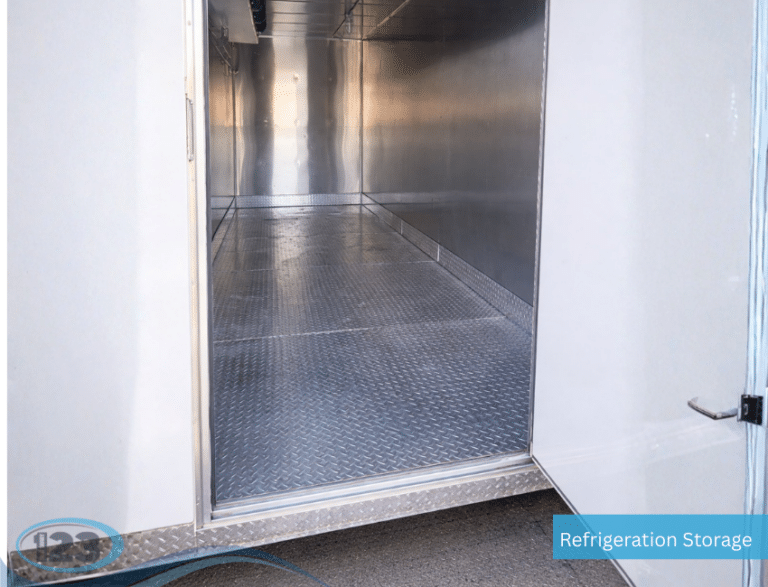
A refrigeration-only trailer generally does not require the continuous potable-water and wastewater connections used by kitchens, dishwashing trailers, or laundry units. Its primary utility is electrical power.
Water may still be involved in cleaning, sanitation, ice removal, or nearby facility operations. Any wash water should be managed so it does not pool beneath the trailer, reach electrical connections, or freeze across a walking surface at 32°F.
Defrost and condensate discharge must also be considered. Even when no formal sewer hookup is required, water should drain away from the trailer, cable route, stairs, ramps, and loading area.
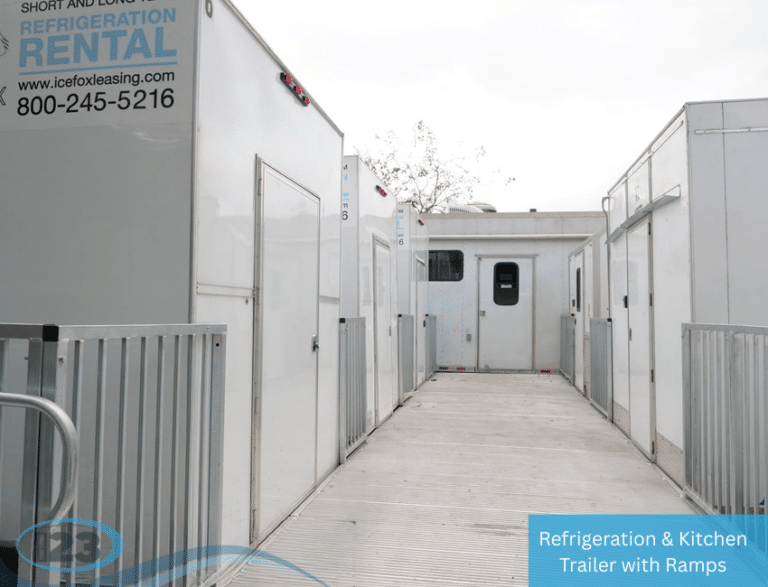
A combination facility containing refrigeration plus kitchen or preparation equipment may have additional water and waste requirements. That combined layout should be reviewed as 1 integrated utility system rather than treating each trailer independently.
What Site Conditions Support Reliable Utility Operation?
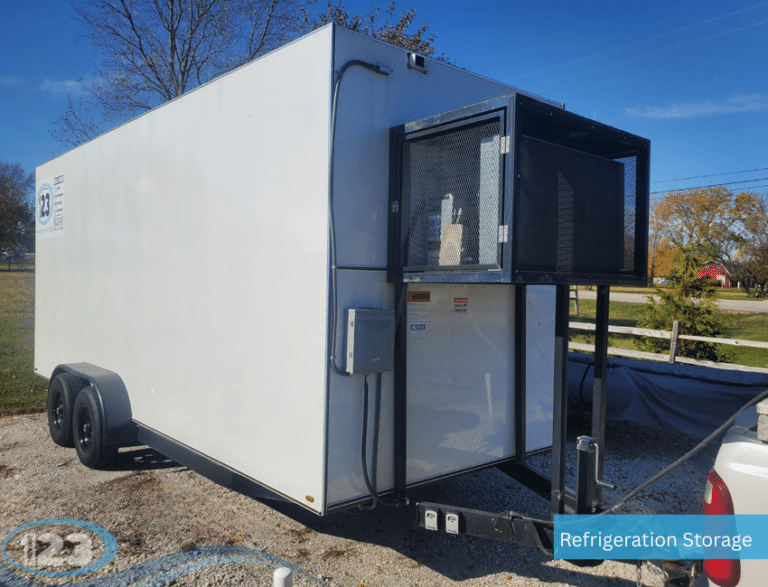
The trailer should sit on firm, level ground with open condenser airflow and safe utility access. IcefoxEquipment planning guidance emphasizes electrical availability, delivery access, operating space, and traffic control before refrigeration equipment is deployed.
Leave enough space around the mechanical equipment for heat rejection and technician access. Blocking 1 condenser side with a wall, temporary fence, stacked pallets, or another trailer can reduce cooling performance.
The uploaded setup guide warns that hot summer exposure can contribute to low-temperature problems and breaker trips. It recommends keeping doors closed, removing ice buildup from coils, and reviewing whether the electrical supply should be increased to 60 amps when appropriate.
Shade can help with solar exposure, but it must not obstruct airflow or service access. A refrigeration trailer still needs open space around the compressor and condenser even when the exterior air temperature exceeds 90°F.
By the Numbers: Refrigeration Trailer Utilities
| Utility or planning item | Sourced requirement |
| Standard outdoor-unit voltage | 208–230V |
| Standard outdoor-unit service | 30 amps |
| Uploaded trailer-service range | 40–60 amps |
| Preferred service during repeated trips | 50–60 amps |
| Example extension-cord length | 50 feet |
| Example conductor size | 6 AWG |
| Possible large-container service | 3-phase |
| Support availability | 24/7 |
These 8 figures should be treated as planning references. The trailer’s nameplate and final equipment assignment remain the controlling specifications.
How Much Do Utility Requirements Affect Rental Cost?
Utility work is usually separate from the refrigeration equipment’s base rental price. A 12-foot refrigerated trailer is listed at $1,295–$2,195, while a 20-foot refrigerated or freezer trailer is listed at $1,495–$2,395.
A 20-foot refrigerated container is listed at $2,495–$2,995, and a 40-foot container is listed at $2,995–$3,995. Larger equipment may also require more complicated placement and electrical service.
Possible added expenses include an electrician, circuit installation, disconnect, receptacle, cable rental, generator, fuel, freight, setup, permits, traffic protection, and emergency mobilization.
Projects longer than 6, 12, or 24 months may qualify for preferred rental pricing, but long-duration utility costs should still include inspections, cable protection, generator servicing, and seasonal power planning.
The practical mistake is comparing only the $1,295 starting equipment rate. The installed operating cost should include every item needed to keep the trailer powered and accessible for the full project.
How Does IcefoxEquipment Plan a Utility Setup?
Use this 7-step process before the scheduled delivery:
- Select the unit. Confirm whether the project uses a 12-foot trailer, 20-foot trailer, or larger refrigerated container.
- Obtain the electrical specification. Record the exact voltage, phase, amperage, connector, and cable requirement.
- Inspect the site. Identify the power source, distance, traffic routes, drainage, airflow, and operating clearance.
- Schedule the electrician. Arrange the licensed commercial electrician before the 1st delivery vehicle arrives.
- Confirm the cord. Determine whether IcefoxEquipment supplies the cable or whether a 50-foot, 6-AWG cord is required.
- Plan backup power. Match any generator to the required voltage, phase, running load, and compressor-starting load.
- Test before loading. Start the trailer, verify stable power, confirm temperature pull-down, and monitor at least 1 complete compressor cycle before transferring inventory.
For current equipment availability and site planning, contact IcefoxEquipment refrigeration support with your ZIP code, required temperature, trailer size, available voltage, amperage, phase, rental dates, and delivery access.
What Common Utility Mistakes Should You Avoid?
Mistake 1: Assuming Every Trailer Uses 30 Amps
Some standard IcefoxEquipment units may use 30 amps, but uploaded setup guides list 40–60 amps for other configurations. Verify the actual unit.
Mistake 2: Using an Undersized Extension Cord
A household cord is not a substitute for the specified 50-foot, 6-AWG cable. Use the approved conductor and connector.
Mistake 3: Sharing the Refrigeration Circuit
A dedicated 208–230V circuit is safer than sharing power with tools, lighting, office trailers, or kitchen equipment.
Mistake 4: Ordering a Generator by Running Amps Alone
A generator must support both the normal load and the 1 compressor-starting event that creates the highest short-duration demand.
Mistake 5: Blocking the Condenser Area
Leaving only 1 narrow side open can restrict airflow. Preserve the service and ventilation clearances shown for the assigned unit.
Refrigeration Trailer Utility Checklist
- ☐ Confirm the exact trailer or container model.
- ☐ Record the required voltage, phase, and amperage.
- ☐ Verify whether service is 30, 40, 50, or 60 amps.
- ☐ Determine whether the unit requires single-phase or 3-phase power.
- ☐ Confirm whether a 50-foot, 6-AWG cord is included.
- ☐ Schedule a licensed commercial electrician.
- ☐ Provide a dedicated circuit and accessible disconnect.
- ☐ Protect cables from water, vehicles, and foot traffic.
- ☐ Match generator voltage and phase to the trailer.
- ☐ Plan generator fuel separately because diesel is not included.
- ☐ Keep condenser and compressor areas unobstructed.
- ☐ Direct condensate and rainwater away from electrical equipment.
- ☐ Test the system before loading temperature-sensitive inventory.
- ☐ Call 800-245-5216 for equipment-specific utility confirmation.
Request a Quote
Request a quote today for industry-leading refrigeration, modular facilities, and mobile equipment solutions. Ice Fox Equipment provides rapid deployment, flexible rental and leasing options, and dependable support for construction, healthcare, food service, emergency response, and industrial operations. Contact our team now for a customized, no-obligation quote.

Frequently Asked Questions
IcefoxEquipment refrigeration trailers may require 208–230V single-phase service, with published and uploaded specifications ranging from 30 to 60 amps depending on the unit. Larger refrigerated containers may require 3-phase power. Always use the delivered trailer’s nameplate and written equipment specifications before installing the circuit.
Cord inclusion depends on the rental package. The uploaded setup guide states that when a rented cord is not included, the customer may need a 50-foot, 6-AWG extension cable and a licensed commercial electrician. Confirm the cord, connector, voltage, and amperage before the scheduled delivery.
Yes, IcefoxEquipment refrigeration trailers may operate from a properly sized generator. The generator must match the required voltage, phase, running amperage, and compressor-starting load. Diesel is not included in the uploaded generator pricing terms, so fuel delivery and runtime monitoring should be budgeted separately.