
How IcefoxEquipment Protects High-Value Seafood During Power Outages?
Article Plans
A commercial seafood inventory can represent a major financial exposure when a walk-in cooler or freezer suddenly loses power. IcefoxEquipment provides 24/7 emergency refrigeration for power outages, utility disruptions, equipment failures, and severe weather, with temporary refrigerated storage advertised from $1,295.
This article addresses the frequently searched $85K seafood-loss scenario, but that dollar amount should be treated as an inventory-value example rather than a verified IcefoxEquipment case-study result. What the sources do establish is a practical response system built around temporary refrigeration, 220V power, temperature monitoring, backup storage, and emergency deployment. Contact IcefoxEquipment at 800-245-5216 when permanent refrigeration goes offline.
Quick Answer
High-value seafood can be protected during a refrigeration outage by limiting door openings, monitoring temperatures, arranging temporary cold storage immediately, and transferring inventory only after the replacement unit reaches the required operating range. IcefoxEquipment provides 24/7 emergency refrigeration, with rental equipment advertised from $1,295.
What Are the Quick Facts?
- IcefoxEquipment provides emergency refrigeration support 24 hours a day, 7 days a week.
- IcefoxEquipment advertises refrigeration rentals starting from $1,295.
- Company materials use 41°F or below as the refrigerated-food operating target.
- Frozen products should generally remain at 0°F or below in IcefoxEquipment compliance material.
- A common refrigeration trailer requires approximately 220V single-phase, 40–60-amp service.
- IcefoxEquipment specifically targets refrigerated-container applications for meat and seafood storage.
What Are the Key Takeaways?
- An outage involving expensive seafood should trigger an emergency-storage plan during the 1st response period, not after temperatures have already moved out of range.
- IcefoxEquipment’s 24/7 support can be used for unexpected walk-in cooler failures, freezer failures, power outages, and utility disruptions.
- A temporary refrigeration trailer may require 220V and 40–60 amps, so the electrical plan should start while the equipment is being dispatched.
- Refrigerated seafood should be monitored against the facility’s approved limit, with IcefoxEquipment material using 41°F or below as its operating reference.
- A temperature log showing only 1 current reading cannot establish what happened to seafood earlier in an outage.
Why Is Seafood Inventory Especially Difficult to Protect During an Outage?
Seafood cold storage depends on continuous temperature control, which means a refrigeration outage immediately creates an operational problem even if the product still feels cold. IcefoxEquipment specifically includes seafood cold storage and refrigerated containers for meat and seafood among its commercial applications.
The first mistake is treating a failed walk-in as only a repair issue. You now have 2 jobs running at once: repair the permanent system and maintain a separate controlled environment for the inventory.
Our preference is to start the temporary-storage process before the technician has completed the 1st repair diagnosis when the outage duration is uncertain. Waiting for a definitive compressor, electrical, or refrigerant answer can consume the time available to move product safely.
What Happens in a High-Value Seafood Outage Scenario?
Consider a seafood operation with a high-value load in a failed walk-in cooler or freezer. The exact $85,000 figure in the requested topic is not documented as an IcefoxEquipment historical case, so the operational lesson is more useful than presenting an unsupported success story.
The response begins by recording the outage time, keeping doors closed, and checking reliable temperature information. IcefoxEquipment compliance materials use 41°F or below for refrigerated product and 0°F or below for frozen inventory.
From there, the facility should identify backup capacity and power. A common IcefoxEquipment refrigerated-trailer setup requires approximately 220V single-phase service at 40–60 amps, which needs to be verified before the temporary unit becomes part of the cold chain.
How Does IcefoxEquipment Respond to a Refrigeration Outage?
IcefoxEquipment’s website describes 24/7 emergency customer support and nationwide refrigeration service for unexpected walk-in cooler or freezer failures, utility disruptions, severe weather, and power outages.
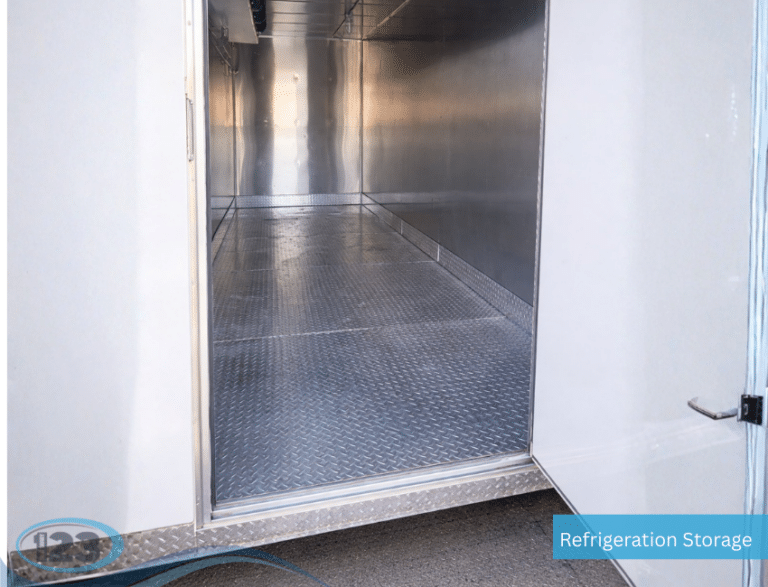
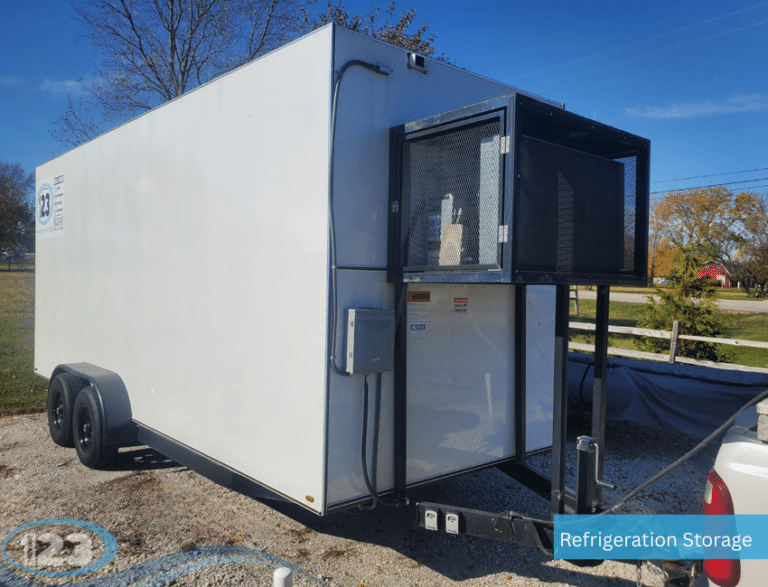
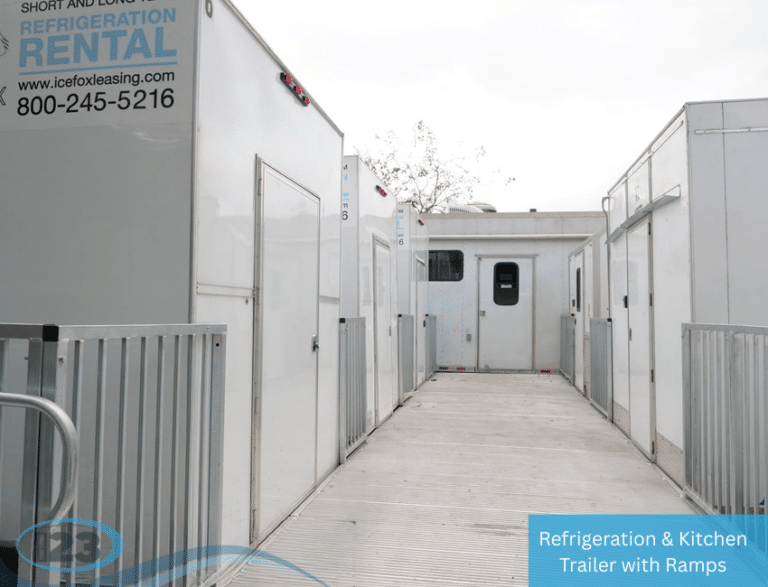
The company advertises refrigerated trailers, temporary refrigerated containers, emergency freezer containers, and portable refrigeration. Its inventory includes 12-ft and 20-ft trailers plus 8×10, 20-ft, 24-ft, and 40-ft refrigerated-container configurations.
This variety matters because a small seafood restaurant and a large seafood distributor do not need the same 1 temporary box. Capacity should follow actual inventory, loading method, temperature requirement, and site space.
How Cold Can Temporary IcefoxEquipment Storage Operate?
IcefoxEquipment’s website states that its refrigeration containers are commonly set around 35°F and describes equipment capable of operating down to approximately -20°F depending on configuration and requirement.
Separate IcefoxEquipment compliance material uses 41°F or below as the refrigerated-food operating threshold and 0°F or below for frozen food. Those operational figures should be matched to the seafood product and the facility’s approved food-safety plan.
A refrigerated load and a frozen load should therefore not automatically be placed in the same 1 temperature setting. The operator should identify which seafood requires refrigerated storage and which products require frozen storage before loading begins.
What Does Emergency Refrigeration Cost?
IcefoxEquipment advertises temporary refrigeration starting from $1,295. The exact equipment, rental duration, freight, installation, and required support services determine the final project quote.
| Emergency planning item | Source-supported figure |
|---|---|
| Refrigeration rental advertised from | $1,295 |
| Emergency assistance | 24/7 |
| Standard website refrigeration setting | 35°F |
| Refrigerated-food operating target | 41°F or below |
| Frozen-food operating target | 0°F or below |
| Common trailer electrical supply | 220V |
| Common amperage | 40–60 amps |
These 7 figures explain why protecting inventory requires more than comparing the value of the seafood with the rental rate. The temporary refrigeration has to be correctly sized, powered, placed, cooled, monitored, and operated.
For an expensive seafood load, the equipment rate can be small compared with the value being protected, but we do not convert that relationship into an invented percentage saved. The actual avoided loss depends on product value, temperature history, insurance, disposition, and how much inventory remains usable.
How Do You Move Seafood Into Emergency Refrigeration?
Use this 8-step response process.
- Record the outage. Document the exact time the permanent refrigeration failed.
- Keep the doors closed. Avoid unnecessary openings during the 1st response stage.
- Check temperature records. Compare refrigerated products against the approved limit, including the company’s 41°F operating reference.
- Call for backup storage. IcefoxEquipment provides 24/7 emergency refrigeration support.
- Prepare electrical service. Confirm approximately 220V single phase and 40–60 amps when applicable.
- Pre-cool the rental unit. Verify the required temperature before the 1st seafood case moves.
- Transfer in controlled batches. Keep airflow paths open rather than packing the temporary storage completely full.
- Continue logging. Document temperatures, power events, corrective actions, and product disposition after the transfer.
Why Does Power Preparation Matter?
A temporary trailer cannot protect seafood until it has dependable electricity. IcefoxEquipment’s setup material describes approximately 220V single-phase power at 40–60 amps, with 50–60 amps preferred when breaker instability becomes an issue.
Where a customer provides the documented temporary connection, the setup material calls for a 50-ft, 6-AWG cord and a licensed commercial electrician. That is a commercial electrical requirement, not a standard household extension-cord setup.
On hot days, the source also recommends limiting door openings, correcting coil ice, and providing up to 60 amps when the approved equipment and electrical system require it. Those details can become critical during an outage when warm product movement is already adding heat to the temporary space.
How Should Seafood Be Organized Inside the Rental Unit?
IcefoxEquipment’s cold-storage compliance material recommends at least 3 storage zones: ready-to-eat products, raw products, and nonfood or packaging materials. That separation supports both sanitation and faster retrieval.
Airflow matters just as much as organization. The source gives an example where a controller can show 38°F while a tightly packed corner remains warmer because cartons interfere with cold-air circulation.
For that reason, we would not fill every available inch merely because the seafood inventory has a high dollar value. A slightly less dense 1st load that preserves airflow can be operationally safer than packing the box wall-to-wall.
How Should Temperature Problems Be Handled?
IcefoxEquipment’s compliance material lays out a 5-step corrective-action process when a reading goes outside the approved range: verify the reading, inspect operating conditions, move product to approved backup storage when required, document the event, and determine product disposition under the food-safety procedure.
Typical causes listed in the source include frequent door openings, blocked airflow, heavy product loading, ice accumulation, power failure, and incorrect controller settings. A single 41°F reading after the system recovers does not erase what happened during the outage.
Our recommendation is never to rewrite a bad reading into a better number. A documented 1-time deviation with an actual corrective action is more useful operationally than a perfect-looking temperature log that cannot explain an obvious refrigeration failure.
By the Numbers
| Seafood-outage planning item | Figure |
| Emergency support | 24/7 |
| Rental starting point | $1,295 |
| Website refrigeration setting | 35°F |
| Refrigerated operating target | 41°F or below |
| Frozen operating target | 0°F or below |
| Monitoring capability described | -20°F to 70°F |
| Common electrical supply | 220V |
| Common amperage | 40–60 amps |
| Customer-supplied cord example | 50 ft, 6 AWG |
| Corrective-action process | 5 steps |
These 10 figures are verifiable in IcefoxEquipment’s sources. The requested $85K saved figure is not, which is why it should be treated as a scenario value unless supporting customer documentation is added.
What Common Seafood-Outage Mistakes Should You Avoid?
Mistake 1: Waiting for the Repair Technician Before Calling for Backup
A refrigeration technician may solve the mechanical failure, but temporary refrigeration is a separate 1-track response. Start both processes when the outage duration is uncertain.
Mistake 2: Looking Only at the Current Temperature
A display reading of 38°F does not establish what occurred during the previous loading period, overnight shift, or power interruption. Keep the temperature history.
Mistake 3: Ignoring Electrical Requirements
A refrigeration trailer that needs 40–60 amps cannot protect inventory until an appropriate 220V commercial supply has been established.
Mistake 4: Packing Seafood Against the Evaporator
A box can display 1 acceptable controller temperature while an obstructed zone remains warmer. Protect airflow around the refrigeration system.
Mistake 5: Claiming a Dollar Save Without Documentation
A headline such as $85,000 saved should be supported by purchase records, inventory valuation, temperature records, customer authorization, and final disposition documentation before it is presented as an actual IcefoxEquipment case study.
What Should Be on the Seafood-Outage Checklist?
- ☐ Record the outage start time.
- ☐ Identify refrigerated inventory requiring 41°F or below.
- ☐ Identify frozen seafood requiring 0°F or below.
- ☐ Call IcefoxEquipment at 800-245-5216 using its 24/7 support.
- ☐ Confirm the required temporary unit size.
- ☐ Verify 220V single-phase service.
- ☐ Confirm approximately 40–60 amps for the applicable trailer.
- ☐ Inspect the 50-ft, 6-AWG connection when customer-supplied.
- ☐ Pre-cool the rental before moving the 1st seafood load.
- ☐ Maintain temperature and corrective-action records throughout the outage.
The operating lesson behind an $85K inventory scenario is straightforward: prepare the backup cold chain while the product is still controlled. The temporary unit is most valuable before temperature history becomes uncertain, not after the inventory has already been compromised.
Request a Quote
Request a quote today for industry-leading refrigeration, modular facilities, and mobile equipment solutions. Ice Fox Equipment provides rapid deployment, flexible rental and leasing options, and dependable support for construction, healthcare, food service, emergency response, and industrial operations. Contact our team now for a customized, no-obligation quote.

Frequently Asked Questions
The supplied IcefoxEquipment sources do not verify a specific $85,000 seafood-save case study. They do verify 24/7 emergency refrigeration, seafood cold-storage applications, and temporary equipment starting from $1,295. The $85K figure should remain a scenario or be supported with customer documentation before publication as a factual result.
Yes. IcefoxEquipment’s refrigeration keyword and service materials specifically identify refrigerated containers for meat and seafood storage, seafood cold storage, equipment failures, and power outages. The company advertises 24/7 support and multiple refrigeration-trailer and container sizes for temporary commercial use.
Call IcefoxEquipment at 800-245-5216 and provide the location, seafood type, required temperature, inventory volume, available electrical service, and site-access information. IcefoxEquipment provides 24/7 emergency support, and its website advertises temporary refrigeration beginning at $1,295.