
What Temperature Logs Are Required for Meat Storage? IcefoxEquipment Guide
Article Plans
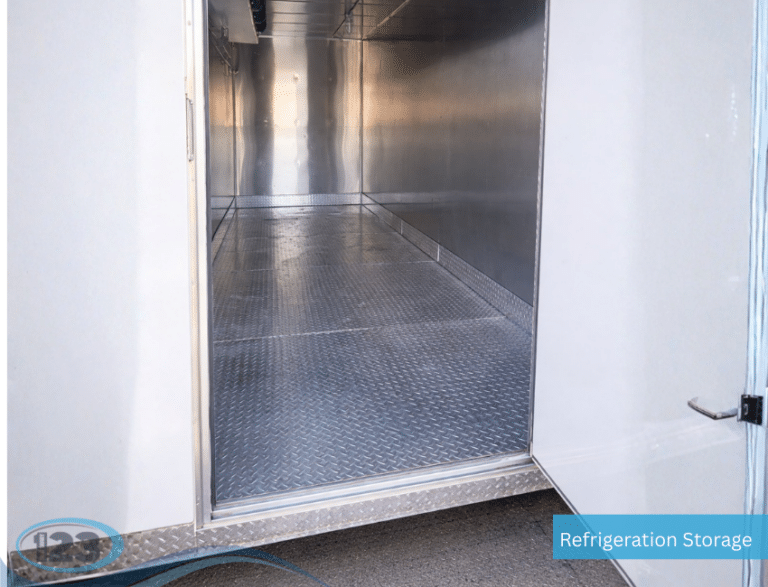
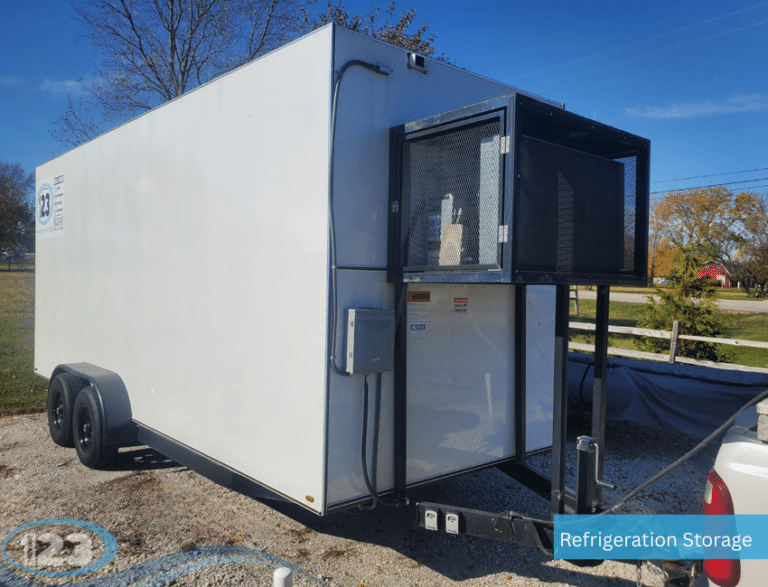
Meat-storage records should show that refrigerated products remained at or below 41°F and frozen products remained near 0°F throughout receiving, storage, and corrective-action periods. IcefoxEquipment supplies temporary refrigeration with digital temperature monitoring, precise controls, and 24/7 support for food-service operations across the United States.
The supplied sources do not establish one universal federal schedule requiring every meat operation to record temperatures at the same 1-hour, 2-hour, or daily interval. Your required frequency should therefore come from your approved HACCP plan, local health department, regulatory authority, customer specification, or facility policy, while the storage limits remain at or below 41°F for refrigerated food and approximately 0°F for frozen food.
Quick Answer
A useful meat-storage log records the date, time, unit identification, displayed air temperature, product temperature when required, employee initials, and any corrective action. Refrigerated meat should remain at or below 41°F, while frozen inventory should remain near 0°F. Record checks at every interval required by your HACCP plan or inspector.
Quick Facts
- Refrigerated meat storage should remain at or below 41°F.
- Frozen meat storage should remain at approximately 0°F.
- IcefoxEquipment refrigeration trailers can operate across an approximately -20°F to 70°F control range.
- Available equipment includes 12-ft, 20-ft, 24-ft, and 40-ft refrigeration options.
- Some trailers require 220V, single-phase power at approximately 40–60 amps.
- IcefoxEquipment offers 24/7 support at 800-245-5216.
Key Takeaways
- A meat-cooler log should demonstrate that refrigerated inventory remained at or below 41°F.
- A freezer log should demonstrate that frozen inventory remained near 0°F.
- Each of the 2 temperature records should identify the refrigeration unit, time, employee, reading, and corrective action.
- A digital display is useful, but at least 1 documented verification method should be defined by your food-safety plan.
- Door traffic, coil ice, direct sun, and power below the required 40–60 amps can affect logged temperatures.
What Information Belongs on a Meat-Storage Temperature Log?
A meat-storage log should contain enough information to reconstruct conditions for every recorded 41°F cooler reading or 0°F freezer reading. At minimum, identify the date, exact time, refrigeration unit, displayed temperature, person completing the check, product category, and action taken when the reading is outside the approved range.
The unit identification matters when a site has 2 or more refrigerated rooms, trailers, containers, or reach-in cabinets. Writing “cooler okay” is weak documentation because an inspector or manager cannot determine whether the reading came from the 12-ft trailer, the 20-ft trailer, or a permanent walk-in.
A complete record should also distinguish between the unit’s air reading and a product reading when 2 different measurement methods are used. The digital display shows refrigeration conditions, while a properly performed product check may show whether the meat itself remained within the approved 41°F refrigerated-storage limit.
What Should a Basic Log Include?
A practical log can contain the following 9 fields:
- Date of the check.
- Exact time of the check.
- Refrigeration-unit identification.
- Product or meat category.
- Displayed air temperature.
- Product temperature when required.
- Name or initials of the employee.
- Corrective action taken.
- Supervisor verification.
These 9 fields create a clearer record than a sheet containing only temperatures. In our experience, the corrective-action column is the most neglected field, even though it becomes the most important part of the record when a cooler exceeds 41°F or a freezer moves away from approximately 0°F.
How Often Must Meat Temperatures Be Logged?
The supplied IcefoxEquipment and uploaded documents do not specify a single mandatory interval such as every 1 hour, every 2 hours, or exactly 1 time per day for every operation. Logging frequency should follow the facility’s HACCP plan, local health department instructions, customer requirements, and the risks created by the specific meat product and storage system.
At a minimum, your written procedure should identify checks at operational control points such as receiving, startup, shift changes, opening, closing, an alarm, a power interruption, or any reading above 41°F. The exact number of checks should be written into the approved procedure rather than left to employee judgment.
IcefoxEquipment’s sanitation material connects documented monitoring with daily cleaning and food separation during a 5-day refrigeration-trailer deployment. That supports keeping a repeatable written schedule throughout the entire rental rather than checking the unit only on delivery day.
Our practical view is simple: a 24-hour refrigeration operation should not depend on one undocumented glance at the display. Your chosen frequency must be sufficient to identify a failing unit before a prolonged temperature deviation affects a full load of meat.
Which Temperatures Should Be Recorded?
Record refrigerated storage against the sourced limit of 41°F or below and frozen storage against the sourced target of approximately 0°F. The same record should identify whether the reading represents cooler air, freezer air, packaged meat, exposed product, or another measurement point.
IcefoxEquipment refrigeration trailers provide adjustable temperature control across an approximately -20°F to 70°F range, but the equipment’s available range does not replace the correct setpoint for the stored product. Meat assigned to refrigerated storage still needs a setpoint and monitoring procedure designed to maintain 41°F or below.
A freezer capable of reaching below 0°F may provide operating margin during door openings and loading. However, the supplied sources describe approximately 0°F as the frozen-storage reference, so do not substitute a different number in the log unless the product specification or approved plan requires it.
What Is the Difference Between Air and Product Temperatures?
Air temperature and product temperature are 2 related but different measurements. The unit display shows conditions near its sensor, while a product measurement addresses the temperature of the meat or the environment immediately surrounding it.
A digital display is valuable because IcefoxEquipment trailers include precise controls and digital monitoring. Still, a display reading of 39°F does not automatically prove that every densely packed case, pallet, or container is also at 39°F, especially immediately after loading or frequent door activity.
For that reason, your HACCP plan should define which of the 2 measurements employees must take, where they take it, and when a second verification is necessary. The supplied materials support monitoring but do not specify a universal probe method for every meat facility.
How Should Receiving Temperatures Be Documented?
A receiving record should connect the incoming meat load to at least 1 temperature reading, delivery time, supplier or carrier, employee, and disposition decision. The record should also show whether the meat was transferred into storage maintained at or below 41°F or into frozen storage near 0°F.
Receiving and storage logs serve different purposes. The first reading documents the condition of the meat upon arrival, while later 41°F or 0°F records document the performance of the refrigerated storage unit after acceptance.
When a delivery is moved into a 12-ft, 20-ft, 24-ft, or 40-ft temporary refrigeration unit, note the specific unit identifier. IcefoxEquipment offers several sizes, so a generic reference to “the trailer” may be inadequate when multiple units are operating on one site.
What Corrective Actions Should the Log Record?
A corrective-action entry should state what happened after an unacceptable 41°F cooler reading or a freezer deviation from approximately 0°F. Record the time discovered, second reading, product evaluation, equipment check, inventory movement, supervisor notification, and final disposition.
Do not write only “fixed” in the corrective-action column. A stronger entry might document that the reading was verified after 1 repeat check, door activity was reduced, affected meat was transferred to another unit, and IcefoxEquipment support was contacted at 800-245-5216.
The refrigerated-trailer installation material identifies at least 3 operational causes of poor temperature performance: coil ice buildup, frequent door openings, and insufficient amperage. The same source recommends removing coil ice, keeping doors closed, and increasing available service toward 60 amps when the breaker or electrical supply is contributing to the problem.
How Can Power Problems Affect Meat-Storage Logs?
Some 12-ft freezer trailers and 20-ft refrigerated trailers require 220V, single-phase service at approximately 40 amps. Another uploaded installation document identifies a broader 40–60-amp requirement and states that 50–60 amps may be preferred when breaker trips occur.
When electrical service is undersized, the refrigeration unit may cycle incorrectly, trip the breaker, or fail to recover after loading. A temperature log may then show a gradual rise toward or above 41°F, but the real root cause is the power source rather than the thermostat.
We consider power verification part of temperature-control documentation because the 220V circuit, breaker size, connection, and generator capacity directly affect refrigeration performance. Log repeated breaker trips beside the temperature deviation instead of treating the electrical event as unrelated.
How Do Door Openings and Airflow Affect Logged Temperatures?
Every door opening allows conditioned air to escape and warmer air to enter, which can affect readings even when the refrigeration system is functioning. IcefoxEquipment’s materials specifically identify frequent door openings as a challenge during hot-weather operation, particularly when the unit is in direct sun.
Keep meat away from fans and avoid packing product tightly against walls or airflow paths. The sourced materials do not provide a universal clearance in inches, but they do establish airflow management as part of compliant refrigeration operation during a 5-day rental.
A single elevated reading after heavy loading should not be ignored. Record the time, door activity, product movement, and follow-up reading so the 41°F limit can be evaluated with a complete operational history.
What Records Should Be Available for an Inspection?
Prepare at least 5 categories of documentation: receiving temperatures, cooler logs, freezer logs, corrective-action records, and equipment or power-event records. Together, these materials show that meat was accepted, stored, monitored, and addressed when conditions changed.
Health departments commonly review temperature control, sanitation, storage practices, and documentation before approving temporary food-storage operations. IcefoxEquipment notes that faster approvals are associated with preparing records before equipment arrives rather than waiting until the first inspection.
The supplied sources do not state one universal record-retention period of 30 days, 90 days, or 1 year. Retain logs for the period required by your regulator, HACCP plan, corporate policy, customer contract, insurer, or product-control program.
By the Numbers
| Logging or equipment factor | Source-supported figure |
|---|---|
| Refrigerated meat-storage limit | At or below 41°F |
| Frozen meat-storage reference | Approximately 0°F |
| Trailer control capability | Approximately -20°F to 70°F |
| Common trailer lengths | 12 ft and 20 ft |
| Common container lengths | 20 ft, 24 ft, and 40 ft |
| Example electrical supply | 220V, single phase |
| Example amperage requirement | 40–60 amps |
| IcefoxEquipment support | 24/7 |
| Company experience | 23 years |
These 9 figures provide operating references, but they do not create a universal logging interval. The inspection authority and approved HACCP plan determine how often your operation must document the sourced 41°F and approximately 0°F storage conditions.
What Is a Step-by-Step Logging Process?
Use this 8-step process for each scheduled meat-storage check:
- Confirm the correct refrigeration unit and its identification number.
- Read the digital display without leaving the door open.
- Record the exact time and displayed temperature.
- Compare the reading with 41°F for refrigerated storage or approximately 0°F for frozen storage.
- Take a product reading when the approved procedure requires one.
- Record employee initials and product category.
- Complete corrective action immediately when the reading is unacceptable.
- Obtain supervisor verification when required by the facility’s plan.
This 8-step process gives each reading context. It is stronger than writing a number alone because it identifies the unit, product, employee, limit, and action associated with the 41°F or 0°F reading.
What Common Temperature-Logging Mistakes Should You Avoid?
Mistake 1: Recording a Temperature Without a Time
A reading of 38°F has limited value when no one knows whether it was taken before loading, after a power interruption, or at the end of a 24-hour operating period. Record the exact time.
Mistake 2: Using One Log for Several Units
A site using 2 trailers should identify both units separately. Otherwise, an elevated reading cannot be connected to the correct cooler, freezer, circuit, or load.
Mistake 3: Logging Only the Thermostat Setting
A thermostat set to 35°F is not the same as a measured storage temperature of 35°F. Record the actual displayed or measured result required by the procedure.
Mistake 4: Leaving Corrective Action Blank
When a cooler exceeds 41°F, document what happened next. A blank field fails to show whether meat was evaluated, moved, rejected, held, or otherwise controlled.
Mistake 5: Ignoring Electrical Events
A 40-amp breaker trip or unstable 220V service may explain a temperature rise. Record the electrical event beside the affected cooler reading.
Meat-Storage Temperature Log Checklist
- ☐ Identify every 12-ft, 20-ft, 24-ft, or 40-ft storage unit.
- ☐ Confirm refrigerated meat remains at or below 41°F.
- ☐ Confirm frozen meat remains near 0°F.
- ☐ Record the date and exact time for every scheduled check.
- ☐ Distinguish the display reading from a product reading.
- ☐ Record employee initials and supervisor review.
- ☐ Document every corrective action and follow-up reading.
- ☐ Note breaker trips, door activity, coil ice, or loss of 220V power.
- ☐ Keep IcefoxEquipment’s 800-245-5216 support number with the log.
- ☐ Retain records for the period required by your approved plan or authority.
Request a Quote
Request a quote today for industry-leading refrigeration, modular facilities, and mobile equipment solutions. Ice Fox Equipment provides rapid deployment, flexible rental and leasing options, and dependable support for construction, healthcare, food service, emergency response, and industrial operations. Contact our team now for a customized, no-obligation quote.
Frequently Asked Questions
IcefoxEquipment’s supplied materials do not impose one universal 1-hour, 2-hour, or daily interval. The facility must follow its HACCP plan, local health department, customer standard, and product policy. IcefoxEquipment equipment supports digital monitoring, while refrigerated meat should remain at or below 41°F.
Record the actual measured or displayed reading and compare it with the sourced limit of 41°F or below. IcefoxEquipment trailers include digital temperature-monitoring displays, but your procedure should specify whether employees also take product readings and when a second measurement is required.
The uploaded kitchen and refrigeration material identifies approximately 0°F for frozen storage. IcefoxEquipment refrigeration systems may operate across a broader range of approximately -20°F to 70°F, but the correct setpoint and action limit should follow the stored product and approved operating plan.