
How Hospitals Store Vaccines and Pharmaceuticals in Temporary Modular Pods | IceFoxEquipment
Article Plans
Last updated: August 12, 2026
Hospitals use temporary modular refrigeration when permanent pharmacy cold storage is unavailable, undergoing construction, overloaded, or part of an emergency continuity plan. IceFoxEquipment offers COOLBOX STRUCTURES™ in a popular 20 × 8.5-ft configuration, with structures available up to 50 ft and refrigeration products marketed specifically to hospitals and pharmaceutical operations. Review IceFoxEquipment temporary refrigeration before developing the hospital site plan.
The critical distinction is that a 20 × 8.5-ft modular Pod is controlled infrastructure, not automatic approval for every vaccine or medication. CDC directs vaccine providers to follow product-specific storage instructions and use suitable storage and monitoring equipment; the hospital pharmacy or vaccine program must therefore approve the exact equipment placed inside or used with the Pod.
Quick Answer
Hospitals can use temporary modular Pods to create secure, temperature-controlled pharmaceutical storage during renovation, capacity expansion, equipment failure, or emergency response. IceFoxEquipment offers structures from the popular 20 × 8.5-ft format up to 50 ft, but vaccines must still be stored using hospital-approved equipment, monitoring, SOPs, and product-specific temperature requirements.
Quick Facts
- IceFoxEquipment’s most popular COOLBOX STRUCTURES™ size is 20 × 8.5 ft, with configurations available up to 50 ft.
- Published IceFox temperature-controlled structures can range approximately -20°F to 50°F, depending on configuration.
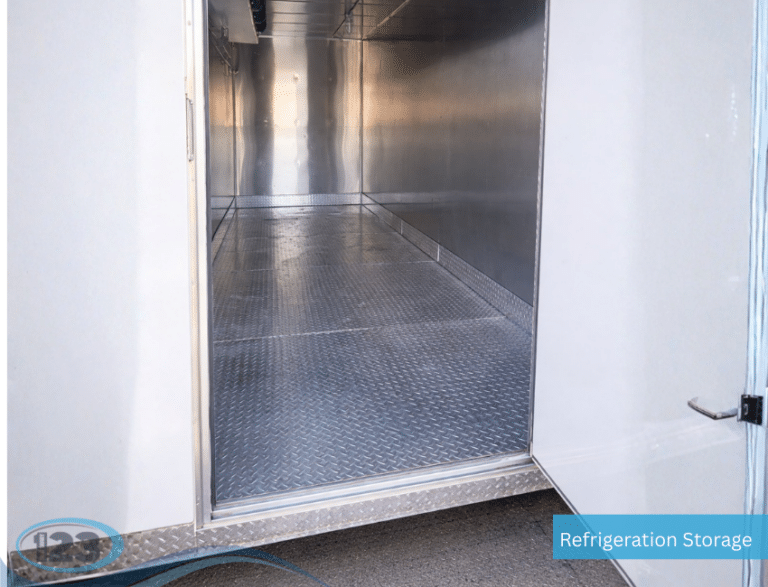
- COOLBOX structures use a .040 aluminum exterior with stainless-steel interior surfaces.
- IceFoxEquipment advertises pharmaceutical refrigeration starting from $1,295.
- A separate 20-ft refrigerated container is listed internally at $2,495–$2,995 with approximately 1,000–1,100 cubic ft of capacity.
- IceFoxEquipment advertises 24/7 refrigeration support at 800-245-5216.
Key Takeaways
- A 20 × 8.5-ft modular Pod can provide temporary pharmacy infrastructure, but it does not by itself prove compliance for a particular vaccine.
- IceFox publishes an equipment capability of approximately -20°F to 50°F, but hospital staff must use the actual storage requirement stated for each pharmaceutical product.
- Hospital vaccine planning should include temperature monitoring, calibration documentation, written procedures, excursion response, and backup storage in addition to the physical 20-ft or larger modular space.
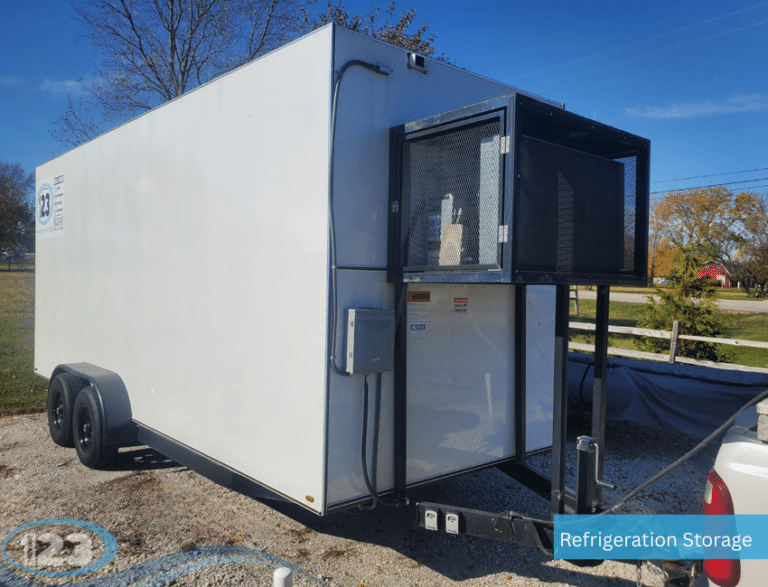
- Backup power should be planned before loading inventory because a documented 20-ft refrigerated trailer requires 220V single-phase at 40–60 amps, while reefer containers use different electrical infrastructure.
How Do Hospitals Use Temporary Modular Pods for Pharmaceutical Storage?
Hospitals generally use modular refrigeration as temporary infrastructure around an approved cold-chain process. A 20 × 8.5-ft COOLBOX can provide additional controlled space during renovation, emergency repairs, construction, pharmacy expansion, or inventory surges, while IceFoxEquipment specifically markets temporary refrigeration to hospitals and pharmaceutical companies.
For vaccines, the safer planning model is to treat the 20-ft or larger Pod as the controlled room or modular shell and then verify that the actual vaccine-storage equipment and monitoring arrangement inside meet the hospital’s requirements. CDC’s current guidance specifically discusses purpose-built vaccine units, continuous monitoring, calibration documentation, emergency procedures, and product-specific handling.
For pharmaceuticals other than vaccines, the same 20 × 8.5-ft modular space can support temporary cold-chain operations only when each product is stored according to its approved labeling and pharmacy procedures. FDA guidance does not support treating one general refrigeration set point as appropriate for every medication.
What Temperature Should a Hospital Modular Pod Maintain?
There is no single temperature that covers every vaccine and pharmaceutical. IceFoxEquipment publishes a broad equipment capability of approximately -20°F to 50°F, but CDC directs vaccine providers to use product-specific storage information from the manufacturer, making the required temperature a pharmacy decision before the modular unit is configured.
The internal IceFox fleet guide separately lists 12-ft and 20-ft refrigerated trailers at 34°F–41°F and a 20-ft freezer trailer at 0°F to -10°F. Those are equipment specifications, not universal vaccine-storage temperatures, and they should never override the labeled requirements for the product being stored.
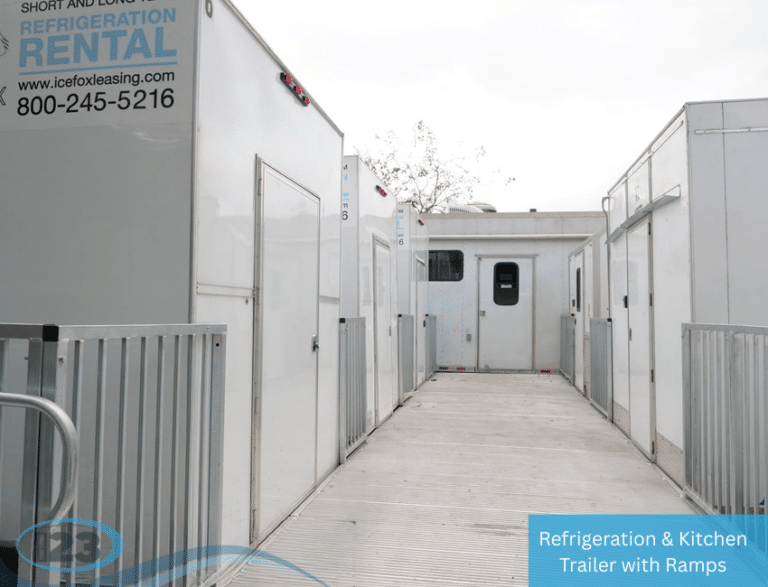
This distinction is especially important for a 50-ft hospital modular installation carrying multiple product classes. If the hospital needs several temperature zones, the facility should determine whether separate approved storage units, separate modular rooms, or another validated configuration is required rather than assuming the entire structure should operate at one temperature.
What Monitoring Should Be Inside a Temporary Vaccine Storage Pod?
A hospital should plan temperature monitoring before the 1st vaccine shipment enters temporary storage. CDC guidance describes continuous temperature monitoring with digital data loggers in vaccine-storage environments and addresses calibration documentation, proper device placement, backup monitoring, and temperature-excursion records.
That means a COOLBOX STRUCTURES™ Pod with a published -20°F to 50°F equipment capability should not be marketed as vaccine-ready merely because its controller shows a temperature. The hospital should verify the monitoring system, probe location, calibration status, alarm process, record retention, and response procedure required by its vaccine program.
IceFoxEquipment’s broader refrigeration materials describe integrated temperature-monitoring capabilities on some mobile cold-storage products, but the available sources do not establish that every 20 × 8.5-ft COOLBOX includes a CDC/VFC-compliant digital data logger package. That feature should therefore be confirmed on the individual quote and equipment specification.
By the Numbers
| Hospital cold-storage planning item | Source-supported figure |
|---|---|
| Popular COOLBOX structure | 20 × 8.5 ft |
| Maximum advertised COOLBOX length | Up to 50 ft |
| Published IceFox equipment range | -20°F to 50°F |
| COOLBOX aluminum exterior | .040 in |
| 20-ft refrigerated container | 1,000–1,100 cu. ft. |
| 40-ft refrigerated container | 2,200–2,400 cu. ft. |
| Refrigeration pricing | Starting from $1,295 |
| Equipment support | 24/7 |
These 8 figures help facilities teams compare physical infrastructure, but they do not determine whether a vaccine can be stored in a particular configuration. That decision still follows product-specific guidance, hospital policy, monitoring requirements, and the approved cold-chain plan.
How Should a Hospital Lay Out a Temporary Pharmaceutical Pod?
A good 20 × 8.5-ft hospital layout separates product storage from door traffic, staging, monitoring equipment, maintenance access, and emergency transfer pathways. CDC guidance emphasizes organized vaccine management and emergency procedures, while FDA manufacturing guidance similarly recognizes the need for orderly material placement and controls that reduce mix-ups and contamination.
We recommend avoiding a design where every available inch of a 20-ft or 50-ft Pod becomes inventory space. A pharmacy team needs practical access to storage units, monitoring devices, lot-controlled inventory, quarantined product, and emergency transfer supplies without repeatedly disturbing the cold-storage environment.
For hospitals needing larger temporary capacity, IceFoxEquipment lists 20-ft refrigerated containers at approximately 1,000–1,100 cubic ft and 40-ft containers at approximately 2,200–2,400 cubic ft. These container figures belong to the reefer line rather than COOLBOX STRUCTURES™, so the formats should be compared separately during planning.
What Power and Backup Infrastructure Should Hospitals Plan?
Power is a cold-chain issue, not simply a facilities issue. A documented 12-ft refrigeration trailer uses 220V single-phase at 30–40 amps, while the 20-ft refrigeration configuration uses 220V single-phase at 40–60 amps; the exact COOLBOX or modular system must be checked against its own equipment specifications.
The larger reefer-container configurations are documented at 220V–480V, 3-phase, 30 amps, showing why a hospital cannot assume one temporary electrical connection will support every cold-storage format. Electrical capacity, cable routing, transfer power, generator strategy, and qualified installation should be resolved before regulated product enters the unit.
CDC recommends an emergency vaccine-storage plan that addresses alternate storage, power interruption, temperature monitoring, and staff responsibilities. In a hospital deployment using a 20-ft temporary unit, that means the pharmacy and facilities teams should agree on what happens when primary power fails before the first temperature-sensitive shipment is moved.
How Do You Set Up Temporary Hospital Vaccine Storage Step by Step?
Use this 8-step process before loading vaccines or pharmaceuticals into a temporary modular refrigeration area.
- Identify every product class. Determine which inventory will enter the 20-ft, 40-ft, 50-ft, or other temporary configuration and obtain the approved storage instructions for each product.
- Define the required temperature environment. Compare the product requirement with IceFoxEquipment’s published -20°F to 50°F equipment capability without assuming the broad equipment range equals the approved product range.
- Select the temporary infrastructure. Consider the common 20 × 8.5-ft COOLBOX, configurations up to 50 ft, or separate refrigerated containers according to inventory and workflow.
- Approve the actual storage hardware. If vaccines are involved, have the hospital vaccine program verify the purpose-built storage and monitoring equipment placed inside the 20-ft or larger modular area.
- Set up monitoring and documentation. Verify continuous monitoring, calibration records, alarm procedures, and excursion response before the 1st vaccine load arrives.
- Verify electrical service. A related 20-ft refrigeration trailer may require 40–60 amps at 220V single-phase, while reefer containers require different service.
- Test the emergency plan. Keep alternate storage and power procedures available before the 24/7 temporary unit becomes part of active hospital inventory.
- Document turnover. Record the approved equipment, temperature-control plan, responsible staff, emergency contacts, and 800-245-5216 equipment-support number before pharmacy operations begin.
Hospitals can review IceFoxEquipment pharmaceutical refrigeration while developing the 20-ft or larger temporary-storage specification, but the hospital’s vaccine coordinator, pharmacy team, facilities staff, and compliance personnel should approve the operating plan.
What Common Hospital Cold-Storage Mistakes Should You Avoid?
Mistake 1: Assuming “Pharmaceutical Refrigeration” Means Every Vaccine Is Approved
IceFoxEquipment markets refrigeration to pharmaceutical companies and hospitals, but that does not mean every 20 × 8.5-ft Pod or rental unit automatically satisfies every vaccine program. CDC specifically tells vaccine providers to evaluate appropriate storage equipment and product-specific requirements.
Mistake 2: Using the Pod Controller as the Only Temperature Record
A modular system may operate within IceFoxEquipment’s published -20°F to 50°F equipment range, but CDC vaccine guidance calls for appropriate temperature-monitoring devices and documentation. A controller display alone should not be confused with the hospital’s required vaccine-monitoring record.
Mistake 3: Skipping the Backup Storage Plan
A 20-ft refrigeration system can lose cooling when electrical service fails, regardless of its normal performance. CDC’s emergency-planning resources specifically address alternate vaccine storage and procedures for outages and temperature excursions.
Mistake 4: Loading Inventory Before Qualification Is Complete
Even when a 20 × 8.5-ft structure has been delivered and powered, the hospital should not treat physical installation as the final approval step. Storage equipment, monitoring, procedures, product requirements, backup arrangements, and responsible staff should be confirmed before regulated inventory is moved.
Hospital Pharmaceutical Storage Decision Checklist
- Confirm whether a 20 × 8.5-ft COOLBOX or a configuration up to 50 ft fits the hospital workflow.
- Confirm the actual product requirement before applying the published -20°F to 50°F equipment capability.
- Verify hospital approval for the vaccine storage equipment placed inside the 20-ft or larger temporary area.
- Confirm monitoring, calibration documentation, alarms, and excursion procedures before the 1st vaccine load.
- Verify electrical service, including the documented 30–40-amp or 40–60-amp refrigeration requirements where applicable.
- Establish backup storage and power procedures before beginning 24/7 operation.
- Keep inventory organized so pharmacy personnel can control product status inside a 20-ft, 40-ft, or 50-ft temporary installation.
- Keep IceFoxEquipment’s 24/7 support number, 800-245-5216, available to pharmacy and facilities personnel.
Request a Quote
Request a quote today for industry-leading refrigeration, modular facilities, and mobile equipment solutions. Ice Fox Equipment provides rapid deployment, flexible rental and leasing options, and dependable support for construction, healthcare, food service, emergency response, and industrial operations. Contact our team now for a customized, no-obligation quote.

Frequently Asked Questions
A hospital can use a 20 × 8.5-ft or larger IceFoxEquipment modular Pod as temporary controlled infrastructure, but the Pod itself should not be assumed to satisfy every vaccine-storage requirement. The hospital must verify the actual vaccine storage equipment, monitoring, product-specific conditions, SOPs, and program requirements before inventory is loaded.
IceFoxEquipment publishes a broad equipment capability of approximately -20°F to 50°F, while its internal fleet guide lists certain 12-ft and 20-ft refrigerated trailers at 34°F–41°F and a separate 20-ft freezer at 0°F to -10°F. Hospitals must still follow each pharmaceutical product’s approved storage requirements.
IceFoxEquipment advertises refrigeration leasing and rental starting from $1,295. The newer internal guide separately lists a 20-ft refrigerated container at $2,495–$2,995 and a 40-ft refrigerated container at $2,995–$3,995. Final hospital pricing depends on the selected configuration, delivery, utilities, duration, and project scope.