
How Do Craft Breweries Add Temporary Cold Storage? An IcefoxEquipment Guide
Article Plans
Craft breweries add temporary cold storage by renting mobile walk-in coolers, refrigerated trailers, freezer trailers, or refrigerated containers sized for their peak inventory. IcefoxEquipment provides portable refrigeration for brewery expansions, seasonal production, cooler failures, packaging surges, and construction projects across the United States.
A temporary refrigeration plan should account for at least 5 factors: product temperature, keg count, packaged-beer volume, electrical service, and delivery access. The equipment must support the brewery’s cold chain without blocking forklifts, delivery vehicles, loading docks, or daily production routes.
Quick Answer: Craft breweries can add temporary cold storage with 12-foot or 20-foot refrigerated trailers, larger 20-foot or 40-foot refrigerated containers, or portable walk-in cooler pods. A 20-foot refrigerated trailer has a documented planning range of $1,495–$2,395, while standard cooler storage operates around 34°F–41°F.
Quick Facts
- A 12-foot refrigerated trailer has a documented rental range of $1,295–$2,195.
- A 20-foot refrigerated trailer has a documented rental range of $1,495–$2,395.
- A 40-foot refrigerated container has a documented range of $2,995–$3,995.
- IcefoxEquipment offers published sizes from 7 × 12 feet through 8 × 40 feet.
- A brewery traffic-planning example on the website references temporary storage for 200–500 kegs.
- Selected standard units require 208–230V, single-phase, 30-amp power.
Key Takeaways
- A brewery storing 200–500 kegs should calculate peak inventory rather than average daily inventory before selecting a unit.
- Refrigerated beer, kegs, and ingredients can be held in equipment operating within a documented 34°F–41°F cooler range.
- A 20-foot trailer may work for moderate overflow, while a 40-foot refrigerated container provides more space for long production runs.
- The brewery should verify whether the delivered unit requires 30 amps or 40–60 amps before arranging electrical work.
- Projects lasting more than 6, 12, or 24 months should request preferred long-term pricing.
Why Do Craft Breweries Need Temporary Cold Storage?
Craft breweries use temporary refrigeration when permanent cooler capacity cannot hold peak inventory or becomes unavailable. Common triggers include seasonal releases, tank-room construction, packaging-line installation, cooler repair, festivals, distributor pickups, and an inventory surge of 200–500 kegs.
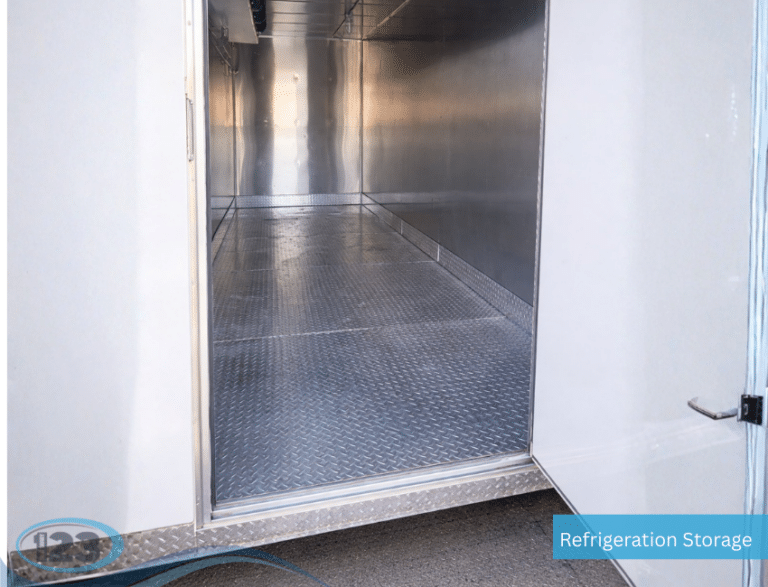
A portable cooler gives you usable storage without waiting for a permanent room to be designed and built. IcefoxEquipment describes mobile units used for ingredients, kegs, packaged beer, and specialty products during brewery expansion projects.
Temporary capacity is particularly useful when the production schedule and construction schedule overlap for 6 months or longer. Instead of forcing brewers to reduce output, a rented unit can preserve receiving, conditioning, packaging, and shipment workflows while the permanent refrigeration system is offline.
In our experience, most breweries do not run short of total square footage first. They run short of organized, temperature-controlled positions for 1 specific category, such as finished kegs awaiting pickup or canned beer waiting for distributor allocation.
What Type of Temporary Cold Storage Should a Brewery Use?
The best unit depends on your inventory format, available space, rental duration, and electrical supply. IcefoxEquipment offers mobile walk-in coolers, refrigeration trailers, refrigerated containers, and configurations ranging from 7 × 12 feet to 8 × 40 feet.
When Does a 12-Foot Refrigerated Trailer Work?
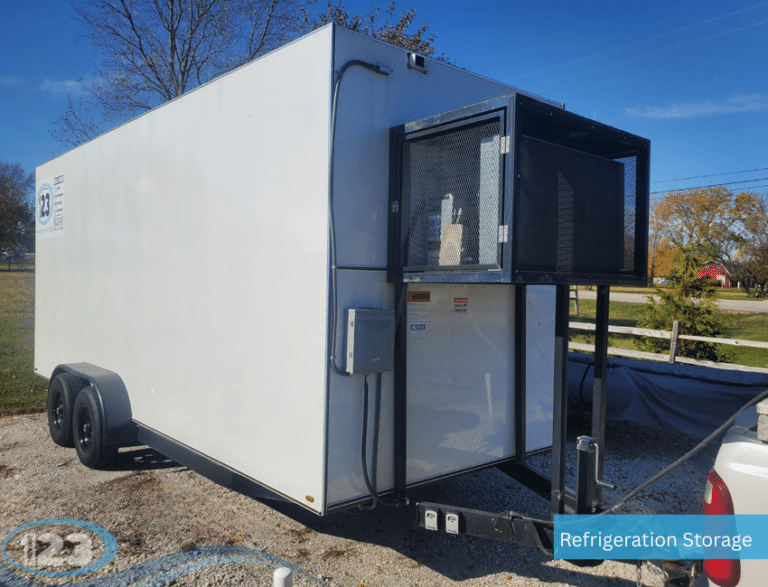
A 12-foot refrigerated trailer is suited to smaller overflow requirements, packaged releases, ingredient storage, or a limited number of staged kegs. Its documented planning rate is $1,295–$2,195, making it the lowest-priced refrigeration option in the uploaded rental guide.
The smaller footprint can be useful where a brewery has only 1 narrow service lane or limited rear-yard space. However, selecting a small trailer solely to reduce rent can create daily handling problems when cases and kegs must be moved repeatedly.
When Is a 20-Foot Refrigerated Trailer Better?
A 20-foot refrigerated trailer provides more room for palletized cans, packaged beer, raw materials, and keg inventory. The documented rate is $1,495–$2,395, which overlaps the 12-foot range but provides a longer interior.
For many breweries, 20 feet is a practical middle ground. It adds meaningful storage without occupying the space required by an 8 × 40-foot container.
When Should a Brewery Use a Refrigerated Container?
A 20-foot refrigerated container has a documented range of $2,495–$2,995, while a 40-foot refrigerated container ranges from $2,995–$3,995. Containers are useful for larger inventories, longer rentals, and sites with room for delivery and placement equipment.
A 40-foot unit can hold more product but requires more site preparation and maneuvering room. Before selecting one, confirm a 12-foot-wide gate, 14 feet of vertical clearance, and approximately 60 feet of turning radius.
Does the Brewery Need Separate Cooler and Freezer Space?
Most finished beer storage fits a cooler application, while certain ingredients or specialty products may require a different setting. IcefoxEquipment publishes available unit settings of 35°F, 0°F, -10°F, and -20°F, allowing separate temperature zones when the inventory calls for them.
Do not place products with different storage requirements into 1 shared unit simply to reduce the trailer count. A 35°F cooler and a -10°F freezer solve different operational problems.
By the Numbers: Brewery Cold Storage Options
| Temporary storage option | Published or documented figure | Typical planning use |
|---|---|---|
| 12-foot refrigerated trailer | $1,295–$2,195 | Small overflow or short runs |
| 20-foot refrigerated trailer | $1,495–$2,395 | Kegs, packaged beer, ingredients |
| 20-foot refrigerated container | $2,495–$2,995 | Larger or longer-term projects |
| 40-foot refrigerated container | $2,995–$3,995 | High-volume inventory |
| Cooler range | 34°F–41°F | Standard refrigerated storage |
| Brewery inventory example | 200–500 kegs | Peak-production planning |
| Standard unit power | 208–230V, 30 amps | Selected 7 × 12 and 7 × 20 units |
| Emergency response | Within 12 hours in many cases | Cooler failure or urgent demand |
These 8 figures provide a useful starting point, but the final quote depends on the ZIP code, rental dates, unit availability, freight distance, access conditions, electrical connection, and service package.
How Should a Brewery Calculate the Required Capacity?
Start with peak inventory, not average inventory. A brewery that normally holds 200 kegs but reaches 500 kegs before seasonal distribution should size for the 500-keg peak or arrange more frequent outbound pickups.
Separate the inventory into at least 4 groups: full kegs, packaged cans or bottles, ingredients, and returns or empty containers. Each group uses floor space differently and may require different racks, pallets, aisles, and handling equipment.
Next, calculate the maximum product held during the busiest 24-hour period. Include packaged beer waiting for pickup, product waiting for labeling, distributor orders, and stock carried through weekends or holidays.
Leave enough room for at least 1 safe working aisle. A trailer filled door-to-door may have impressive theoretical capacity, but poor access increases labor time and causes longer door openings.
My opinion is direct: skip the smallest available trailer when the projected inventory nearly fills it on day 1. The apparent rental savings usually disappear through extra handling, disorganized stock, and repeated door-open time.
What Temperature Should the Brewery Specify?
The required temperature depends on the product and the brewery’s production specifications. The uploaded pricing guide identifies 34°F–41°F as the operating range for refrigerated trailers, while IcefoxEquipment publishes a standard 35°F setting for refrigeration.
The selected temperature should be written into the rental request before delivery. “Cold” is not a sufficient specification when a unit may be configured at 35°F, 0°F, -10°F, or -20°F.
Plan for normal temperature movement during receiving and picking. IcefoxEquipment notes that door opening and closing may create a 5°F variation, which is another reason to stage orders before opening the door.
Assign 1 person per shift to review the display, record the temperature, and report alarms or breaker trips. A simple responsibility chain is more dependable than assuming someone else checked it.
What Electrical Service Does Temporary Refrigeration Need?
Selected IcefoxEquipment 7 × 12 and 7 × 20 units require 208–230V, single-phase, 30-amp service. Uploaded installation guidance for other refrigerated trailers lists 220V, single-phase, 40–60 amps, so the exact delivered unit’s data plate must control the installation.
A licensed electrician should verify voltage, phase, breaker size, grounding, disconnect type, and cable length before the delivery date. For cable runs up to 50 feet, the uploaded power guide calls for 6 AWG copper.
Where utility power is unavailable or unreliable, the uploaded guidance recommends a 25–30 kW generator for a standard refrigeration load. Available capacity should exceed the calculated requirement by 20%–25% to help handle compressor startup and cycling.
Do not run an unplanned 50-foot extension across a forklift route or public walkway. Position the unit close enough to its approved connection that cables can be protected from traffic, standing water, sharp edges, and vehicle tires.
How Should IcefoxEquipment Position the Unit?
IcefoxEquipment should receive a site plan showing the building, loading dock, utilities, gates, traffic routes, and proposed refrigeration location. A 12-foot gate, 14-foot vertical clearance, and approximately 60-foot turning radius may be needed for delivery.
Place the cooler on stable, level concrete, asphalt, or properly compacted gravel. A unit intended to run for 6, 12, or 24 months should not be placed on soft turf that can settle after rain.
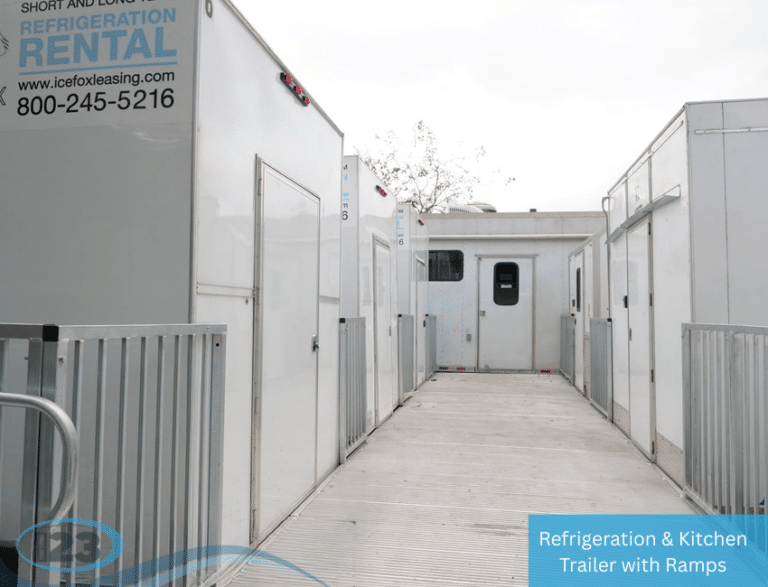
Trailer floors may sit 24–36 inches above grade, so stairs, handrails, platforms, or ramps may be required. The access system must also accommodate the weight and dimensions of kegs, carts, pallet jacks, and packaged-beer loads.
Keep the unit close enough to production to reduce handling but far enough from the loading dock to avoid blocking 2-way vehicle movement. The right location usually saves more labor than choosing a trailer that is a few feet shorter.
For additional equipment details, review the IcefoxEquipment mobile walk-in cooler options before requesting a site-specific quote. The company describes mobile coolers as suitable for temporary, seasonal, and emergency use with quick installation and precise temperature controls.
Step-by-Step: How Does a Craft Brewery Add Cold Storage?
Use this 7-step process before the delivery truck reaches the brewery.
- Count peak inventory. Record the highest expected quantity of kegs, cases, pallets, and ingredients, including a possible 200–500-keg seasonal peak.
- Select the temperature. Specify a target within the documented 34°F–41°F cooler range or another approved setting.
- Choose the unit. Compare 12-foot, 20-foot, and 40-foot storage options.
- Confirm power. Verify whether the selected model requires 30 amps or 40–60 amps.
- Prepare the site. Check the 12-foot gate, 14-foot clearance, and 60-foot turning area.
- Create the loading plan. Divide the interior into at least 4 zones for kegs, packaged beer, ingredients, and outbound orders.
- Test before loading. Confirm that the unit has reached its specified temperature before moving 1 pallet or keg inside.
A brewery facing an urgent cooler failure should call 800-245-5216 with its ZIP code, requested temperature, access details, power availability, and estimated inventory. IcefoxEquipment states that emergency delivery may occur within 12 hours in many cases, subject to availability and logistics.
What Common Mistakes Should Breweries Avoid?
Mistake 1: Sizing Only for Current Inventory
A brewery holding 200 kegs today may have 500 kegs after the next packaging run. Size the unit around the expected peak, not the count observed during a slow week.
Mistake 2: Failing to Verify the Electrical Data Plate
One standard model may require 30 amps, while uploaded guidance for another refrigeration trailer specifies 40–60 amps. Confirm the delivered model before installing the circuit.
Mistake 3: Blocking the Loading Dock
A 40-foot container can add significant capacity but may restrict distributor vehicles, grain deliveries, waste pickup, or emergency access. Map every traffic path before placement.
Mistake 4: Ignoring Door-Opening Recovery
IcefoxEquipment notes a possible 5°F variation from opening and closing a cooler. Stage outgoing orders before opening the door and avoid using the unit as a gathering or sorting room.
Mistake 5: Renting Without a Backup Plan
A brewery using temporary refrigeration for 24-hour operations should document who responds to a breaker trip, alarm, generator issue, or compressor failure. IcefoxEquipment advertises 24/7 customer support for mobile cold-storage operations.
Craft Brewery Cold Storage Decision Checklist
- ☐ Calculate the maximum number of kegs, including any 200–500-keg peak.
- ☐ Separate kegs, packaged beer, ingredients, and outbound orders into 4 inventory groups.
- ☐ Choose between a 12-foot, 20-foot, or 40-foot unit.
- ☐ Confirm the required setting within the documented 34°F–41°F cooler range.
- ☐ Verify whether the delivered equipment needs 30 amps or 40–60 amps.
- ☐ Arrange a 25–30 kW generator when dependable utility power is unavailable.
- ☐ Check for a 12-foot gate and 14-foot vertical clearance.
- ☐ Preserve approximately 60 feet of truck maneuvering room.
- ☐ Plan stairs or ramps for a floor 24–36 inches above grade.
- ☐ Request preferred pricing for projects exceeding 6, 12, or 24 months.
- ☐ Establish 24/7 alarm and service contacts.
- ☐ Call 800-245-5216 before finalizing the site plan.
Request a Quote
Request a quote today for industry-leading refrigeration, modular facilities, and mobile equipment solutions. Ice Fox Equipment provides rapid deployment, flexible rental and leasing options, and dependable support for construction, healthcare, food service, emergency response, and industrial operations. Contact our team now for a customized, no-obligation quote.

Frequently Asked Questions
IcefoxEquipment offers mobile walk-in coolers, refrigerated trailers, freezer trailers, refrigerated containers, and pod-style units. Published sizes include 7 × 12, 7 × 20, 7 × 26, 8 × 20, and 8 × 40 feet, allowing breweries to match equipment to kegs, packaged beer, ingredients, and available site space.
IcefoxEquipment project pricing depends on the unit, location, duration, freight, power, and setup. Uploaded planning figures range from $1,295–$2,195 for a 12-foot refrigerated trailer to $2,995–$3,995 for a 40-foot refrigerated container. A final written quote should identify all additional project services.
Selected IcefoxEquipment 7 × 12 and 7 × 20-foot models require 208–230V, single-phase, 30-amp service. Other uploaded refrigeration guidance specifies 220V and 40–60 amps. A licensed electrician should follow the delivered unit’s data plate rather than assuming every cooler has the same connection.