
How Could IcefoxEquipment Deploy 12 Freezers Post-Hurricane?
Article Plans
A post-hurricane cold-storage deployment can require several freezers operating as one coordinated system rather than a single emergency trailer. IcefoxEquipment provides 24/7 emergency refrigeration support, nationwide delivery, portable freezer equipment, refrigerated containers, and temporary-power configurations for hurricane recovery and other disaster-response operations.
The 12-freezer quantity in this article is a deployment scenario supplied for this topic, not a verified historical IcefoxEquipment case result. What the available sources do establish is the infrastructure required to execute a multi-unit response: equipment selection, transport, 208–230V or 220V power, generators, cable distribution, site layout, monitoring, and field support. Start emergency planning through IcefoxEquipment or call 800-245-5216.
Quick Answer
A 12-freezer post-hurricane deployment would start with equipment availability, delivery routes, freezer temperatures, and temporary power. IcefoxEquipment provides 24/7 emergency support and states that emergency cold storage can arrive within 12 hours in many cases, while individual freezer configurations may require 208–230V or 220V single-phase service.
What Are the Quick Facts?
- IcefoxEquipment provides emergency assistance 24 hours a day, 7 days a week.
- The website states emergency cold storage may be delivered within 12 hours in many cases.
- IcefoxEquipment says quotes can be issued in about 1 hour.
- Standard website freezer configurations include 7×12, 7×20, and 7×26 sizes.
- Website temperature options include 35°F, 0°F, -10°F, and -20°F.
- The master equipment guide identifies hurricane recovery as a specific temporary-infrastructure application.
What Are the Key Takeaways?
- A 12-unit response should be treated as a coordinated cold-storage compound rather than 12 independent deliveries.
- Website freezer configurations may use 30-amp, 208–230V single-phase service, while other documented 20-ft freezer equipment uses 220V at 40–60 amps.
- A documented 20-ft refrigeration/freezer configuration may require approximately 25–30 kW of generator capacity when utility power is unavailable.
- Hurricane recovery packages can combine refrigeration with 6 broader support elements, including kitchens, showers, laundry, water/waste, and generator systems.
- The website’s 12-hour statement is qualified as “in many cases” and should not be presented as a universal hurricane-delivery guarantee.
Why Would a Hurricane Response Need Multiple Freezers?
A hurricane can disrupt utility power, permanent refrigeration, grocery distribution, institutional kitchens, and emergency feeding at the same time. The source specifically lists hurricane recovery operations among the applications for independent temporary utility and commercial food-service systems.
A 12-freezer scenario could support several functions at one response site or spread cold storage across multiple operating locations. The important planning question is not simply the number of boxes; it is what temperature each unit needs to hold and what inventory each unit will protect.
IcefoxEquipment’s website lists freezer settings of 35°F, 0°F, -10°F, and -20°F, which allows equipment to be matched to refrigerated or frozen applications rather than forcing every load into the same set point.
How Fast Could IcefoxEquipment Begin the Response?
IcefoxEquipment advertises 24/7 emergency customer service and says quotes can be prepared in about 1 hour. That allows equipment availability and logistics planning to begin immediately after an emergency request.
The company’s walk-in freezer page also states that emergency cold storage can be delivered within 12 hours in many cases. That is a useful rapid-response benchmark, but the phrase “in many cases” matters because hurricane transportation depends on roads, fleet locations, weather, fuel, drivers, and site accessibility.
For a 12-unit deployment, we would expect logistics to be more complex than a single freezer request. Dispatch should establish which units can travel together, which depots can supply equipment, and which sites can accept deliveries without waiting for all 12 units to arrive simultaneously.
What Freezer Sizes Could Be Used?
IcefoxEquipment’s website lists standard walk-in freezer sizes of 7×12, 7×20, and 7×26, along with larger 8×20 and 8×40 configurations. The larger units are not available in all areas and may require additional delivery time.
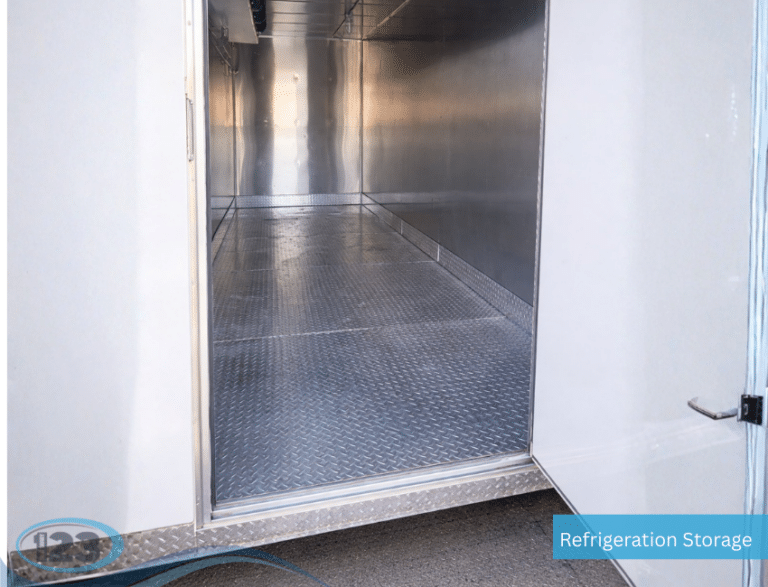
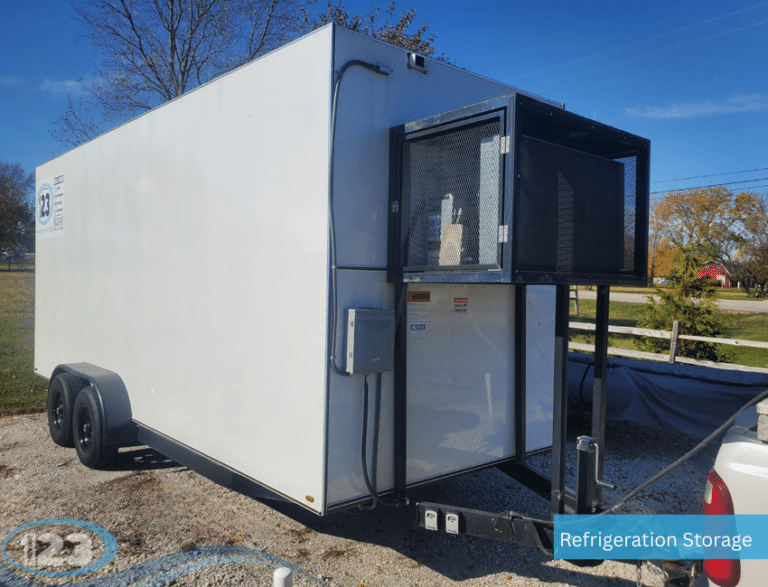
The wider refrigeration inventory also includes 12-ft and 20-ft refrigerated trailers plus 8×10, 20-ft, 24-ft, and 40-ft refrigerated containers. That range gives a disaster team more flexibility than insisting that all 12 positions use identical equipment.
Our preference would be to standardize as much of a 12-unit fleet as practical. Using similar electrical loads, connectors, temperature settings, and operating procedures makes generator distribution, troubleshooting, and staff training easier.
What Would 12 Freezers Cost?
The verified pricing guide provides equipment-level ranges rather than a specific 12-unit hurricane package price. A documented 20-ft freezer trailer is listed at $1,495–$2,395, before project-specific freight, power, installation, fuel, and other services.
| Equipment | Planning range |
|---|---|
| 20-ft freezer trailer | $1,495–$2,395 |
| 20-ft refrigerated trailer | $1,495–$2,395 |
| 20-ft refrigerated container | $2,495–$2,995 |
| 40-ft refrigerated container | $2,995–$3,995 |
These 4 ranges should not simply be multiplied into an invented hurricane contract value. Multi-unit deployments can add separate transportation, generator, fuel, cable, installation, attendant, and logistics costs, and the master guide states that those services are generally outside the base rental rate.
How Would IcefoxEquipment Power a Multi-Freezer Deployment?
Power planning is central because a hurricane site may have little or no usable grid service. IcefoxEquipment’s walk-in freezer page lists 30-amp, 208–230V single-phase service for standard 7×12 and 7×20 freezer sizes.
A different master specification lists the 20-ft freezer trailer at 220V single phase and 40–60 amps, with a 60-amp breaker planning figure. The specific equipment nameplate therefore has to control each installation rather than applying one fleet-wide assumption.
Where utility power is unavailable, the documented generator planning range is approximately 25–30 kW for 1 common 20-ft freezer configuration. Twelve units should not be connected to generators by simply multiplying that number without an engineered load and distribution plan.
For a hurricane response, IcefoxEquipment freezer options should be matched to the actual temporary-power infrastructure before the units are dispatched. Generator capacity, starting loads, cable distances, grounding, and distribution equipment all need to work together.
How Do Cable Distances Affect the Site Layout?
The uploaded power guide changes cable planning at 3 distance bands. It lists AWG 6 copper up to 50 ft, AWG 4 from 50–100 ft, and AWG 2 from 100–200 ft.
With 12 freezers, poor placement can create a spiderweb of long temporary-power runs. A well-organized cold-storage compound should keep equipment close enough to approved power distribution while still leaving room for doors, loading, service access, and emergency traffic.
We would rather move a freezer 50 ft closer to a properly engineered distribution point than create an unnecessary 100–200-ft heavy-cable run. That usually simplifies setup and reduces the number of field variables.
How Does Hurricane Weather Change the Setup?
Post-hurricane operations require more than normal freezer placement because damaged sites can still face wind, rain, standing water, debris, and unstable utilities. The uploaded high-wind guidance specifically recommends securing cylinders, anchoring tank racks, protecting regulators, and inspecting systems after storms.
That source is written around propane systems, but the operating principle applies to a 12-unit temporary compound: inspect every utility and support system after severe weather rather than assuming the previous setup remains unchanged.
Electrical distribution should also be positioned away from water exposure and protected through the project’s approved temporary-power design. A 220V refrigeration circuit is not something to improvise in a flooded or debris-filled service area.
By the Numbers
| Hurricane deployment factor | Figure |
| Emergency support | 24/7 |
| Quote turnaround | About 1 hour |
| Emergency delivery statement | Within 12 hours in many cases |
| Requested scenario size | 12 freezers |
| Standard website service | 30 amps, 208–230V |
| Other 20-ft freezer service | 220V, 40–60 amps |
| Generator planning per documented 20-ft configuration | 25–30 kW |
| Short cable run | Up to 50 ft, AWG 6 |
| Medium run | 50–100 ft, AWG 4 |
| Long run | 100–200 ft, AWG 2 |
These 10 planning figures show why a post-hurricane freezer project is really an electrical, transportation, and site-coordination project wrapped around temporary refrigeration.
How Would a 12-Freezer Deployment Work Step by Step?
Use this 8-step multi-unit response model.
- Define the mission. Identify what each of the 12 freezer positions will store and the required temperature.
- Confirm inventory. Match the request to available 7×12, 7×20, 7×26, 8×20, 8×40, or container configurations.
- Build the dispatch plan. Use IcefoxEquipment’s 24/7 emergency operation to coordinate available units, drivers, staging, and site contacts.
- Survey the power. Separate equipment requiring 30-amp, 208–230V service from units requiring 220V and 40–60 amps.
- Engineer backup generation. Use the documented 25–30-kW figure only as a starting point for applicable 20-ft units, then size the complete temporary-power system for the actual fleet.
- Lay out the compound. Keep cable runs within the appropriate 50-ft, 100-ft, or 200-ft planning band wherever possible.
- Commission units individually. Verify every freezer reaches its approved temperature before the 1st load enters.
- Operate as one system. Maintain temperature logs, generator checks, fuel service, electrical inspections, and IcefoxEquipment’s 24/7 support throughout the response.
How Could This Fit Into a Larger Relief Basecamp?
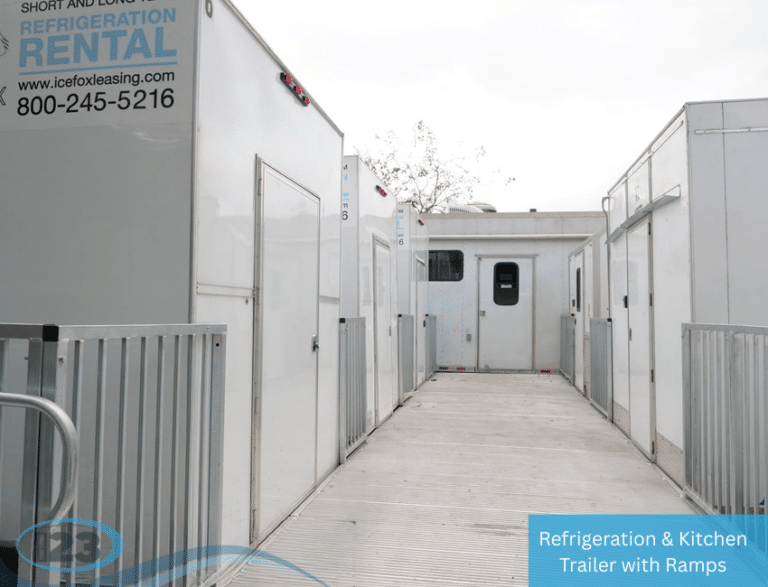
A freezer compound may be only 1 part of the hurricane operation. The master guide’s Disaster Response Package can also include kitchens, showers, laundry, water/waste systems, and generator support.
For a feeding site, independent utility packages can use 2,500-gallon potable-water tanks, 5,000-gallon wastewater bladder bags, and generator power when municipal infrastructure is unavailable.
That is why we would plan a 12-freezer deployment alongside food production and logistics rather than as a stand-alone line item. Frozen inventory, kitchens, water, waste, fuel, loading, and incident command all compete for the same site access and service routes.
What Common Post-Hurricane Deployment Mistakes Should Be Avoided?
Mistake 1: Treating 12 Units as 12 Separate Rentals
A 12-unit project needs one coordinated site and power strategy. Twelve individual deliveries without a compound plan can create conflicting cable routes, access problems, and unnecessary repositioning.
Mistake 2: Assuming Every Freezer Uses the Same Power
One website specification uses 30 amps at 208–230V, while the master guide lists certain 20-ft freezers at 40–60 amps and 220V. Check every delivered nameplate.
Mistake 3: Assuming Every Unit Arrives Within 12 Hours
IcefoxEquipment says emergency cold storage can arrive within 12 hours in many cases, not in every case. Hurricane roads, weather, equipment location, and multi-unit fleet availability can change deployment timing.
Mistake 4: Forgetting Generator Fuel and Distribution
A documented 25–30-kW generator may support one applicable 20-ft freezer configuration, but the broader power system also needs distribution, fuel, cable, and monitoring.
Mistake 5: Publishing the Scenario as a Historical Case
The supplied sources do not verify that IcefoxEquipment historically deployed exactly 12 freezers after a hurricane. Publish it as a deployment model unless project documentation is available.
What Should Be on the Hurricane Freezer Checklist?
- ☐ Confirm the required number of units and temperature zones.
- ☐ Call IcefoxEquipment at 800-245-5216 through its 24/7 emergency support.
- ☐ Identify which units need 30 amps and which need 40–60 amps.
- ☐ Confirm 208–230V or 220V service for each delivered freezer.
- ☐ Plan generator requirements using the 25–30-kW equipment figure where applicable.
- ☐ Measure cable routes against the 50-ft, 100-ft, and 200-ft conductor bands.
- ☐ Create a loading and service route for all 12 freezer positions.
- ☐ Inspect the full compound after severe weather.
- ☐ Verify operating temperature before loading the 1st pallet or case.
- ☐ Keep temperature, power, generator, and maintenance records throughout the deployment.
Our strongest recommendation is to run a multi-freezer hurricane response as 1 engineered temporary cold-storage facility. That approach is easier to power, monitor, fuel, service, and troubleshoot than treating 12 units as unrelated rentals scattered across a damaged site.
Request a Quote
Request a quote today for industry-leading refrigeration, modular facilities, and mobile equipment solutions. Ice Fox Equipment provides rapid deployment, flexible rental and leasing options, and dependable support for construction, healthcare, food service, emergency response, and industrial operations. Contact our team now for a customized, no-obligation quote.

Frequently Asked Questions
The supplied IcefoxEquipment documents and current website do not verify 1 historical deployment of exactly 12 freezers after a hurricane. Hurricane recovery is a documented application, and IcefoxEquipment provides 24/7 emergency refrigeration, but this article treats 12 units as a planning scenario rather than an undocumented customer case.
IcefoxEquipment advertises 24/7 emergency service and states that walk-in cold storage can be delivered within 12 hours in many cases. That is not a universal guarantee. Hurricane conditions, road access, equipment location, fleet quantity, power readiness, and the requested freezer configuration affect actual delivery.
IcefoxEquipment’s website lists 30-amp, 208–230V single-phase service for standard 7×12 and 7×20 walk-in freezers. Separate master specifications list some 20-ft freezer trailers at 220V, 40–60 amps, so each delivered unit must be matched to its actual data plate.