
How Do Disaster Relief Teams Get Mobile Freezers? IcefoxEquipment
Article Plans
Disaster relief teams get mobile freezers by identifying the required cold-storage temperature and capacity, locating available equipment, arranging professional delivery, preparing site access, and providing stable power before the 1st load arrives. IcefoxEquipment supports emergency refrigeration operations with 24/7 assistance and temporary freezer, refrigeration-trailer, container, and cold-storage options for deployments across the United States.
The equipment request should begin as soon as an emergency food, medical, or basecamp need is identified. A typical 20-ft refrigeration or freezer trailer requires commercial electrical service rather than a household outlet, and disaster-response plans may also require generators, potable water, waste systems, kitchens, and other infrastructure. Start planning through IcefoxEquipment or call 800-245-5216.
Quick Answer
Disaster relief teams can obtain mobile freezers by calling a temporary refrigeration provider, specifying the required temperature and location, confirming available equipment, and arranging delivery plus site power. A documented 20-ft freezer trailer requires approximately 220V single-phase, 40–60-amp service, with 25–30 kW of generator capacity listed for sites without adequate utility power.
What Are the Quick Facts?
- IcefoxEquipment-related emergency refrigeration materials describe support available 24 hours a day, 7 days a week.
- The internal FAQ states that refrigeration depots are located across the United States for urgent requirements.
- A common 20-ft freezer trailer uses approximately 220V single-phase power at 40–60 amps.
- A 25–30-kW generator is a documented planning range for a 20-ft refrigerated or freezer trailer.
- Low-temperature refrigeration equipment is documented to reach approximately -10°F.
- A broader disaster-response package can include refrigeration plus 6 support categories such as kitchens, showers, laundry, water/waste systems, and generators.
What Are the Key Takeaways?
- A disaster team should identify the freezer requirement before dispatch because a 20-ft trailer and a 40-ft refrigerated container have different electrical and site needs.
- A mobile freezer may require 220V, 40–60 amps, so an electrician or generator plan should begin while transportation is being arranged.
- A 25–30-kW generator may support a documented 20-ft freezer configuration when site power is unavailable.
- Refrigeration can be integrated into a larger 72-hour basecamp mobilization plan that includes housing, kitchens, sanitation, and utilities.
- Disaster teams should not assume the trailer itself is a transportation vehicle; the internal FAQ says customers do not move the 20-ft refrigeration units themselves.
Why Do Disaster Relief Teams Need Mobile Freezers?
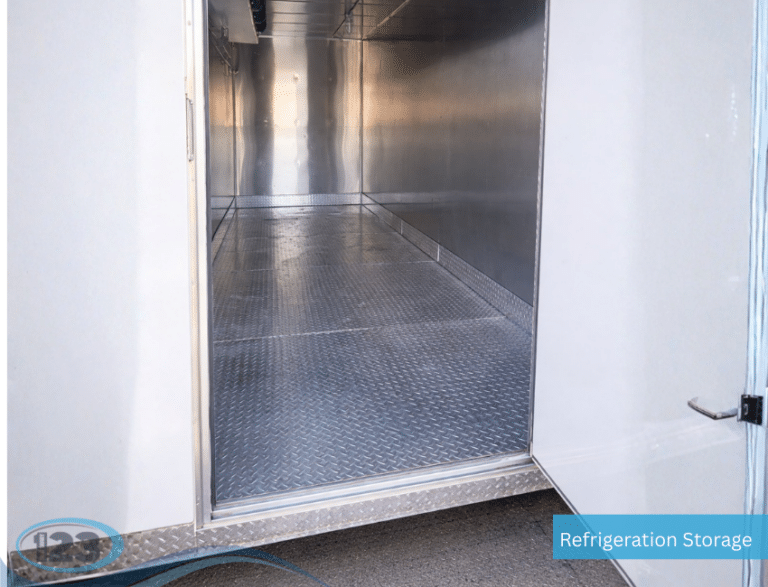
Mobile freezers provide temporary controlled storage when storms, fires, floods, grid failures, building damage, or remote operations interrupt permanent cold storage. The uploaded basecamp material specifically identifies refrigerated trailers, freezer trailers, refrigerated containers, and walk-in storage for 6 inventory categories, including emergency food and medical supplies.
For a feeding operation, freezer capacity may support meat, frozen prepared foods, bulk inventory, and ingredients needed by a mobile kitchen producing anything from several hundred meals to 1,500–3,000 meals per day in a bulk configuration.
The same cold-storage resource can support medical or logistical operations where stable temperature-controlled space is needed. IcefoxEquipment’s target applications explicitly include disaster response refrigerated storage, storm recovery, emergency freezer trailers, and rapid cold-storage deployment.
How Does IcefoxEquipment Start an Emergency Freezer Deployment?
The process starts by identifying the site, required temperature, estimated inventory, rental duration, and available utilities. IcefoxEquipment-related materials describe phones answered 24/7 and depots across the United States for urgent refrigeration requests.
For disaster response, we would provide at least 5 facts on the first call: ZIP code, temperature target, approximate product volume, power availability, and delivery access. That gives dispatch enough information to distinguish between a 20-ft freezer trailer and a larger refrigerated-container solution.
The sources should not be read as a guarantee that every freezer will arrive within 1 fixed number of hours. Fleet location, transportation, weather, road closures, site readiness, and power preparation all affect the actual physical deployment.
What Mobile Freezer Options Are Available?
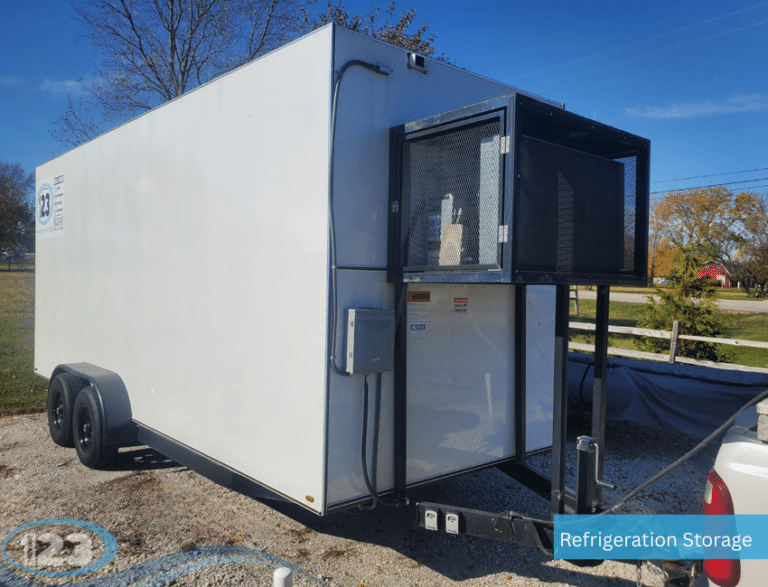
A common low-temperature option is the 20-ft freezer trailer, with a planning-level rental range of $1,495–$2,395. The internal FAQ also describes low-temperature units capable of approximately -10°F operation.
For larger storage requirements, the source set lists 20-ft and 40-ft refrigerated containers. The planning ranges are $2,495–$2,995 for the 20-ft container and $2,995–$3,995 for the 40-ft container.
| Disaster cold-storage option | Planning range |
|---|---|
| 20-ft refrigerated trailer | $1,495–$2,395 |
| 20-ft freezer trailer | $1,495–$2,395 |
| 20-ft refrigerated container | $2,495–$2,995 |
| 40-ft refrigerated container | $2,995–$3,995 |
These 4 equipment categories should be matched to the actual disaster mission rather than ordered solely by price. A smaller response kitchen has a different inventory profile from a large basecamp feeding hundreds or thousands of meals.
What Power Does a Disaster Relief Freezer Need?
A documented 20-ft refrigerated or freezer trailer uses approximately 220V single-phase power at 40–60 amps. The source also recommends a 60-amp breaker as a planning figure for that configuration, subject to the actual delivered equipment nameplate.
Remote disaster sites often lack stable utility power, which is why generator planning is important. The supplied power guide identifies approximately 25–30 kW for a 20-ft refrigeration or freezer trailer.
We recommend treating the generator as part of the freezer deployment from the 1st dispatch call when grid power is unavailable. A freezer parked at a disaster site without suitable electricity is still only an insulated box.
The broader Disaster Response Package specifically lists generator support alongside refrigeration, kitchens, showers, laundry, water, and waste infrastructure.
What Cable Setup Is Needed at a Remote Site?
Cable distance affects temporary-power planning. The uploaded guide identifies AWG 6 copper up to 50 ft, AWG 4 from 50–100 ft, and AWG 2 for 100–200 ft.
That matters in a relief basecamp where generators may need separation from kitchens, sleeping areas, command posts, or public-access zones. A 200-ft electrical route requires a very different temporary-power setup from a freezer positioned within 50 ft of the approved source.
The same guide lists 3 connection methods that may appear on refrigeration equipment: NEMA 6-50, cam lock, and hardwire. The delivered unit must be verified before electrical hardware is prepared.
How Does Refrigeration Fit Into a Complete Disaster Basecamp?
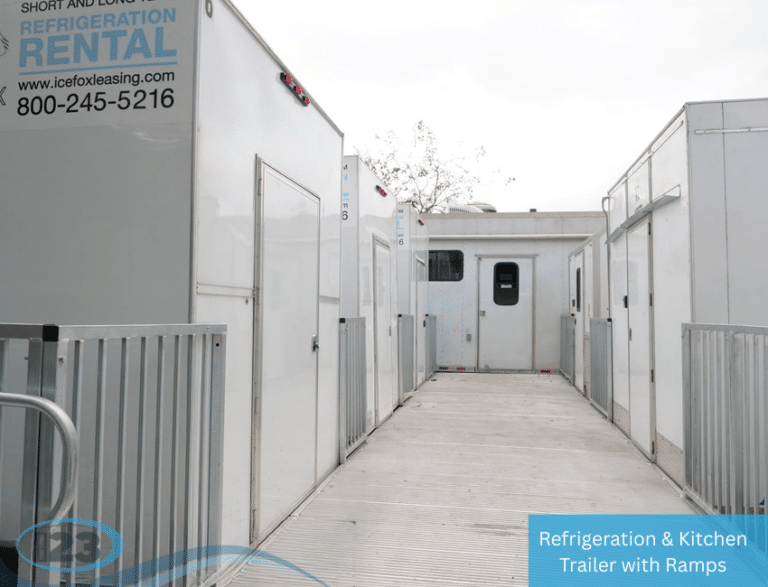
Mobile freezers are often only 1 component of a larger relief operation. The basecamp planning document tells response teams to plan cold storage alongside kitchens, sleeping accommodations, showers, restrooms, laundry, command centers, electrical service, water, waste, communications, and site layout.
A complete Disaster Response Package may include 6 major support components: kitchen, showers, laundry, refrigeration, water/waste systems, and generator support.
Another internal basecamp FAQ states that a complete basecamp can be mobilized within 72 hours for urgent needs, while all-inclusive packages are listed at approximately $125–$300 per person depending on meals, location, site preparation, and duration.
That 72-hour statement applies to the broader basecamp package and should not be turned into a guarantee for every IcefoxEquipment freezer delivery. Individual refrigeration deployment can be faster or slower depending on inventory location and logistics.
By the Numbers
| Disaster-response planning item | Figure |
| Emergency support | 24/7 |
| Standard freezer trailer | 20 ft |
| Low-temperature capability | About -10°F |
| Trailer electrical supply | 220V single phase |
| Electrical load | 40–60 amps |
| Breaker planning figure | 60 amps |
| Generator planning range | 25–30 kW |
| Short cable run | Up to 50 ft, AWG 6 |
| Refrigerated-container range | 20–40 ft |
| Broader basecamp mobilization statement | 72 hours |
These 10 numbers show why mobile-freezer deployment is a logistics job as much as an equipment rental. The disaster team needs transportation, placement, power, temperature control, and site coordination working together.
How Do Disaster Relief Teams Get a Mobile Freezer Step by Step?
Use this 8-step process.
- Define the mission. Estimate how much frozen food, medical inventory, or emergency stock needs storage and whether approximately -10°F capability is required.
- Call the emergency provider. Contact IcefoxEquipment through its 24/7 response channel and provide the site ZIP code.
- Choose the equipment. Select a 20-ft freezer trailer or larger container configuration based on the inventory.
- Confirm transport and placement. Remember that customers are not permitted to transport the 20-ft rental trailer themselves under the internal FAQ.
- Prepare electrical service. Arrange approximately 220V single phase, 40–60 amps for the 20-ft freezer.
- Arrange generator power if needed. Use the 25–30-kW planning range for the documented 20-ft configuration.
- Connect and test the unit. Confirm the equipment is operating properly before the 1st frozen load is placed inside.
- Integrate it with the basecamp. Coordinate the freezer with kitchens, water, waste, generators, command functions, and other 6-part disaster-support infrastructure where applicable.
What Should Teams Prepare Before the Freezer Arrives?
Site preparation should happen while the freezer is moving. At minimum, verify 220V power or generator availability, cable distance, access route, ground conditions, unloading space, security, and who will monitor the equipment.
For a remote site, generator location and cable distance deserve early attention. A short run of 50 ft can use the source’s AWG 6 guidance, while a 100–200-ft run moves into substantially heavier temporary-power requirements.
Disaster camps also need clear utility corridors and service routes. The basecamp source lists delivery routes, emergency vehicle access, parking, walking paths, equipment spacing, drainage, and lighting among 7 layout considerations.
What Common Mobile Freezer Deployment Mistakes Should Teams Avoid?
Mistake 1: Calling Only for “a Freezer”
A useful request includes at least 5 facts: location, temperature, inventory, power, and delivery conditions. Those details help match the mission to the right equipment.
Mistake 2: Forgetting Electrical Power
A 20-ft freezer can require 40–60 amps at 220V. Finding the freezer first and the electrical solution second can delay operations after delivery.
Mistake 3: Assuming the Trailer Includes a Generator
The source identifies 25–30 kW as generator guidance, but generator rental and fuel are separate project considerations.
Mistake 4: Planning Cold Storage Separately From the Kitchen
A large relief kitchen may produce 1,500–3,000 meals per day, so refrigeration capacity and food-production capacity should be planned together.
Mistake 5: Trying to Move the Rental Unit Yourself
The internal FAQ says customers may not transport or relocate the 20-ft refrigeration trailers themselves; professional drivers handle transportation.
What Should Be on the Disaster Relief Freezer Checklist?
- ☐ Identify the required freezer temperature, including whether approximately -10°F capability is needed.
- ☐ Call IcefoxEquipment’s 24/7 support at 800-245-5216.
- ☐ Confirm whether a 20-ft freezer trailer provides enough capacity.
- ☐ Prepare 220V single-phase, 40–60-amp electrical service.
- ☐ Check the 60-amp breaker planning figure against the delivered unit.
- ☐ Arrange 25–30 kW of generator capacity where suitable utility power is unavailable.
- ☐ Measure whether the temporary-power run is 50 ft, 50–100 ft, or 100–200 ft.
- ☐ Confirm the connector before preparing any of the 3 documented connection types.
- ☐ Coordinate the freezer with the kitchen, water, waste, and other basecamp systems.
- ☐ Keep IcefoxEquipment’s 24/7 support details in the incident-command file.
Our recommendation is to treat cold storage as part of the incident infrastructure from day 1. A freezer ordered after meal production begins is a reactive purchase; a freezer sized alongside the kitchen, generator, water, and logistics plan becomes part of a controlled response operation.
Request a Quote
Request a quote today for industry-leading refrigeration, modular facilities, and mobile equipment solutions. Ice Fox Equipment provides rapid deployment, flexible rental and leasing options, and dependable support for construction, healthcare, food service, emergency response, and industrial operations. Contact our team now for a customized, no-obligation quote.

Frequently Asked Questions
Yes. IcefoxEquipment-related source material specifically targets disaster-response refrigerated storage, emergency freezer trailers, basecamp cold storage, and storm-recovery refrigeration. A documented 20-ft freezer trailer can reach approximately -10°F and requires roughly 220V single-phase, 40–60-amp electrical service.
Call IcefoxEquipment at 800-245-5216 with the disaster location, temperature requirement, inventory volume, rental duration, power availability, and site access. IcefoxEquipment’s internal materials describe 24/7 emergency support and depots across the United States for urgent refrigeration requirements.
Generator support can be part of a broader disaster-response package. The documented planning range for a 20-ft refrigerated or freezer trailer is approximately 25–30 kW. Generator rental and fuel are separate project considerations, so the exact delivered equipment and total electrical load should be confirmed before generator selection.