
How Fast Can an Emergency Freezer Deploy? IcefoxEquipment
Article Plans
An emergency freezer deployment can start as soon as the call is received, but the physical delivery and startup time depend on equipment availability, distance, transportation, site access, and electrical readiness. IcefoxEquipment provides 24/7 refrigeration support and has advertised quote turnaround of approximately 1 hour, but a fixed nationwide delivery-hour guarantee is not established in the supplied sources.
That distinction matters when a walk-in freezer fails with inventory still inside. The fastest response is not simply finding a truck. You need the correct freezer, transportation, a clear placement area, 220V power, a qualified electrical connection, and enough time for the unit to reach the required temperature before loading. Start the emergency process through IcefoxEquipment or call 800-245-5216.
Quick Answer
IcefoxEquipment can begin responding to an emergency freezer request through 24/7 support, with source material advertising quotes in about 1 hour. Actual deployment is project-specific. A 20-ft freezer still needs delivery, placement, approximately 220V single-phase 40–60-amp power, startup, and verification at 0°F or below before frozen inventory is transferred.
What Are the Quick Facts?
- IcefoxEquipment emergency and operational assistance is documented as available 24 hours a day, 7 days a week.
- Source material advertises quote turnaround in approximately 1 hour.
- A 20-ft freezer trailer is listed at $1,495–$2,395.
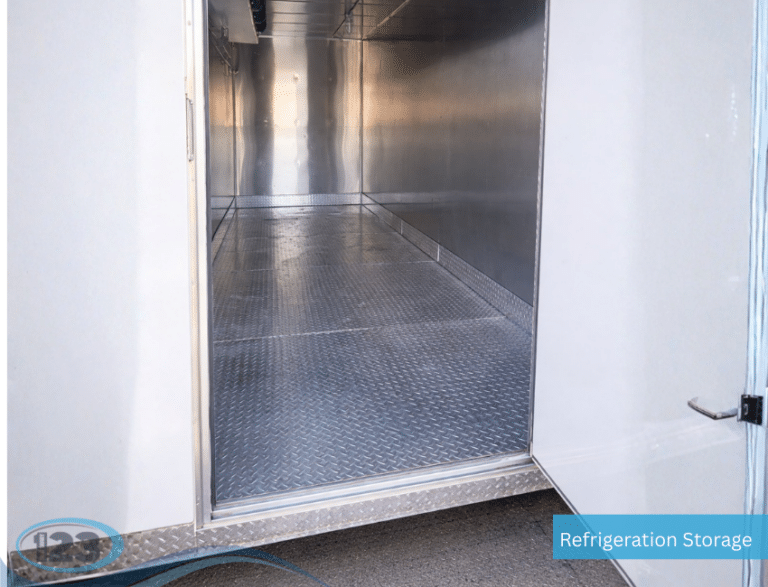
- The same 20-ft freezer is documented for approximately 0°F to -10°F operation.
- Typical electrical service is 220V single phase at 40–60 amps.
- When utility power is unavailable, the planning guide identifies approximately 25–30 kW of generator capacity for a 20-ft refrigerated or freezer trailer.
What Are the Key Takeaways?
- A 24/7 response line can start the emergency process immediately, but it should not be confused with a guaranteed same-hour physical delivery.
- A quote may be prepared in about 1 hour, while transportation and installation depend on where the available freezer is located.
- A 20-ft emergency freezer is not ready for food simply because it has reached the site; it still needs 220V, 40–60-amp service and temperature verification.
- Frozen inventory should generally remain at 0°F or below, so the rental must reach the required set point before the transfer begins.
- Site readiness can remove avoidable deployment delays, particularly when the location already has a 12-ft gate, adequate turning room, and prepared electrical service.
What Does “Rapid Deployment” Actually Mean?
Rapid deployment is a sequence, not a single delivery timestamp. The process includes at least 5 operational stages: emergency intake, equipment confirmation, transportation, electrical setup, and temperature verification.
That is why we would not promise that every IcefoxEquipment freezer can be “fully running in 1 hour.” The source supports an approximately 1-hour quote timeframe, not a universal 1-hour delivery-and-commissioning guarantee.
For a genuine emergency, the practical objective is to shorten each of those 5 stages. Having the ZIP code, required temperature, amount of inventory, site access, available power, and unloading conditions ready when you call can move the request faster than simply saying, “Our freezer is down.”
How Quickly Can IcefoxEquipment Start the Response?
The response process can begin at any hour because IcefoxEquipment materials describe assistance as available 24/7. That is important for power outages, compressor failures, storm events, restaurant refrigeration losses, hospital support, and other after-hours incidents.
The source set also describes quotes in approximately 1 hour, giving the customer a fast first decision point. At that stage, the job still has to be matched with a 12-ft, 20-ft, 40-ft, or other available refrigeration configuration.
Our view is that the first 1 hour should be used aggressively. Confirm the unit, transportation plan, power source, delivery route, onsite contact, and loading strategy while dispatch is being arranged rather than waiting until the trailer reaches the property.
What Can Slow an Emergency Freezer Delivery?
Equipment Availability
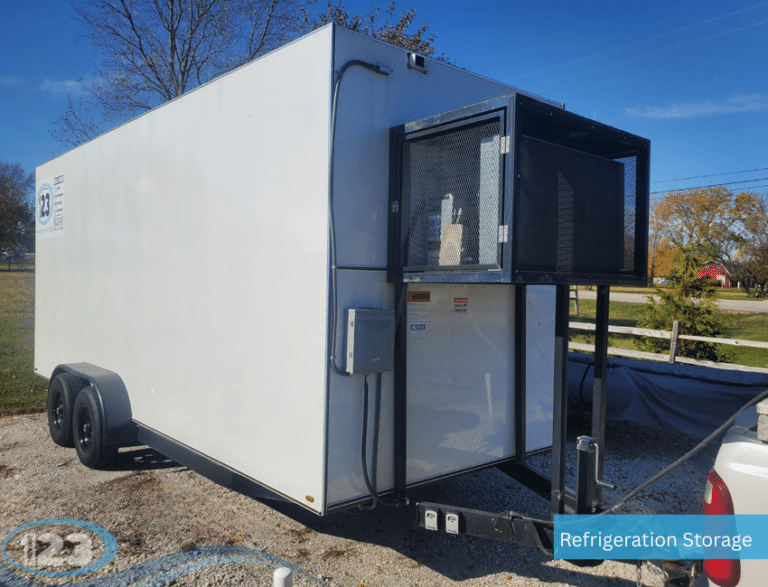
The correct freezer has to be available within a practical transport radius. A 20-ft freezer trailer is documented in the fleet, but that does not mean one is physically stationed beside every customer at every hour.
The internal training material even uses an example of finding a replacement unit 20 minutes away, but it is presented as an example of proactive problem-solving, not as a nationwide service guarantee. That is the correct way to read it: nearby inventory can accelerate deployment when it happens to be available.
Transportation Distance
A 20-ft freezer weighing about 5,000 lb requires professional transportation and safe placement. Distance from the available depot to the customer therefore becomes part of the deployment clock.
This is why “same-day emergency freezer” can be realistic for some projects without being something that should be promised for 100% of deployments. Weather, road conditions, driver availability, and equipment location all affect the final arrival.
Site Access
The fleet guide calls for a minimum 12-ft gate width, prefers 16 ft, lists 14 ft of minimum vertical clearance, and recommends a 60-ft turning radius. A freezer can be dispatched quickly and still lose time if the driver cannot get it into the proposed placement area.
For emergency jobs, send photos and measurements of the service yard before dispatch. Confirm those 4 access figures while the transportation plan is still being built.
Why Can Electrical Preparation Decide the Deployment Time?
Electrical setup is one of the biggest differences between “the freezer arrived” and “the freezer is operational.” A documented 20-ft freezer trailer requires approximately 220V single-phase power at 40–60 amps.
The power guide identifies a 60-amp breaker as the planning recommendation for the 20-ft refrigerated/freezer configuration, subject to the actual delivered unit’s data plate. A building with 220V available may still lack the correct circuit, conductor, or connection hardware.
We have a simple rule for emergencies: do not wait for the trailer to arrive before calling the electrician. Preparing 220V and 40–60 amps while the freezer is in transit can remove an entire installation delay from the critical path.
What Cable and Generator Setup May Be Needed?
For the documented short power run, the source identifies 6 AWG copper up to 50 ft. The guide moves to 4 AWG for 50–100 ft and 2 AWG for 100–200 ft.
Those distances matter during emergency placement because the closest parking location is not always the best electrical location. A 200-ft temporary cable plan is materially different from positioning the freezer within 50 ft of a suitable electrical source.
The guide also lists 3 common connection approaches: NEMA 6-50, cam lock, and hardwire. The delivered freezer should be checked before the electrician fabricates or purchases connection hardware.
If stable site power is unavailable, the planning material identifies approximately 25–30 kW for a 20-ft freezer trailer. Generator rental and fuel are separate considerations rather than automatic parts of every refrigeration rental.
How Long Until Frozen Food Can Go Inside?
Frozen food should not be loaded simply because the freezer has been plugged in. The temporary unit should be verified at 0°F or below before regulated frozen inventory is transferred.
This creates a second clock after delivery: pull-down and stabilization. The source documents the operating range of the 20-ft freezer at approximately 0°F to -10°F, but it does not establish one universal number of minutes or hours required for every freezer to reach that range.
Temperature pull-down can vary with ambient conditions, door activity, product load, controller setting, power stability, and the starting temperature of the box. The source itself identifies frequent door openings, heavy loading, ice accumulation, failed power, and incorrect settings among factors that can affect temperature performance.
What Does an Emergency Freezer Cost?
The uploaded pricing guide lists a 20-ft freezer trailer at $1,495–$2,395 and separately describes refrigeration as one of the higher-demand emergency rental categories.
| Emergency refrigeration option | Planning rate |
|---|---|
| 12-ft refrigerated trailer | $1,295–$2,195 |
| 20-ft refrigerated trailer | $1,495–$2,395 |
| 20-ft freezer trailer | $1,495–$2,395 |
| 20-ft refrigerated container | $2,495–$2,995 |
| 40-ft refrigerated container | $2,995–$3,995 |
Those 5 equipment ranges are planning-level figures. The master pricing guide states that freight, delivery, installation, fuel, utility connections, staffing, and other project-specific services generally sit outside the basic equipment rate.
For an emergency, freight can matter as much as the $1,495–$2,395 freezer rate because a closer available unit may produce a very different delivery cost and response time from equipment several states away.
By the Numbers
| Emergency deployment item | Figure |
| Emergency support | 24/7 |
| Advertised quote turnaround | About 1 hour |
| 20-ft freezer temperature | 0°F to -10°F |
| Frozen-food target | 0°F or below |
| Electrical supply | 220V single phase |
| Electrical load | 40–60 amps |
| Recommended breaker planning figure | 60 amps |
| Generator planning range | 25–30 kW |
| Minimum gate width | 12 ft |
| Minimum turning radius | 60 ft |
These 10 figures show why deployment speed is more than truck travel time. A fast dispatch can still stall if the 220V supply, 60-amp circuit, gate width, or placement route has not been addressed.
What Is the Fastest Emergency Deployment Process?
Use this 8-step sequence.
- Call immediately. Contact IcefoxEquipment through its 24/7 support process and provide the site ZIP code.
- Define the requirement. Confirm whether the inventory needs 0°F or below freezer storage or refrigerated storage.
- Match the unit. Identify whether the project needs a 20-ft freezer trailer or a different available refrigeration configuration.
- Confirm access before dispatch. Verify at least 12 ft of gate width, 14 ft of vertical clearance, and a workable 60-ft turning area where applicable.
- Prepare power while the freezer travels. Arrange approximately 220V single-phase, 40–60-amp electrical service.
- Plan backup power. Where utility service is unavailable, evaluate the documented 25–30-kW generator range against the specific unit.
- Position, connect, and test. Verify the freezer is operating correctly after the 1st electrical connection.
- Load only after temperature verification. Confirm 0°F or below before moving frozen inventory into the emergency unit.
This is the part customers can control. IcefoxEquipment cannot make a distant freezer physically closer, but having all 8 steps ready can prevent avoidable site delays after dispatch.
How Can You Make Emergency Deployment Faster?
The most useful thing you can do is prepare the site before the driver arrives. Send IcefoxEquipment the exact location, required 0°F target, access photos, electrical-panel information, cable distance, inventory volume, and onsite contact when the emergency request is opened.
Second, get the electrician moving during dispatch. A 40–60-amp commercial refrigeration requirement is not the moment to search for an electrician after the delivery truck has parked.
Third, clear the delivery route. A 12-ft gate that is blocked by dumpsters or contractor vehicles is effectively narrower than 12 ft, and the 60-ft maneuvering requirement still needs usable space.
You can also review IcefoxEquipment refrigeration trailer options while dispatch is being discussed so the selected unit, power needs, and intended temperature are aligned before transportation begins.
What Common Emergency Deployment Mistakes Cause Delays?
Mistake 1: Treating the 1-Hour Quote as a Delivery Guarantee
The source supports about 1 hour for quoting, not a blanket 1-hour physical deployment. Keep those two milestones separate.
Mistake 2: Waiting to Check Power
A 20-ft freezer may need 220V and 40–60 amps. Finding inadequate site power after arrival can turn a fast delivery into a stalled installation.
Mistake 3: Assuming Any Generator Will Work
The planning range is approximately 25–30 kW for the 20-ft refrigerated/freezer configuration. Generator selection still needs to match the delivered equipment.
Mistake 4: Loading Too Early
A freezer that is plugged in but has not reached 0°F or below is not ready for the final frozen-product transfer.
Mistake 5: Ignoring Access Measurements
A deployment can stop at the gate when the site lacks 12 ft of clear width, 14 ft of vertical clearance, or enough room for approximately a 60-ft turning radius.
What Should Be on the Emergency Freezer Checklist?
- ☐ Call 800-245-5216 and identify the request as an emergency.
- ☐ Confirm the frozen-storage target of 0°F or below.
- ☐ Identify the required 20-ft freezer or alternative configuration.
- ☐ Verify a minimum 12-ft clear gate where the fleet-access requirement applies.
- ☐ Confirm 220V single-phase service.
- ☐ Prepare approximately 40–60 amps for the 20-ft freezer.
- ☐ Verify the 60-amp breaker planning figure against the delivered nameplate.
- ☐ Measure whether the cable run is under 50 ft, 50–100 ft, or 100–200 ft.
- ☐ Arrange generator support if the site cannot provide stable power.
- ☐ Keep the freezer empty until it reaches 0°F or below.
Our strongest recommendation is to work on logistics and site readiness in parallel. During the same 1-hour period when pricing and availability are being confirmed, the site team should already be checking power, access, and the inventory-transfer plan.
Request a Quote
Request a quote today for industry-leading refrigeration, modular facilities, and mobile equipment solutions. Ice Fox Equipment provides rapid deployment, flexible rental and leasing options, and dependable support for construction, healthcare, food service, emergency response, and industrial operations. Contact our team now for a customized, no-obligation quote.

Frequently Asked Questions
IcefoxEquipment provides 24/7 emergency support and its keyword planning material targets same-day and rapid-deployment freezer searches, but the supplied operational sources do not establish a universal same-day delivery guarantee. Actual timing depends on available equipment, transportation distance, site access, power preparation, and the specific emergency location.
IcefoxEquipment source material advertises quote turnaround in approximately 1 hour. That quote stage can begin through 24/7 support, but physical deployment includes additional steps such as dispatch, freight, placement, electrical connection, testing, and freezer pull-down before frozen inventory is loaded.
A documented 20-ft IcefoxEquipment-style freezer trailer requires approximately 220V single-phase, 40–60-amp service, with a 60-amp breaker planning figure. Where site power is unavailable, the source identifies approximately 25–30 kW of generator capacity for planning, subject to the delivered equipment.