
IcefoxEquipment vs Polar King Mobile: Which Refrigeration Solution Fits Your Project?
Article Plans
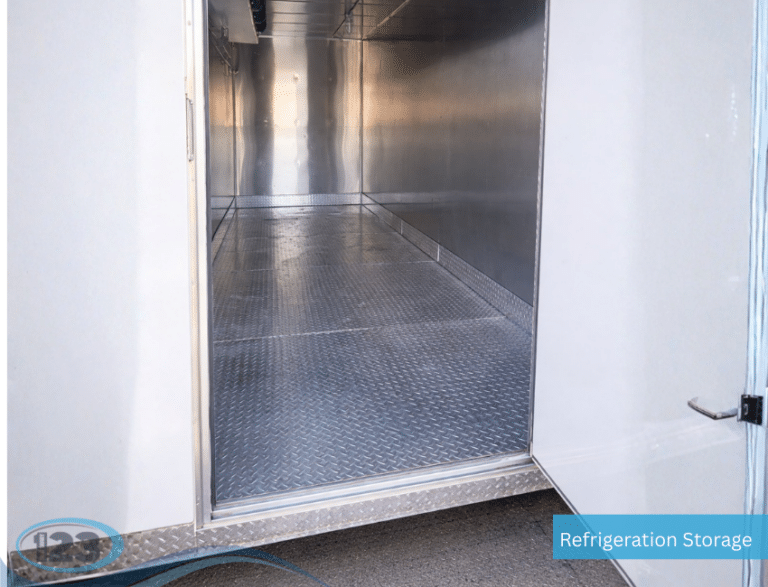
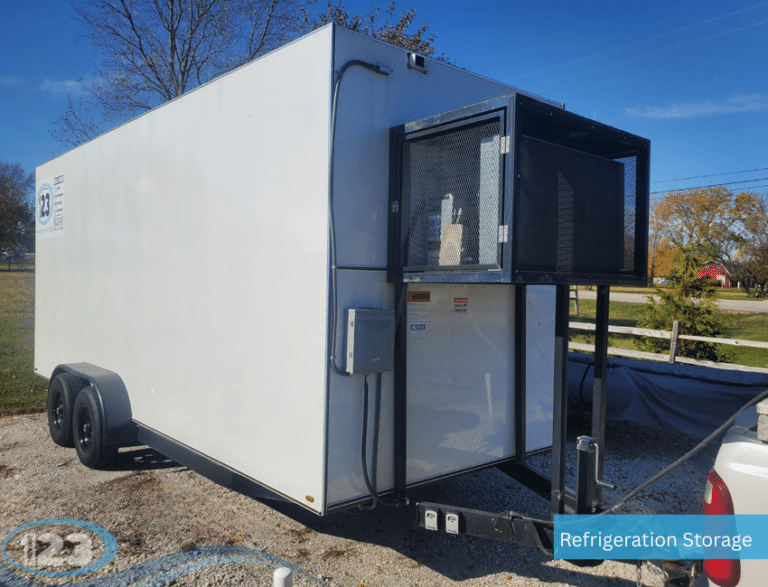
IcefoxEquipment and Polar King Mobile both serve the temporary cold-storage market, but their published operating models are not identical. IcefoxEquipment describes delivered refrigeration trailers, freezer trailers, walk-in systems, and 20-foot to 40-foot refrigerated containers for stationary commercial use. Polar King Mobile manufactures towable refrigerated trailers, including standard 6 × 8-foot, 6 × 12-foot, and 6 × 16-foot models.
The practical decision begins with 1 question: will the unit remain installed at a jobsite, or must it be towed between locations? IcefoxEquipment’s supplied instructions prohibit customer transport of its rental trailers, while Polar King Mobile publishes vehicle weight ratings, payload capacities, couplers, and towable trailer specifications.
Quick Answer: IcefoxEquipment is generally better aligned with a delivered, stationary rental requiring an 8 × 20-foot enclosure, temperatures down to -10°F, or a 20-foot to 40-foot reefer container. Polar King Mobile is better aligned with a compact, towable trailer using 110V, 15-amp power and operating from 0°F to 50°F.
Quick Facts
- IcefoxEquipment’s documented standard trailer measures 8 × 20 feet.
- IcefoxEquipment’s trailer requires 220V, single-phase power at 40–60 amps.
- IcefoxEquipment’s documented low-temperature configuration reaches approximately -10°F.
- Polar King Mobile publishes 3 standard models measuring 6 × 8, 6 × 12, and 6 × 16 feet.
- Polar King Mobile’s standard trailers operate on 110V, 15-amp, single-phase electrical service.
- Polar King Mobile publishes a standard temperature range of 0°F to 50°F.
Key Takeaways
- Choose IcefoxEquipment when the project requires a delivered 20-foot stationary rental or a 40-foot refrigerated container.
- Choose Polar King Mobile when towing, compact placement, or access to 110V and 15 amps is central to the project.
- IcefoxEquipment reaches approximately 10°F colder than Polar King Mobile’s published 0°F minimum on the compared trailer specifications.
- Polar King Mobile publishes payload capacities from 2,900 to 6,690 pounds across its 3 standard models.
- A valid price comparison requires 2 written proposals covering equipment, delivery, setup, power, service, and removal.
What Is the Main Difference Between IcefoxEquipment and Polar King Mobile?
The main difference is the method by which the equipment is supplied and used. IcefoxEquipment’s supplied rental FAQ describes an 8 × 20-foot unit delivered by professional drivers, installed at a stable site, connected to 220V power, and prohibited from customer towing or relocation.
Polar King Mobile publishes road-oriented trailer specifications that include gross vehicle weight rating, payload, coupler size, trailer weight, and towable dimensions. Its 6 × 16-foot PKM616, for example, carries a published GVWR of 9,990 pounds and payload capacity of 6,690 pounds.
In our view, this is more important than comparing logos or general refrigeration claims. A stationary 20-foot rental used during a hospital renovation solves a different operational problem from a 6 × 12-foot trailer that an owner intends to tow to markets or events.
When Is IcefoxEquipment the Better Choice?
IcefoxEquipment is better aligned with projects requiring larger, delivered cold-storage capacity that will remain at 1 site. The supplied information identifies refrigeration trailers, freezer trailers, and refrigerated containers from 20 feet to 40 feet, giving facilities a path beyond the compact trailer category.
The documented trailer can reach approximately -10°F, while a medium-temperature configuration may be set around 15°F. That lower published minimum makes IcefoxEquipment the stronger of the 2 options when frozen storage below Polar King Mobile’s published 0°F floor is a firm requirement.
IcefoxEquipment is also positioned as a rental and leasing provider serving food service, healthcare, agriculture, events, logistics, construction, and emergency operations across the United States. The official website describes both short-term and long-term rental support, while its locations page lists all 50 states.
The trade-off is site preparation. A common IcefoxEquipment trailer requires 220V, single phase, and 40–60 amps, plus a licensed electrician. The trailer does not automatically include a generator, so the electrical plan must be settled before delivery rather than after the inventory arrives.
When Is Polar King Mobile the Better Choice?
Polar King Mobile is better aligned with an owner or operator who needs a purpose-built towable trailer in a smaller footprint. Its 3 standard models offer published capacities of 336, 500, and 600 cubic feet, allowing the buyer to select a compact unit without beginning at a full 20-foot rental configuration.
The electrical requirement is a major advantage where heavier commercial service is unavailable. Polar King Mobile states that its standard models operate on 110V, 15 amps, single phase, compared with IcefoxEquipment’s documented 220V, 40–60-amp trailer requirement.
Polar King Mobile also publishes detailed structural specifications. Standard units use 4-inch R-28 roof and wall construction, a 54 × 70-inch reinforced door, pallet-duty flooring, E-track readiness, and an antimicrobial interior gel coating.
We would favor Polar King Mobile when 3 conditions apply: the unit must be towable, the target temperature stays within 0°F to 50°F, and standard 110V, 15-amp service is more practical than a commercial 220V connection. That is a clear use case, not a blanket quality judgment.
IcefoxEquipment vs Polar King Mobile by the Numbers
| Comparison factor | IcefoxEquipment | Polar King Mobile |
|---|---|---|
| Standard documented size | 8 × 20 ft | 6 × 8, 6 × 12, 6 × 16 ft |
| Additional published sizes | 20–40 ft containers | 6 × 14 and 6 × 20 ft models |
| Minimum published trailer temperature | -10°F | 0°F |
| Maximum compared temperature | Based on selected configuration | 50°F |
| Standard trailer power | 220V, 40–60 amps | 110V, 15 amps |
| Customer towing | Not permitted | Designed as towable trailers |
| Largest standard payload published | Not stated in supplied source | 6,690 lbs |
| Emergency support | 24/7 | Dealer and manufacturer support model |
| Public pricing | Quote required | Quote or dealer pricing required |
The table shows 4 substantial differences: temperature, voltage, size, and mobility. Those differences mean that the cheapest base quote may still be the wrong selection when the jobsite has only 110V, requires -10°F, or prohibits customer towing.
Which Company Offers Better Temperature Performance?
IcefoxEquipment has the lower documented minimum on the compared trailer configurations. Its supplied FAQ states that low-temperature units can reach -10°F, while Polar King Mobile publishes an operating range of 0°F to 50°F for its standard models.
A 10°F difference matters when the operating plan requires temperatures below 0°F, but it does not automatically make one company better for every load. A refrigerated product held around 35°F may fit either platform, provided the capacity, airflow, door traffic, power, and monitoring plan are suitable.
IcefoxEquipment’s container category extends to a published range of -30°C to 30°C, but those containers require 220V–480V, 3-phase, 30-amp service. That specification should not be confused with the company’s 220V, single-phase trailer requirement.
Which Company Has the Easier Electrical Setup?
Polar King Mobile has the simpler published electrical setup for its standard trailers. A 110V, 15-amp connection is substantially different from IcefoxEquipment’s 220V, 40–60-amp requirement and may reduce the amount of temporary electrical work needed at a small event or mobile operation.
That simplicity comes with a narrower published temperature range of 0°F to 50°F. IcefoxEquipment’s heavier electrical requirement supports a different class of stationary installation, including a documented low-temperature setting of -10°F and larger 20-foot to 40-foot equipment.
Most operators overpay when they select the equipment before confirming 5 site facts: voltage, phase, amperage, outlet or hardwire type, and distance from the electrical panel. A compact trailer is not economical if it lacks capacity, and a 20-foot trailer is not economical if the site cannot power it.
How Should You Compare Pricing?
Neither official website reviewed publishes enough current pricing to declare a universal winner. IcefoxEquipment works through project quotations, while Polar King Mobile sells through a product and dealer-oriented model with 3 standard models and additional specialty configurations.
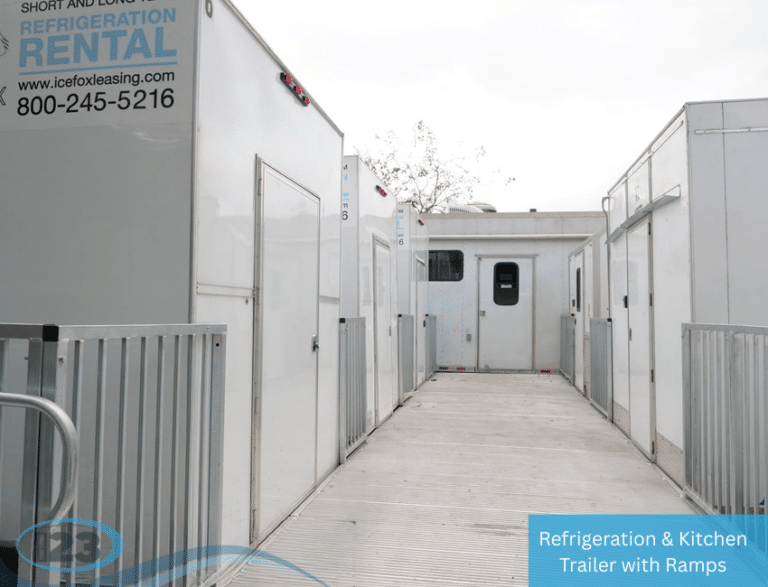
Request 2 proposals based on the same operating scope. Each quotation should identify trailer size, target temperature, rental or purchase term, delivery, pickup, electrical setup, monitoring, service response, stairs or ramps, freight, taxes, and generator responsibility.
A Polar King Mobile purchase should also be evaluated using towing requirements, payload, vehicle compatibility, insurance, licensing, storage, and ownership maintenance. Its standard GVWR values range from 5,000 pounds to 9,990 pounds, so tow-vehicle selection cannot be treated as an afterthought.
For an IcefoxEquipment proposal, review the commercial refrigeration-trailer service and provide the project ZIP code, temperature, product type, required date, rental duration, available power, and loading method. At least 7 details should be resolved before a reliable delivered quote is compared.
What Is the 6-Step Comparison Process?
Use this 6-step process before selecting either company:
- Define mobility. Decide whether the trailer stays at 1 site or must be towed between locations.
- Set the temperature. Confirm whether the requirement is above 0°F or as low as -10°F.
- Calculate capacity. Compare the IcefoxEquipment 20-foot footprint with Polar King Mobile’s 336–600-cubic-foot standard range.
- Verify power. Confirm 110V at 15 amps or 220V at 40–60 amps before ordering.
- Plan loading. Compare pallet dimensions, the IcefoxEquipment 42-inch planning door opening, and Polar King Mobile’s 54 × 70-inch door.
- Compare total cost. Include delivery, towing, installation, generator, electrician, service, maintenance, pickup, and storage.
This 6-step review prevents a size-only decision. In our experience, electrical service and loading access eliminate more unsuitable options than the first quoted price.
What Common Mistakes Should You Avoid?
Mistake 1: Assuming Both Trailers Can Be Towed by the Customer
IcefoxEquipment’s supplied policy prohibits customer pickup, towing, or relocation of its 20-foot rental units. Polar King Mobile publishes coupler, GVWR, trailer-weight, and payload specifications because its products are designed as towable trailers.
Mistake 2: Ignoring the 110V vs. 220V Difference
Polar King Mobile’s standard 110V, 15-amp connection and IcefoxEquipment’s 220V, 40–60-amp requirement are not interchangeable. Confirm the specific unit’s data plate before committing to the site or generator plan.
Mistake 3: Comparing Exterior Length Alone
A 16-foot trailer does not automatically have the same payload, cubic capacity, door opening, or interior workflow as another 16-foot configuration. Polar King Mobile publishes up to 600 cubic feet for its standard models, while IcefoxEquipment’s supplied data focuses on a larger 20-foot stationary platform.
Mistake 4: Assuming Every Freezer Reaches -10°F
IcefoxEquipment publishes a documented minimum of -10°F, while Polar King Mobile’s standard published minimum is 0°F. Confirm the exact target before loading frozen inventory.
Mistake 5: Comparing Purchase and Rental Prices as One Number
A purchased trailer and a delivered rental carry different costs over 1 project. Ownership adds towing, registration, storage, insurance, maintenance, and resale considerations, while rental pricing can add freight, setup, power, and removal.
Decision Checklist
- ☐ Confirm whether the unit must remain stationary for 1 project.
- ☐ Confirm whether customer towing is required.
- ☐ Select -10°F or 0°F as the required minimum.
- ☐ Verify access to 110V, 15 amps or 220V, 40–60 amps.
- ☐ Compare the 42-inch and 54 × 70-inch door specifications.
- ☐ Confirm whether 336–600 cubic feet is sufficient.
- ☐ Review whether a 20-foot to 40-foot container is required.
- ☐ Include generator, electrician, freight, pickup, towing, and maintenance costs.
- ☐ Call IcefoxEquipment at 800-245-5216 with the complete project specification.
Request a Quote
Request a quote today for industry-leading refrigeration, modular facilities, and mobile equipment solutions. Ice Fox Equipment provides rapid deployment, flexible rental and leasing options, and dependable support for construction, healthcare, food service, emergency response, and industrial operations. Contact our team now for a customized, no-obligation quote.

Frequently Asked Questions
IcefoxEquipment is more directly aligned with a delivered temporary rental because its supplied model uses an 8 × 20-foot trailer that remains at the customer’s site and cannot be transported by the customer. Polar King Mobile primarily publishes manufactured towable units in 6 × 8, 6 × 12, and 6 × 16-foot sizes.
IcefoxEquipment publishes the colder minimum in the compared sources. Its low-temperature trailer can reach approximately -10°F, while Polar King Mobile publishes a standard operating range of 0°F to 50°F. IcefoxEquipment should therefore be reviewed first when the written storage requirement is below 0°F.
Polar King Mobile’s standard unit is easier to connect where only ordinary light commercial power is available because it requires 110V and 15 amps. IcefoxEquipment’s documented trailer requires 220V, single-phase service at 40–60 amps and a licensed electrician for either a hardwired or twist-lock connection.