
IcefoxEquipment vs Mobile Air & Power Rentals: Which Rental Company Fits Your Project?
Article Plans
IcefoxEquipment and Mobile Air & Power Rentals solve different temporary-infrastructure problems. IcefoxEquipment focuses on commercial refrigeration trailers, freezer trailers, cold-storage containers, and walk-in structures, while Mobile Air & Power Rentals focuses on temporary HVAC, process cooling, heating, dehumidification, generators, and power distribution. The right choice depends less on brand size and more on the specific equipment required for your operation.
A food facility needing an 8-foot by 20-foot walk-in refrigeration trailer has a different requirement from a plant needing a 400-ton temporary chiller. Comparing the companies as direct substitutes can therefore produce the wrong purchasing decision before the first quote is requested.
Quick Answer: Choose IcefoxEquipment when your primary requirement is temporary food-grade refrigeration, freezer storage, or a 20-foot to 40-foot refrigerated container. Choose Mobile Air & Power Rentals when the primary requirement is temporary HVAC, dehumidification, process cooling, generators, or power distribution. Compare written project scopes before comparing price.
Quick Facts
- IcefoxEquipment’s standard refrigeration trailer measures 8 feet by 20 feet.
- Its standard trailer requires 220V, single-phase power at 40–60 amps.
- IcefoxEquipment refrigeration trailers can reach temperatures as low as -10°F.
- IcefoxEquipment offers 20-foot and 40-foot refrigerated-container options.
- Mobile Air & Power Rentals advertises emergency service 24 hours a day, 365 days a year.
- Mobile Air’s chiller fleet ranges from 1.5 to 400 tons.
Key Takeaways
- IcefoxEquipment is the more directly aligned choice for an 8-foot by 20-foot temporary walk-in refrigerator or freezer.
- Mobile Air & Power Rentals is better aligned with temporary building HVAC and process-cooling loads from 1.5 to 400 tons.
- IcefoxEquipment’s published refrigeration planning rates begin at $1,295–$2,195 for a 12-foot refrigerated trailer.
- Both companies advertise emergency support available 24/7, but their equipment categories are materially different.
- A quote comparison is valid only when both proposals include the same 5 cost areas: equipment, freight, installation, utilities, and support.
What Is the Main Difference Between IcefoxEquipment and Mobile Air?
The main difference is equipment specialization. IcefoxEquipment supplies temporary cold-storage spaces such as refrigeration trailers, freezer trailers, and 20-foot to 40-foot refrigerated containers, while Mobile Air & Power Rentals supplies temporary air conditioning, chillers, heaters, dehumidifiers, generators, and electrical distribution.
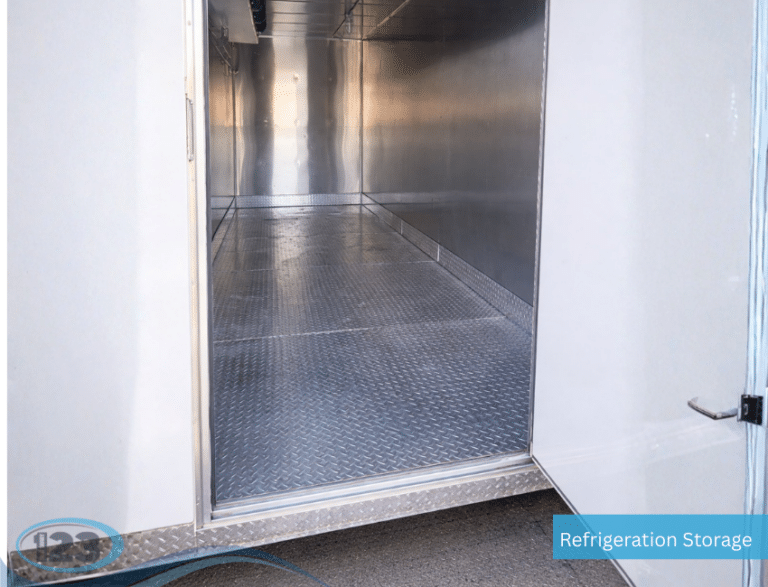
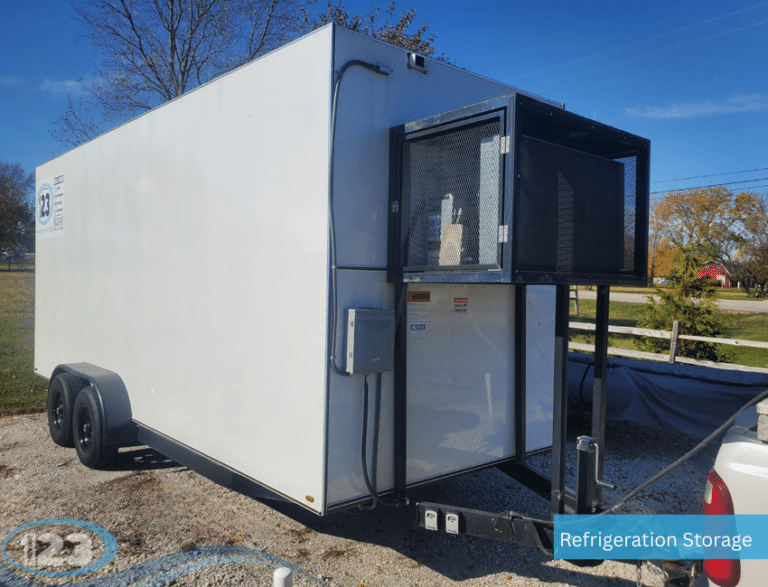
IcefoxEquipment’s offering is designed around storing products inside a controlled enclosure. A standard 20-foot refrigeration trailer can support approximately 6–8 pallets, while a 40-foot reefer container may provide approximately 2,200–2,400 cubic feet of interior capacity.
Mobile Air’s equipment is generally designed to condition a room, building, production process, or work area. Its published chiller range of 1.5 to 400 tons shows that it can address loads ranging from a small process or machine to a large commercial or industrial facility.
In our view, the most common buying mistake is asking both companies for “temporary cooling” without defining the load. A 20-foot refrigerated trailer protects inventory inside the trailer; a 400-ton chiller supports a cooling system or process. Those are not interchangeable solutions.
When Is IcefoxEquipment the Better Fit?
IcefoxEquipment is the stronger fit when you need a temporary room or container that directly holds refrigerated or frozen inventory. Its documented equipment includes a 12-foot refrigerated trailer, a 20-foot refrigerated trailer, a 20-foot freezer trailer, and 20-foot or 40-foot refrigerated containers.
A standard 20-foot trailer requires 220V, single-phase, 40–60-amp service and can reach approximately -10°F in a low-temperature configuration. A licensed electrician must verify and complete the connection rather than relying on a household outlet or improvised adapter.
IcefoxEquipment is also aligned with restaurants, grocery operations, healthcare facilities, caterers, food processors, laboratories, agricultural businesses, and emergency-response teams that need enclosed cold storage. The company’s official refrigeration page identifies food service, healthcare, events, agriculture, catering, and logistics among its applications.
We would choose this category first when the project question is, “Where will the product be stored?” A 6–8-pallet refrigerated trailer is much easier to scope when the inventory count, pallet dimensions, loading method, holding temperature, and delivery route are known before dispatch.
When Is Mobile Air & Power Rentals the Better Fit?
Mobile Air & Power Rentals is the stronger fit when you need to control the temperature or humidity of an existing building, tent, production area, server room, restoration site, or industrial process. Its official equipment categories include air conditioners, chillers, cooling towers, heaters, dehumidifiers, generators, transformers, and power-distribution equipment.
The 1.5-to-400-ton chiller range is particularly relevant for process cooling and central-building applications. Mobile Air also states that its team can size equipment for the space, install engineered temporary systems, provide technicians, arrange delivery and pickup, and support generator refueling.
Mobile Air’s category may also be more suitable when temporary power is the core problem rather than cold storage. Its official power offering includes generators, transformers, accessories, and jobsite power solutions, while IcefoxEquipment documentation states that its refrigeration trailers normally require customer-provided power.
Skip a refrigeration trailer when the real requirement is maintaining an entire occupied building at a controlled temperature. A 20-foot cold-storage trailer can protect inventory, but it will not replace the cooling capacity of a central HVAC system designed around tons of building load.
IcefoxEquipment vs Mobile Air & Power Rentals by the Numbers
| Comparison area | IcefoxEquipment | Mobile Air & Power Rentals |
|---|---|---|
| Core published specialty | Refrigeration and freezer storage | HVAC, dehumidification and power |
| Emergency support | 24/7 | 24/7/365 |
| Documented trailer size | 8 ft × 20 ft standard | Equipment varies by HVAC application |
| Trailer temperature | As low as -10°F | Chillers sized by cooling load |
| Refrigerated containers | 20 ft and 40 ft | Not presented as a core official category |
| Trailer power | 220V, 1 phase, 40–60 amps | Generators and power distribution offered |
| Chiller range | Not listed in supplied sources | 1.5–400 tons |
| Published trailer pricing | From $1,295–$2,195 | Equivalent pricing not publicly identified |
IcefoxEquipment publishes more usable planning data for enclosed cold storage, including 12-foot and 20-foot trailer pricing and 20-foot and 40-foot container pricing. Mobile Air publishes broader HVAC and power capability data, but its official pages reviewed do not provide equivalent refrigeration-trailer prices.
How Do Their Published Costs Compare?
IcefoxEquipment’s planning guide lists a 12-foot refrigerated trailer at $1,295–$2,195, a 20-foot refrigerator or freezer trailer at $1,495–$2,395, a 20-foot refrigerated container at $2,495–$2,995, and a 40-foot refrigerated container at $2,995–$3,995. The document states that final rates vary by duration, location, freight, site conditions, utilities, emergencies, and seasonal demand.
Those planning rates generally exclude freight, delivery, installation, fuel, utility connections, permits, staffing, water, and waste services. A $1,495–$2,395 equipment rate should therefore not be treated as the complete delivered project cost.
Mobile Air’s official pages reviewed do not publish directly comparable project pricing for a refrigeration trailer, chiller, generator, or engineered system. That absence makes a credible “cheaper company” conclusion impossible without 2 written quotations covering the same dates, duty, location, installation, fuel, and service obligations.
For a current IcefoxEquipment proposal, use the temporary refrigeration and freezer equipment information and provide the required temperature, project duration, site ZIP code, inventory volume, available power, and delivery date. A complete request should address at least 6 operating variables before price is compared.
How Should You Compare the Two Companies Step by Step?
Use this 6-step process to make an accurate decision.
- Define the load. State whether you need a storage enclosure, building air conditioning, humidity removal, process cooling, or temporary power.
- Document capacity. Provide pallet count, cubic feet, square footage, heat load, required tons, or equipment amperage.
- Confirm operating limits. Specify the target temperature, including whether the requirement is 34°F–41°F, 0°F to -10°F, or a building comfort condition.
- Inspect utilities. Verify voltage, phase, breaker capacity, generator needs, fuel responsibilities, cable distance, and connection type.
- Price the complete deployment. Compare equipment, freight, setup, removal, power, fuel, technicians, permits, and emergency service.
- Evaluate operational responsibility. Identify who monitors temperature, fuels generators, responds to alarms, documents service, and approves changes.
This process prevents a 1-line rental rate from hiding the larger project cost. In practice, freight, temporary power, electrical work, generator fuel, technician coverage, or emergency mobilization may matter more than the equipment’s base rate.
What Common Comparison Mistakes Should You Avoid?
Mistake 1: Treating Refrigeration and Air Conditioning as the Same Service
A refrigeration trailer holding product at 34°F–41°F is not the same as a portable air conditioner serving an occupied room. Define the controlled space and stored product before requesting either quote.
Mistake 2: Comparing Equipment Rates Without Utilities
IcefoxEquipment’s standard 20-foot trailer needs 220V, single-phase service at 40–60 amps. A low rental rate can become expensive when the site needs an electrician, generator, cable, or power-distribution work.
Mistake 3: Ignoring Capacity Units
IcefoxEquipment capacity may be described as 6–8 pallets or 2,200–2,400 cubic feet, while Mobile Air capacity may be expressed in tons. Pallets, cubic feet, and cooling tons measure different parts of the project.
Mistake 4: Assuming Every Unit Includes a Generator
The IcefoxEquipment source states that refrigeration trailers do not automatically include a generator, while Mobile Air operates a dedicated generator and power-distribution category. Confirm power responsibility in writing before the delivery date.
Mistake 5: Declaring a Winner Without Matching Quotes
A valid comparison requires 2 proposals for the same project scope. Published information supports a category comparison, but it does not support a universal claim that either company is always cheaper, faster, or better.
Decision Checklist
- ☐ Choose enclosed refrigeration if inventory must stay inside an 8-foot by 20-foot controlled space.
- ☐ Choose engineered HVAC when the cooling requirement is measured from 1.5 to 400 tons.
- ☐ Confirm whether the required temperature is 34°F–41°F, 0°F to -10°F, or another approved setpoint.
- ☐ Verify 220V, single-phase, 40–60-amp power for an IcefoxEquipment trailer.
- ☐ Compare freight, installation, removal, generator, fuel, and technician charges.
- ☐ Confirm whether 24/7 emergency support includes onsite labor or only telephone assistance.
- ☐ Match rental duration and delivery dates across both proposals.
- ☐ Call IcefoxEquipment at 800-245-5216 with the temperature, capacity, power, location, and schedule.
Request a Quote
Request a quote today for industry-leading refrigeration, modular facilities, and mobile equipment solutions. Ice Fox Equipment provides rapid deployment, flexible rental and leasing options, and dependable support for construction, healthcare, food service, emergency response, and industrial operations. Contact our team now for a customized, no-obligation quote.
Frequently Asked Questions
No. IcefoxEquipment primarily markets temporary refrigeration trailers, freezer trailers, and 20-foot to 40-foot cold-storage containers. Mobile Air & Power Rentals markets temporary HVAC, chillers, heaters, dehumidifiers, generators, and power distribution, including chillers from 1.5 to 400 tons.
IcefoxEquipment is more directly aligned with a restaurant that needs an enclosed 20-foot refrigerated or freezer trailer. Its documented trailer can reach approximately -10°F and requires 220V, single-phase, 40–60-amp service. Mobile Air may still be relevant when temporary power or building HVAC is also required.
Mobile Air & Power Rentals is more directly aligned with a central-building or process-chiller failure because its published fleet ranges from 1.5 to 400 tons. IcefoxEquipment may protect temperature-sensitive inventory during the outage, but a 20-foot refrigeration trailer does not replace a building’s engineered chilled-water system.