
Why Are All-Aluminum Walk-In Pods More Sanitary? IcefoxEquipment Explains
Article Plans
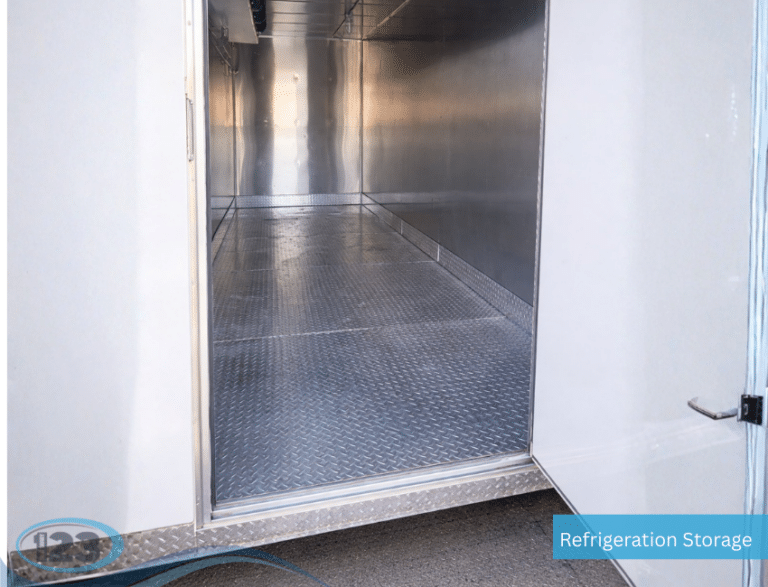
IcefoxEquipment walk-in pods support sanitary cold storage by combining a .040-inch aluminum exterior, stainless-steel interior surfaces, aluminum diamond-plate flooring, and smooth rivet-free construction. The practical benefit is a durable enclosure with fewer exposed joints and porous coverings where water, grime, or food residue can become difficult to remove. Explore IcefoxEquipment walk-in refrigeration solutions for current configurations.
A terminology point matters before comparing materials: IcefoxEquipment’s walk-in units are not necessarily aluminum in every component. The published construction includes 1 aluminum exterior shell, stainless-steel interior walls, aluminum flooring, and a steel structural frame, so “all-aluminum pod” is best understood as an aluminum-clad, sanitary metal system rather than a structure containing no other metal.
Quick Answer
All-aluminum walk-in pods can support better sanitation because their .040-inch metal shells are smooth, non-wood construction that resists rust and moisture damage. IcefoxEquipment adds stainless-steel interiors and rivet-free surfaces, creating a durable enclosure that can be cleaned more thoroughly than materials with porous coverings or numerous exposed joints.
Quick Facts
- IcefoxEquipment uses a .040-inch aluminum shell on applicable refrigeration and modular units.
- Published units combine 4 primary construction elements: aluminum exterior, stainless-steel interior, aluminum diamond plate, and a steel frame.
- Smooth rivet-free construction reduces the number of exposed fastener areas that require detailed cleaning.
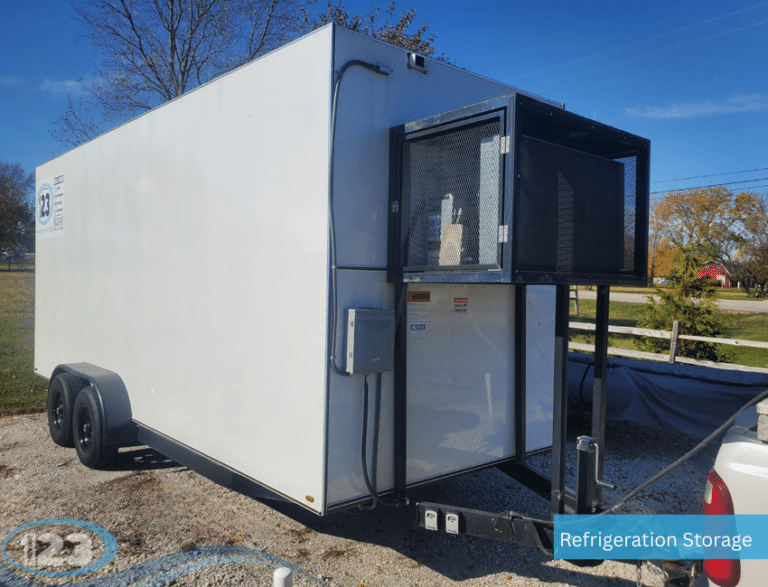
- A standard popular refrigeration trailer is approximately 20 × 8.5 feet, with configurations available up to 50 feet.
- A 5-day cold-storage deployment may protect 2,000 to more than 25,000 pounds of inventory.
- IcefoxEquipment provides assistance 24 hours a day, 7 days a week at 800-245-5216.
Key Takeaways
- A .040-inch aluminum exterior resists rust and moisture-related surface deterioration.
- A stainless-steel interior provides 1 smooth, cleanable food-service surface that resists corrosion and water staining.
- Rivet-free construction removes many of the small exposed fastening points that can complicate a daily cleaning program. [NEEDS DATA: facility-approved cleaning frequency]
- Avoiding wood, fiberglass, and galvanized wall coverings reduces the number of dissimilar surface types within 1 walk-in enclosure.
- Material selection supports sanitation, but employee practices, drainage, airflow, storage layout, and documented cleaning remain essential during every 5-day deployment.
What Makes an Aluminum Walk-In Pod Easier to Keep Clean?
An aluminum walk-in pod is easier to maintain when its surfaces are smooth, corrosion-resistant, and free from unnecessary exposed joints. IcefoxEquipment uses a .040-inch aluminum exterior shell and describes applicable construction as smooth and rivet-free, helping cleaning crews work across broad surfaces instead of scrubbing around rows of raised fasteners.
That does not mean aluminum disinfects itself or guarantees a sanitary result after 1 cleaning pass. The source material supports material durability and cleanability, but it does not provide a validated bacterial-reduction percentage. [NEEDS DATA: independent test comparing microbial retention on IcefoxEquipment aluminum construction and alternative materials]
Why Do Smooth Surfaces Matter?
Smooth surfaces matter because they give soil, spills, and condensation fewer irregular areas in which to collect. IcefoxEquipment describes its refrigeration construction as rivet-free and uses 1 continuous metal-based wall system rather than wall coverings made from galvanized steel, wood, or fiberglass.
In practical terms, a cleaning employee can move a cloth or approved cleaning tool along a broad panel without stopping at every exposed rivet. We consider that a meaningful design advantage because sanitation problems often begin at small junctions, not at the easy-to-see center of an 8.5-foot-wide wall.
Why Is Rivet-Free Construction Useful?
Rivet-free construction reduces exposed hardware and interruptions on the visible surface. IcefoxEquipment specifically identifies smooth rivet-free construction as a feature of its trailers, while its modular kitchen page lists rivet-free construction among 4 primary material and design elements.
Fewer surface interruptions can shorten detailed cleaning work, but the supplied documents do not provide a specific time savings such as 20% or 30 minutes per shift. [NEEDS DATA: measured cleaning-time comparison between riveted and rivet-free units]
How Does the .040-Inch Aluminum Shell Support Sanitation?
The .040-inch aluminum shell supports sanitation by resisting rust and maintaining a smooth exterior that can withstand repeated exposure to weather. IcefoxEquipment states that aluminum’s long-lasting properties help the surface maintain its appearance with limited effort and protect the shell from rust.
Rust resistance is operationally important because exterior corrosion can create flaking material, rough spots, trapped moisture, and difficult maintenance conditions over a long deployment. A 50-foot refrigeration unit positioned outside may face rain, sun, temperature swings, and washdown activity, so durable exterior material helps preserve the enclosure around the sanitary interior.
Our view is that a thicker shell should not be treated as a substitute for inspection. Even with .040-inch aluminum, you should check door seals, panel junctions, floor transitions, drains, and penetrations before loading food or regulated inventory.
Why Does IcefoxEquipment Pair Aluminum With Stainless Steel?
IcefoxEquipment pairs aluminum exteriors with stainless-steel interiors because the 2 metals perform different jobs. Aluminum supplies a corrosion-resistant, weather-exposed shell, while stainless steel supplies an interior surface IcefoxEquipment describes as hygienic, strong, easy to clean, and resistant to rust and water stains.
The published refrigeration-trailer design therefore uses at least 4 material components rather than relying on aluminum alone: stainless-steel interior sidewalls, aluminum diamond-plate flooring, aluminum exterior panels, and a steel frame. This distinction makes the sanitation claim more accurate and avoids suggesting that every structural part is aluminum.
Is Stainless Steel More Sanitary Than Aluminum?
The IcefoxEquipment source material directly describes stainless steel as a hygienic material that does not support bacterial and pathogen growth and can be cleaned with an all-purpose cleaner. The same page identifies corrosion resistance as 1 reason stainless steel is suitable for hospitals, laboratories, kitchens, and refrigerated spaces.
The sources do not provide a controlled test proving that stainless steel produces a specific 10%, 25%, or 50% improvement over aluminum. [NEEDS DATA: independent comparative sanitation study applicable to these exact interior materials]
For that reason, the strongest sourced conclusion is that the 2-material combination gives you a weather-resistant aluminum shell and a cleanable stainless-steel interior. It is more precise than calling the entire pod “all aluminum.”
How Does Aluminum Compare With Wood, Fiberglass, and Galvanized Coverings?
IcefoxEquipment states that its applicable walls are not covered with galvanized steel, wood, or fiberglass. Using metal interior and exterior surfaces limits the pod to a smaller set of durable materials instead of introducing 3 additional covering types that may require different repair or cleaning procedures.
The sources do not provide a direct sanitation test comparing IcefoxEquipment pods with an identical wood-lined, fiberglass-lined, or galvanized unit. [NEEDS DATA: quantified moisture absorption, microbial retention, or cleaning-time comparison for the alternative materials]
Still, our practical recommendation is to avoid exposed wood in a wet cold-storage environment unless the assembly and finish are specifically approved for that use. IcefoxEquipment’s published design removes wood from the listed wall system and instead uses 1 combination of aluminum and stainless steel.
What Role Does Diamond-Plate Flooring Play?
Aluminum diamond-plate flooring provides a durable walking and loading surface inside the unit. IcefoxEquipment includes diamond plate among the 4 main construction features of its refrigeration trailers and modular kitchens.
A textured floor can improve footing, but it also requires deliberate cleaning because liquid or residue may remain around the raised pattern. The supplied sources do not establish a universal 1-time-per-day floor-cleaning schedule. [NEEDS DATA: sanitation schedule approved for the stored product and operating permit]
We would not choose a pod based only on shiny wall panels. The floor receives pallet traffic, shoe traffic, condensation, and spills during a 5-day deployment holding as much as 25,000 pounds or more, so floor condition and drainage deserve equal attention.
Do Floor Drains Make a Pod More Sanitary?
Floor drains can make cleaning and water removal easier when they are properly designed, connected, trapped, and approved for the site. IcefoxEquipment offers optional plumbed floor drains as 1 added feature intended to support simpler and more thorough cleaning.
A drain does not automatically make a unit sanitary. The site still needs an approved wastewater route, and the supplied materials do not specify a universal drain diameter, slope, or gallon-per-minute capacity. [NEEDS DATA: project-specific drainage and wastewater specifications]
For projects involving regular washdown, we generally recommend resolving drainage before delivery rather than treating it as an afterthought. A 20 × 8.5-foot pod with no approved discharge route can create a sanitation problem even when every wall panel is metal.
By the Numbers
| Construction or service detail | Source-supported figure |
|---|---|
| Aluminum exterior thickness | .040 inch |
| Main listed construction elements | 4 |
| Popular refrigeration configuration | 20 × 8.5 ft |
| Maximum published trailer length | Up to 50 ft |
| Example deployment duration | 5 days |
| Possible stored inventory | 2,000 to 25,000+ lb |
| Emergency quote target | Within 1 hour |
| Operational support | 24/7 |
| Published starting figure on selected pages | Starting from $1,295 |
The $1,295 starting figure appears on selected IcefoxEquipment modular-kitchen and sanitary-clean-room pages, but the sources do not confirm that price for an all-aluminum walk-in refrigeration pod. Request a project-specific quote through IcefoxEquipment’s refrigeration trailer page rather than treating that figure as a walk-in-pod rental rate.
How Should You Clean an Aluminum and Stainless Walk-In Pod?
Use a written 7-step process based on the stored product, chemical label, health-department requirements, and equipment instructions:
- Remove or protect all stored inventory before cleaning 1 affected zone.
- Remove loose material from stainless-steel walls and diamond-plate flooring.
- Wash approved surfaces with the facility’s authorized cleaner.
- Give special attention to door gaskets, corners, floor transitions, and penetrations.
- Rinse or wipe surfaces as required by the cleaner’s label.
- Allow surfaces to dry before reloading the cleaned 1-zone area.
- Record the date, time, employee, surfaces cleaned, and corrective action.
The supplied IcefoxEquipment materials do not name 1 universal chemical concentration or contact time for every application. [NEEDS DATA: approved cleaner, concentration, surface compatibility, and label contact time]
Before using any acidic, alkaline, chlorine-based, or abrasive product, verify compatibility with both aluminum and stainless steel. A product suitable for 1 metal may discolor or damage another surface when mixed incorrectly or left beyond its approved contact time.
What Common Sanitation Mistakes Should You Avoid?
Mistake 1: Calling Every Component Aluminum
IcefoxEquipment’s published refrigeration construction includes at least 4 distinct elements, including a stainless-steel interior and steel frame. Describe the system accurately when preparing specifications or inspection paperwork.
Mistake 2: Assuming Metal Never Needs Detailed Cleaning
A .040-inch aluminum shell and stainless-steel interior are cleanable materials, but door seals, corners, drains, floor texture, and penetrations still need attention.
Mistake 3: Ignoring the Diamond-Plate Floor
A unit may protect 25,000 pounds or more of inventory during a 5-day deployment, creating substantial loading traffic. Include the floor in every approved sanitation plan.
Mistake 4: Washing Without a Drainage Plan
An optional floor drain is only 1 part of wastewater control. Confirm the site connection and disposal route before washdown begins.
Mistake 5: Treating Rivet-Free as Self-Sanitizing
Rivet-free construction reduces exposed surface interruptions, but it does not provide a documented 100% bacterial elimination rate. [NEEDS DATA: validated microbial-performance test]
Decision Checklist
- ☐ Confirm the exterior uses .040-inch aluminum.
- ☐ Verify that the interior wall material is stainless steel.
- ☐ Confirm that visible construction is smooth and rivet-free.
- ☐ Inspect all 4 construction areas: walls, floor, frame transitions, and doors.
- ☐ Confirm whether an optional plumbed floor drain is required.
- ☐ Obtain the approved cleaner and its required contact time. [NEEDS DATA: site-approved sanitation chemical]
- ☐ Define the cleaning frequency for the full 5-day or longer deployment. [NEEDS DATA: approved cleaning schedule]
- ☐ Match the pod’s capacity to the expected 2,000-to-25,000-plus-pound inventory load.
- ☐ Confirm access to 24/7 operational support.
- ☐ Call 800-245-5216 before delivery if sanitation, drainage, or configuration details remain unresolved.
Request a Quote
Request a quote today for industry-leading refrigeration, modular facilities, and mobile equipment solutions. Ice Fox Equipment provides rapid deployment, flexible rental and leasing options, and dependable support for construction, healthcare, food service, emergency response, and industrial operations. Contact our team now for a customized, no-obligation quote.

Frequently Asked Questions
No. IcefoxEquipment’s published refrigeration design uses a .040-inch aluminum exterior, stainless-steel interior sidewalls, aluminum diamond-plate flooring, and a steel frame. The phrase “all-aluminum pod” therefore describes the aluminum-focused shell and wall system, not a unit containing only 1 metal.
Rivet-free construction creates smoother visible panels with fewer exposed fastening points requiring detailed cleaning. IcefoxEquipment lists rivet-free construction among 4 core design elements used in applicable modular kitchens and refrigeration units. The sources do not provide a quantified cleaning-time reduction. [NEEDS DATA: riveted-versus-rivet-free cleaning study]
The supplied IcefoxEquipment sources do not claim that aluminum delivers 100% bacterial prevention or provide a laboratory reduction percentage. They support that the .040-inch aluminum shell is smooth, rust-resistant, and durable. The stainless-steel interior is the surface specifically described as hygienic and easy to clean.